MAGAZINE

November 2010 - Cover Story

The Great Debate

By Tariq Kamal

SHARING TOOLS        | Print Subscribe

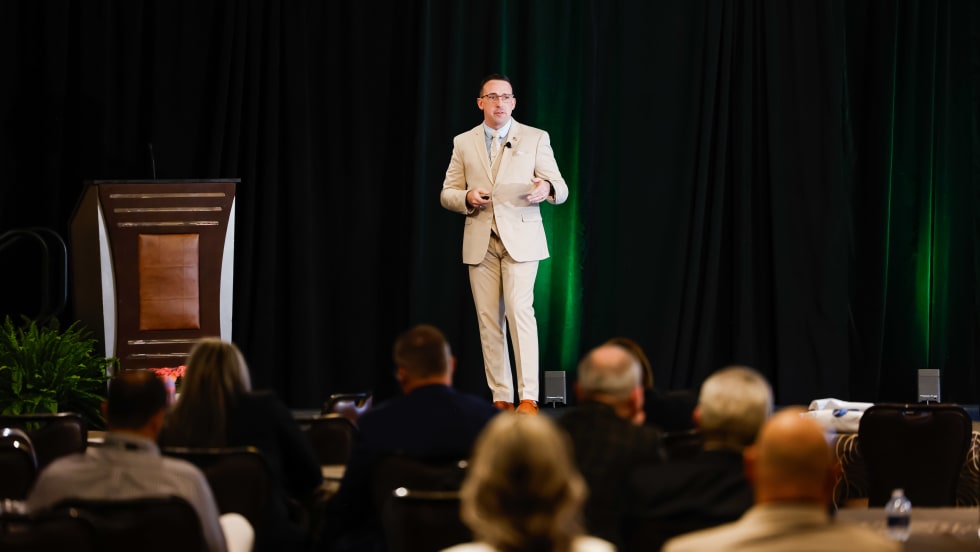
Panelists during the “Building Value in Today’s F&I Presentations” field questions from the audience. The hour-long discussion did feature some debate as to what makes for the ideal menu, but panelists focused more on connectivity and selling features rather than menu design.

Three menu providers, a trainer and a veteran F&I manager squared off at the 2010 F&I Conference and Expo to answer that all-important question: What makes for a good menu? As attendees would learn, the answer to that question is more involved than a specific design or brand.

Moderated by Reahard and Associates’ Rick McCormick, the panel included Ristken Software Services’ Patrick DeMarco, MaximTrack Technologies’ Jim Maxim Jr., Team One Group’s George Angus, The Vision of F&I’s Ron Martin and F&I and Showroom’s own “Mad” Marv Eleazer, an F&I director at Langdale Ford in Valdosta, Ga. Here are the highlights:

McCormick: Customers have probably changed more in the last 24 months than they have in the last 20 years. Patrick, how has this changed your view as to what makes for a good menu?

DeMarco: The gentlemen on this panel offer excellent options for menus. But if you start to take a look at how the menus have changed and, specifically, how that has helped the F&I department, I think the focus is on a couple of areas.

First, menus have become easier to use. We’ve also integrated a lot of tools — OFAC checks, Red Flags verification and biweekly payments. The addition of sales tools — whether it’s GAP or fuel-efficiency analysis, the addition of [service-contract] payment plans — has allowed the F&I manager to more effectively do his or her job and use that menu to sell additional products.

Second, I think that e-rating capabilities within the menu may be the biggest change in our business. The ability to throw away the books or rate sheets and to have that information integrated into the menu is a tremendous change. And, certainly, utilization reports have improved on all of the menus I’ve seen.

McCormick: Jim, how has that development of dealership management system (DMS) integration and e-contracting affected the presentation in the F&I office?

Maxim: The reason we use menus to begin with is to make the presentation more credible, compliant and accurate. So, in our opinion, having a menu without DMS integration is like having a steak without a knife and fork. Without mentioning any names, some DMS providers make it easy and some make it hard. We’ve all had to adjust to stay ahead of the curve.

The fact that we’re all coming together and taking e-contracting to a new level is pretty exciting for us. We see the benefit for everyone in the industry. There’s going to be a time, I’d say in a year or two, when we’ll be able to pull a deal over and populate the finance contracts, the DMV forms, service contracts, GAP and tire-and-wheel [agreements] with a click of a button. And the less time we spend on the activities that don’t really add any value is more time spent selling.

McCormick: I always expect menu usage among dealers to be around 80 to 90 percent, but I’ve been told it’s around 20 percent. George, why are some dealerships resistant to the menu process, and what would you say to a dealer who’s on the fence about using a menu?

Angus: Well, first, that number, in my experience, sounds a little low. Maybe a certain percentage of F&I managers actually have a menu or have menu software, but maybe they’re not using it or using it properly. So what we’re really up against is not whether or not a menu works or whether they should use it, as most dealers would agree they should. But what we’ve found is that dealers generally don’t really know what’s going on in the F&I office. They think they do, but they don’t. What we’re dealing with here is trying to create change.

You have to convince [dealers] that change will cause improvement because, by definition, you can’t improve your performance without changing something. On the other hand, if you can’t create that change and actually get them to use it, you’ll never get them to change. They’ll accept it when they learn how easy and simple the menu process is and what kind of results they can get. That’s how we’ve gotten to the point we’re at today.

RATE THIS STORY

Average Rating: 5 out of 5 (1 vote)

COMMENT ON THIS STORY

Name: 
Email:
Comment: (Maximum 2000 characters)

* Please note that every comment is moderated.

E-NEWSLETTER

Get up-to-the-minute news and information about the automotive finance and insurance industry. SUBSCRIBE!

View the latest e-newsletter eWeekly

ARTICLE ARCHIVE SEARCH

BLOG

Done Deal

Gregory Arroyo
Clicking for Service

By Gregory Arroyo
Guitar Center is doing its best to prove the editor’s 10-year-old prediction that brick-and-mortar retailers would always have a role in the online shopping experience.

Mad Marv

Marv Eleazer
Longing, Not Loathing

By Marv Eleazer
The magazine’s from-the-trenches blogger describes how his days as a spitfire preacher influenced his style in the F&I office — and not the way you might think.

Sales Driver

Cory Mosley
Execution Plan

By Cory Mosley
The magazine’s sales expert explains how you can plan and execute long-term strategies without losing sight of your day-to-day responsibilities.

On the Point

Jim Ziegler
Stop That Train!

By Jim Ziegler
‘Da Man’ gets a little reflective about his recent surgery before regaining form and doing what he does best.

Dealer Job Finder


Save time and money. Search for auto-dealer jobs. Advance your career. Access our career coaching services.

Job Seekers

  Post your resume & manage your job search.

Employers

  Post jobs & search top quality resumes.

Featured Jobs

STORE

$10.00

F&I and Showroom - October 2011

In This Issue
Here are some of the Highlights:

  • Setting the Pace
  • Lights, Camera, Action!
  • Mobile Goes Mainstream
    And much more…

  • News Channels