



First Quarter Delivers Optimistic Outlook
Delinquencies and dollar volume of at-risk loans continued to fall in the first quarter, and auto finance sources responded, with shares of loans to credit-challenged buyers increasing by 11.1 percent. Experian Automotive’s director of automotive credit provides a snapshot of other auto finance trends from the quarter.

As the auto finance landscape continued to stabilize in the first quarter of 2011, lending sources continued to show a higher tolerance for risk. So what looked like a light at the end of tunnel in previous quarters now appears to be an expanding bright spot for the auto finance marketplace.
The clear winners for the quarter were drops in 30- and 60-day delinquencies, a growing share of new-vehicle loans for credit-challenged customers, lower dollar volumes of at-risk loans and a drop in the average loan age. The quarter also represented the best time in 30 months for consumers to secure an auto loan, and all signs point to a market that will continue to improve and expand.
Drop in Delinquencies Lowers At-Risk Loan Volumes
Vehicle owners did a significantly better job making payments on time in the first quarter, helping the automotive finance market stabilize more than it had during the year-ago period.
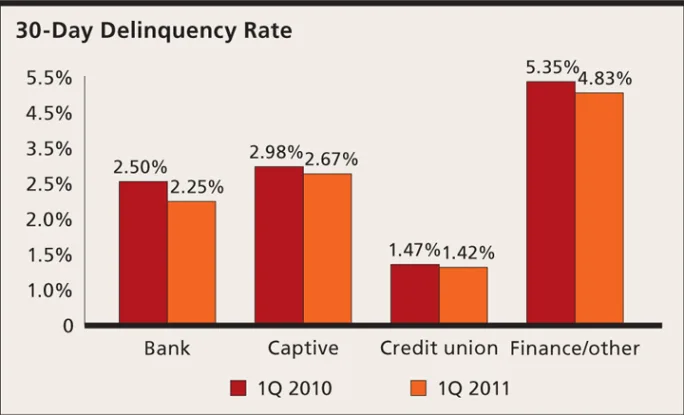
Thirty-day delinquencies are at their lowest point since the fourth quarter of 2008, giving lenders a little more leeway in their credit decisions. Having dropped 7.95 percent, 30-day delinquencies contracted to 2.52 percent in the first quarter from 2.74 percent a year ago. Sixty-day delinquencies dropped by 13.45 percent in the same period, with the captive finance segment enjoying the largest decline.
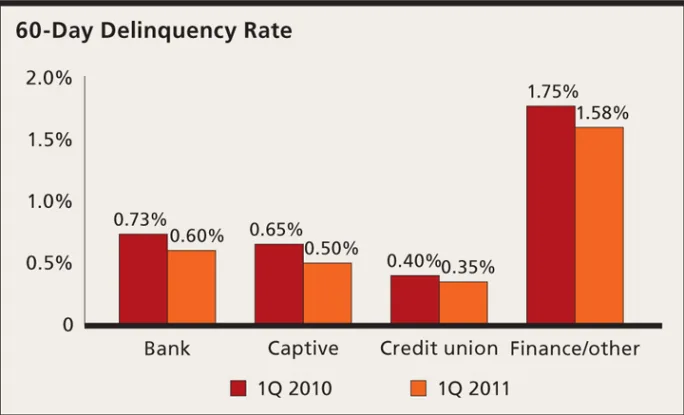
In addition, those drops in delinquencies lowered the total dollar volume of at-risk automotive loans from nearly $20 billion in the first quarter of 2010 to $16 billion in the first quarter of this year.
Lenders Ease Loan Criteria
In a stabilizing automotive credit market, lenders were in a better position to loosen lending criteria and provide more consumers with opportunities to qualify for loans.
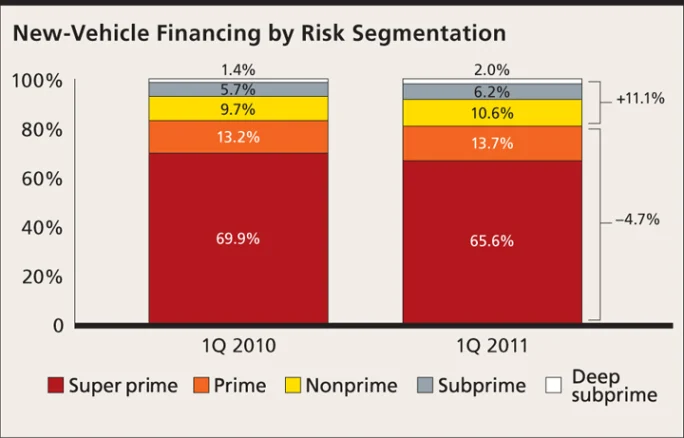
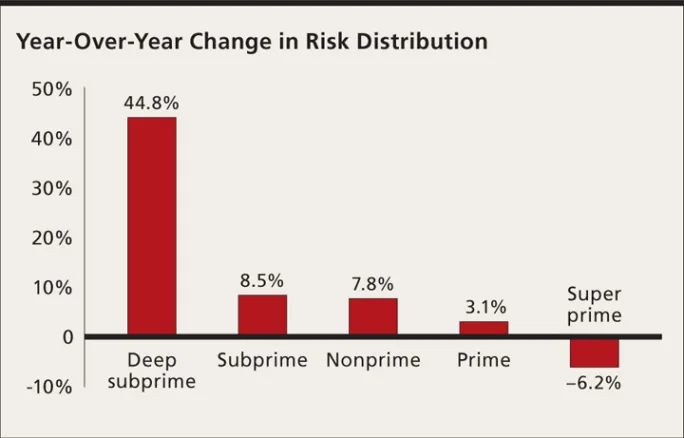
The share of loans to credit-challenged new-vehicle shoppers increased 11.1 percent from the year-ago period. The share of loans made to the nonprime segment increased from 9.71 percent in the year-ago quarter to 10.57 percent. The share of loans made to subprime customers jumped from 5.67 percent to 6.16 percent, while the share of loans made to deep subprime customers rose from 1.38 percent to 2 percent.
The improving ease of obtaining a new-vehicle loan also was reflected in average credit scores. For new-vehicle financing, the average credit score fell to 766, 10 points lower than in the first quarter of 2010. Coincidentally, 766 also was the average score in the fourth quarter of 2008, after which the market began to contract in earnest.[PAGEBREAK]

Loan Ages Decline as Consumers Return to Market
Despite all the buzz about the sluggish economy causing consumers to hold on to their vehicles longer, loan data suggests that this may not be the case. Taking into consideration variances with different lenders and risk tiers, the average age of vehicle loans in the first quarter was 27.89 months, down from 28.14 months in the year-ago period.
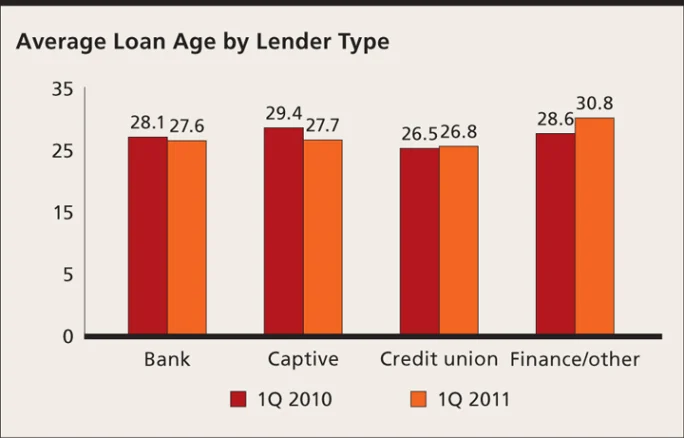
Among lenders, loan age for banks and captive lenders dropped, while the average loan age for credit unions and finance companies increased. Finance companies showed the largest spike, moving from 28.64 months in the first quarter of 2010 to 30.82 months in the first quarter.
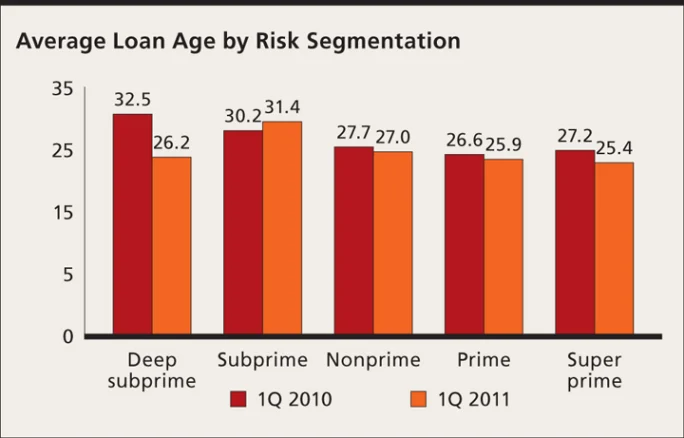
Loan age for all risk tiers except for subprime, which jumped by 1.22 months, experienced a drop from the first quarter of 2010 to the first quarter of this year. Loan age fell 1.82 months for superprime customers, 0.69 months for prime customers and 0.76 months for nonprime customers. Loan age for the deep subprime segment plummeted by 6.25 months.
This data points to customers with solid credit returning to market faster than in 2010, which bodes well for new-vehicle retailers and for lenders with portfolios geared toward higher-end credit customers.
Financing and Monthly Payments Remain Flat
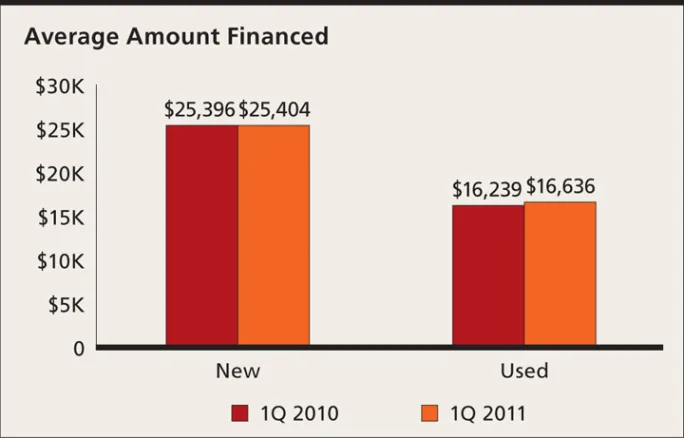
There was little change in loan characteristics, with monthly payment, loan length and amount financed staying relatively stable. The average loan amount for a new vehicle increased by a mere $8 to $25,404 in the first quarter, while the average used-vehicle loan increased by $397 to $16,636 in the first quarter of this year.
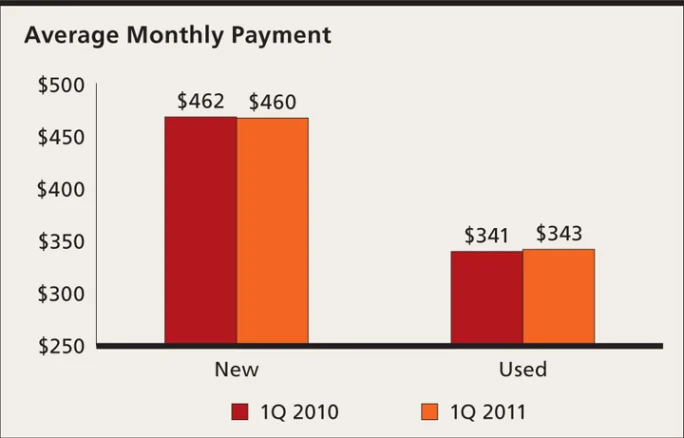
Average monthly payments showed little movement as the average new-vehicle payment fell from $462 to $460, while the average used-vehicle payment rose from $341to $343. Loan terms followed suit, jumping just one month for both new and used vehicles. Terms for new vehicles jumped from 62 months to 63 months, while used increased from 57 months to 58 months.
Continued Expansion Rests on the Economy
The combination of improved consumer payments and lower dollar volumes at risk has given lenders breathing room to loosen their overall lending criteria. It’s also made it easier for automakers to get customers into new vehicles.
Brighter days are ahead for lenders and automotive retailers should these trends continue. However, if sustained economic turmoil causes consumer delinquencies to sneak back up, the lending industry could contract once again.
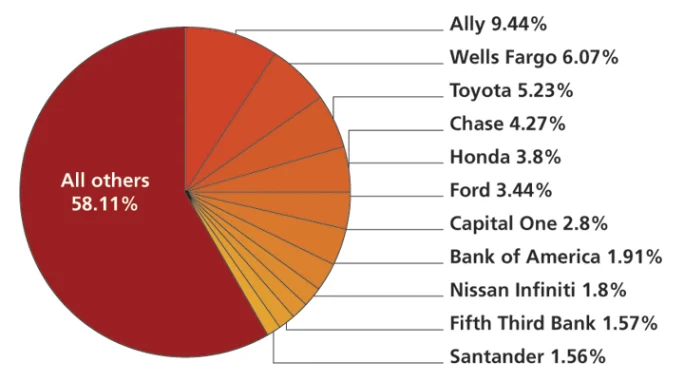
Top 20 Lenders by Market Share
Melinda Zabritski serves as director of automotive credit for Experian Automotive. E-mail her at melinda.zabritski@bobit.com.[PAGEBREAK]
SIDEBAR: 1Q By the Numbers
The average credit score for used-vehicle customers was 663, down two points from 665 in the year-ago quarter.
The average loan amount for a new vehicle was up $8, increasing from $25,396 in the year-ago quarter to $25,404.
The average loan amount for a used vehicle jumped $397, increasing from $16,636 in the first quarter of this year.
The average loan term increased by a full month, jumping to 63 months for new vehicles and 58 months for used.
More Auto Finance

Interest Rates Further Squeeze Auto Consumers
Last month’s hike and a potential second increase this month add to a growing list of inflation woes that could continue to dent overall car sales.
Read More →
Mind Your Process
Consistent steps taken in various aspects of the F&I office can make valuable differences over time, similar to an outline for a best-selling book.
Read More →
Top Five Credit Application Fraud Flags
Compliance audits regularly reveal bad habits that can lead to fraud charges and should have been stamped out decades ago.
Read More →
More Auto Loans for the Taking in August
Riskier categories were on the uptick for the month as lenders loosened access in several areas while balancing out the exposure in another, Cox Automotive reported.
Read More →
July Was Hot for Auto Borrowers
Credit proved readily available for many, but most loans left buyers in negative territory, Cox Automotive said.
Read More →
Dealer Lender Preferences Revealed
When lenders provide consistent, fast service, their overall satisfaction scores with dealers greatly improve, according to JD Power research.
Read More →
Auto Refi Savings Surge
Consumers with 84-month auto loan terms who refinanced saved the most on monthly payments, according to a new report by auto refinancing provider Caribou.
Read More →
Subaru Enters Lending Business
The automaker follows other brands in adding captive financing in the U.S., and says the move will strengthen its position here.
Read More →
Positive Equity Reaches Record High
Mainstream vehicle owners who bought a car seven years ago are likely to have positive equity when trading in for a new vehicle, according to second-quarter Edmunds data.
Read More →
Dealerships Are Paying the Price for Extended Car Loans
Growing negative-equity scenarios mean such lengthy terms should be addressed in a forward-looking way to make them work for the dealer and the consumer down the road.
Read More →