



ALG: Japan Disaster, Gas Prices Drive Compact Prices Skyward
In their latest report, analysts at DealerTrack subsidiary ALG are sticking with predictions they made a month ago that a prolonged production interruption of Japanese-made vehicles could cause prices on some models to jump by as much as 10 percent.
SANTA BARBARA, Calif. — In their latest report, analysts at DealerTrack subsidiary ALG are sticking with predictions they made a month ago that a prolonged production interruption of Japanese-made vehicles could cause prices on some models to jump by as much as 10 percent.
The report states that a 100-day disruption to vehicle production could elevate new-vehicle prices to temporarily increase by 8 to 9 percent and drive 36-month residual values up by 0.2 to 0.7 percent. A shorter interruption in the 20-day range would not likely affect residual values but could cause prices to spike by 1 or 2 percent.
With fuel prices spiking, demand for small, fuel-efficient vehicles such as the Toyota Prius is on the rise as well. Last week, several analysts reported a downward trend in U.S. gas consumption that, coupled with abundant supply, could drive down the per-gallon cost of fuel by as much as 50 cents by summer. Until then, car shoppers will likely continue to consider fuel efficiency as a key selling point.
“The 2011-MY Prius has been initially trending downwards up to early March,” the report stated. “Yet the production halt from March 11th to March 24th, coupled with rising gas prices, has impacted the transaction price.”
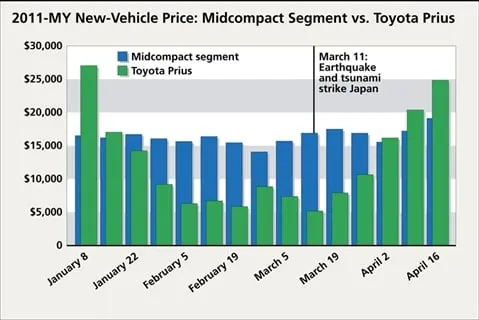
In the last two months, the average price paid for a Prius in the United States has increased from $25,200 to $25,800, a difference of 2.4 percent. ALG says the Prius, which averaged a 27-day turn just prior to the disaster, is now rolling off many dealers’ lots in fewer than 20 days.
The midcompact segment will likely show the most dramatic near- and long-term price increases, especially for vehicles such as the Prius, Honda Fit and Toyota Yaris, which are manufactured only in Japan. However, the effects of the converging factors will be felt industrywide.
“ALG expects further price increases in the short term for particular vehicles as production interruptions and parts supply chains are still hindering OEMs to produce at full capacity,” the report stated.
More Auto Finance

Interest Rates Further Squeeze Auto Consumers
Last month’s hike and a potential second increase this month add to a growing list of inflation woes that could continue to dent overall car sales.
Read More →
Mind Your Process
Consistent steps taken in various aspects of the F&I office can make valuable differences over time, similar to an outline for a best-selling book.
Read More →
Top Five Credit Application Fraud Flags
Compliance audits regularly reveal bad habits that can lead to fraud charges and should have been stamped out decades ago.
Read More →
More Auto Loans for the Taking in August
Riskier categories were on the uptick for the month as lenders loosened access in several areas while balancing out the exposure in another, Cox Automotive reported.
Read More →
July Was Hot for Auto Borrowers
Credit proved readily available for many, but most loans left buyers in negative territory, Cox Automotive said.
Read More →
Dealer Lender Preferences Revealed
When lenders provide consistent, fast service, their overall satisfaction scores with dealers greatly improve, according to JD Power research.
Read More →
Auto Refi Savings Surge
Consumers with 84-month auto loan terms who refinanced saved the most on monthly payments, according to a new report by auto refinancing provider Caribou.
Read More →
Subaru Enters Lending Business
The automaker follows other brands in adding captive financing in the U.S., and says the move will strengthen its position here.
Read More →
Positive Equity Reaches Record High
Mainstream vehicle owners who bought a car seven years ago are likely to have positive equity when trading in for a new vehicle, according to second-quarter Edmunds data.
Read More →
Dealerships Are Paying the Price for Extended Car Loans
Growing negative-equity scenarios mean such lengthy terms should be addressed in a forward-looking way to make them work for the dealer and the consumer down the road.
Read More →