

F&I
Consistency at Scale: Driving F&I Performance
With 75 rooftops across the Sunshine State, Morgan Auto Group has proven to Floridians that it knows a thing or two about driving performance in a competitive market. But it didn’t start at the top.


 MENU
MENU SEARCH
Since finance-and-insurance was added to the auto dealership, most stores’ F&I teams have been separated from sales like a car’s trunk is separated from the engine. It doesn’t have to – and shouldn’t – be that way.

The pass-off from sales to F&I 'really shouldn’t exist,' says Adam Marburger.
Pexels/Katrin Bolovtsova
Dealerships’ sales and finance-and-insurance departments might not see the need to work together closely, but if you look at it from the customer’s viewpoint, they most certainly should, industry experts say.
In fact, you might say the two departments should merge, but barring such a dramatic shift, their staffs should take it upon themselves to work together. The customer doesn’t know the difference anyway and is more likely to buy products in a less fragmented process.
F&I training provider Gerry Gould calls the concept of sales and F&I teamwork “early intervention.” When he was an F&I manager himself, he said he kept a close eye on dealership customers and involved himself in the process as early as possible.
“If I smelled a deal, I was out on the showroom floor watching it go down. When I felt it was appropriate, I was moving in and assisting the sales team in structuring the deal,” he says, acknowledging that the dealership he worked for encouraged that.
“You formulate a connection with the customer when you do that.”
Gould refers to such a move as the introduction, very different from the idea of a “pass-off” from sales to F&I that keeps the F&I manager isolated in an office with only last-step customer contact. That traditional approach no longer works well, especially since customers do much of their shopping outside the dealership.
“The pass-off really shouldn’t exist,” says Adam Marburger, CEO of general agency Ascent Dealer Services. “We’re all on the same team … [the F&I manager] should be out of their office with early involvement. We’ve got to get out of our way, step on our ego, and understand everything is about the retail customer.”
One practical way dealerships can facilitate a more seamless process between sales and F&I is to give their F&I teams access to the same customer relationship management system that sales staff routinely use, Gould says.
“That way, they can identify where the customer is in their buying journey, when the customer’s coming to pick up their car. They can view it just like a sales manager and make determinations as to when they get involved.”
Early F&I team participation is all the more important now that so many deals originate online, the experts said. In fact, Gould believes 90% do since the Covid pandemic accelerated the trend.
But online leads can result in customers getting attached to a quoted vehicle price and thus resistant to any products once they visit the dealership.
“Get F&I involved early. If you have to question how early, it’s not early enough,” Marburger says. “The earlier it gets in the F&I manager’s hands, the better. An F&I professional should be involved in the quoting.”
Gould agrees. Once a customer decides on a dealership they want to do business with, F&I should connect with that prospect. Timing depends on where the customer is in the shopping process, he said, though there’s one obvious trigger: when questions of leasing are posed.
“An introduction is all they have to do,” he said. “‘I just wanted to throw my name out there in case you have any questions about financing, leasing or interest rates.’ … Getting the management team involved draws the customer closer to making a decision.”
Beyond technology, the two teams should also move closer together to build the kind of relationships that break down silo walls, the experts said.
Gould recommends a structured process to build in collaboration, and Marburger advises regular interdepartmental meetings.
“There’s a difference between being a manager and a leader,” Marburger says. “We as leaders have to continually invest in leadership skills with our fellow managers, have one-on-one (meetings) asking how can we serve each other better that helps the experience for the customer but also increases profit for the store.”
But that kind of collaboration probably won’t happen or at least not be sustained if the dealer principal doesn’t lead it, he says.
“The dealer principal has to make it extremely clear to everybody, communicate it at a high level, that we work together as a team.” Otherwise, “that’s where the prisoners run the prison” and nothing changes materially for the customer.
But today, many dealerships still don’t get F&I involved until a car sale deal is done, Gould says. He’s observed that many times F&I managers feel the showroom should tee them up and leave it at that.
“I just left a store where they hired three salespeople, and the F&I manager didn’t meet one of them until they delivered a car two weeks after they were hired,” he says.
“If you have a dealership that just looks at F&I as a turnover … they’re probably not going to max their potential in F&I. F&I managers need to step out of their comfort zone and go into the sales zone. When they’re not working, they should be rehashing deals. They should be at the sales desk observing deals and assisting in the structure of those deals.”
Consumers actually want to know more about F&I products, Gould believes.
“The more the customer knows about the F&I process, the more products we sell and the more customers are open-minded to that process. It’s when we hide it and bring it in at the last minute and the F&I guy knows nothing about the deal is when things fall apart. We’re in a society that wants to know what’s going to happen.”
Gould and Marburger agree that shifting to a collaborative model can amount to a major change for a dealership but is worth it for all involved.
For instance, if sales better understands the F&I manager’s process, that team will likely have more empathy and load deals better, Gould says, adding that F&I can also take more initiative on the front end.
He offered a scenario of an F&I manager approaching the sales desk after a customer test drive to gather information for a loan preapproval.
“That would expedite process,” he says. “That would make everybody happier.”
Once a dealer principal establishes the expectation, F&I and sales teamwork can become a reality.
“It doesn’t happen overnight. People don’t love change,” Marburger says. “Once that decision’s made and there’s communication and accountability, it fixes itself. In 90 and 120 days, you can witness a completely different culture in your dealership.”

Pexels/fauxels
Q: How should sales quote payments?
Gould: Exact. ‘The payment’s $745.95. When would you like to pick up the car?’ It’s different in every store. Sometimes they range them, sometimes they quote roundabout. Initially, I think payments should be quoted on an average rate. Once the customer gets serious, give an exact payment, give them various down payments. Use the software that’s available in the various CRM tools.
Marburger: There’s no right or wrong way as long as it’s done with consistency and compliance on the front end. Every retail customer should have all options presented to them. Back in the day, dealerships would try to withhold that information ... It should be early and upfront. Give as much information as you possibly can on the customer’s terms.
Q: How should a proper sales meeting be conducted?
Gould: They shouldn’t last more than 20 minutes and should be structured when reviewing yesterday’s stuff, what’s going on today with the team. Have F&I speak about challenges, updates. Ten minutes of training, depending on the size and scope of the dealership, till everybody in the store has mastered that topic.
Marburger: I think that all managers should be sitting down together a minimum of one or two times a week to talk about meetings and meeting preparations and are all assigned something of value to (bring to) meetings. … They should be working together hand and glove and delivering them together.
Q: How can sales and F&I co-lead Saturday meetings so they’re on the same page?
Gould: In those meetings, give praise where praise is needed. “We did this in F&I last week, let’s keep it going.” Bring sales staff up-to-date on F&I … “We appreciate all the help you’ve given us. You guys have been endorsing us. You’ve been turning over e-leads.”
Marburger: Saturday meetings should always be positive. The more serious conversations should be held during the week. Saturdays you should be talk about where we are, where do we need to be today, something to bring people together as a team.
Loading data...
F&I
With 75 rooftops across the Sunshine State, Morgan Auto Group has proven to Floridians that it knows a thing or two about driving performance in a competitive market. But it didn’t start at the top.






Industry
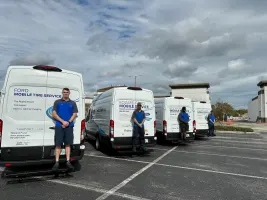
More auto dealerships are offering mobile servicing for today’s convenience-minded consumers to boost business and stand out from competition, though it may not fit every store.
Industry
Since finance-and-insurance was added to the auto dealership, most stores’ F&I teams have been separated from sales like a car’s trunk is separated from the engine. It doesn’t have to – and shouldn’t – be that way.
F&I
Finance has historically been the last step in the car-buying process, but it doesn’t have to be. The customer’s journey starts long before they arrive at the dealership, and so should F&I’s involvement.
Digital
Digital retailing has not made the F&I manager obsolete. If anything, it has revealed how valuable the role can become when technology is used correctly.
F&I
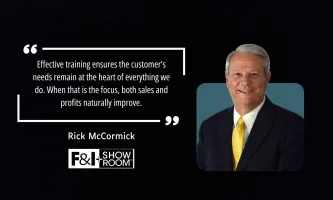
How can auto dealerships help F&I managers fulfill their vital role in the most effective ways? Industry expert Rick McCormick shares his insights on the best ways to train these professionals and help them maintain good habits.
Industry
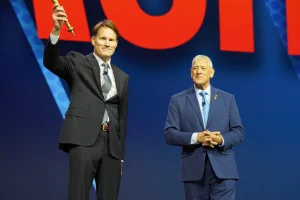
2026 NADA Chairman Rob Cochran knows a thing or two about leadership after decades in the business. He brings an emphasis on stewardship to his new role at the head of the country’s major auto retail trade group.
F&I
It may be human nature to back off when a customer seems to say no to a product or service. But experts say F&I managers should operate as though the answer will be the opposite.
F&I
A high profit per-vehicle retail can create a false sense of strength that masks underlying problems, while a low one may not reveal an operation that's actually efficient and well-balanced.
Industry
As America turns 250, explore how the automotive industry shaped jobs, culture, innovation, and mobility from Detroit assembly lines to today’s EV era.