



CNCDA: Calif. New-Vehicle Registrations Fall for the Fifth Straight Quarter
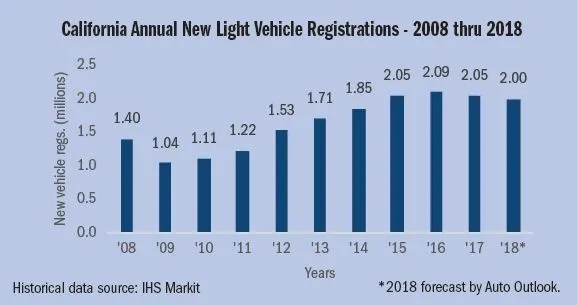
Despite the decline, the trade group expects the California market will end the year with around 2 million new-vehicle registrations. That would be a slight decline from the 2.05 million registrations the market recorded in 2017, providing further proof the market has plateaued after several years of big increases.

SACRAMENTO, Calif. — The California new-vehicle market declined for the fifth consecutive quarter during the period ending in June, providing further proof that the market has plateaued after several years of big increases.
New-vehicle registrations in the second quarter fell 1.1% from the year-ago period to 514,773 registrations. Year to date through June, new-vehicle registrations fell 2.2% from the year-ago period to 1.027 million, which is what the trade group predicted after new light vehicle registrations fell 3.4% from the year-ago period. The CNCDA predicts the market will end 2018 at around 2 million new-vehicle registrations.
“We are encouraged that California vehicle sales are on track to reach about 2 million for 2018,” said CNCDA Chairperson Taz Harvey of Dublin Mazda. “While the market continues to shift in types of vehicles sold, we are experiencing consistent buyer behavior geared more toward larger vehicles. This increased demand continues to demonstrate consumer interest in purchasing larger, more convenient, family-friendly vehicles to meet their transportation needs.”
According to the association, Trucks own 54.1% of the market, with first-half registrations climbing 5.6% from the year-ago period to 514.470. In contrast, first-half passenger car registrations fell 10.1% from the year-ago period to 512,826. The market’s first-half performance is on par with the rest of the country, which registered a 7.7% increase in light truck registrations through June and a 12.1% increase in passenger car registrations.
According to the CNCDA, the trend toward trucks is also reflected on the regional level — more so in Southern California, where light truck registrations increased 6.1% to 285,060 through June and passenger car sales decreased 11.1% to 300,791. In Northern California, first-half light truck registrations increased 3.7% to 161,994 percent, while passenger car registrations fell 10% to 137,584.
The CNCDA’s report also showed that electric and plug-in hybrid vehicle segments continue to gain ground, with new-vehicle registrations increasing 10.2% in the first half compared to the prior-year period. Looking closer at the data, plug-ins and electric vehicle sales were both up more than 1.4 percent combined through June. Hybrid sales, however, continued their long downward trend, with first-half registrations inching down 0.4% from a year ago to 40,011.
By brand, sales increased by more than 10% for 6 brands, with Toyota once again leading the way a 17% share of the market in the first half and the Honda Civic coming in as the best-selling model with registrations totaling 43,857. On the truck side, the Ford F-Series led the way through June with registrations totaling 26,336.
More Auto Finance

Interest Rates Further Squeeze Auto Consumers
Last month’s hike and a potential second increase this month add to a growing list of inflation woes that could continue to dent overall car sales.
Read More →
Mind Your Process
Consistent steps taken in various aspects of the F&I office can make valuable differences over time, similar to an outline for a best-selling book.
Read More →
Top Five Credit Application Fraud Flags
Compliance audits regularly reveal bad habits that can lead to fraud charges and should have been stamped out decades ago.
Read More →
More Auto Loans for the Taking in August
Riskier categories were on the uptick for the month as lenders loosened access in several areas while balancing out the exposure in another, Cox Automotive reported.
Read More →
July Was Hot for Auto Borrowers
Credit proved readily available for many, but most loans left buyers in negative territory, Cox Automotive said.
Read More →
Dealer Lender Preferences Revealed
When lenders provide consistent, fast service, their overall satisfaction scores with dealers greatly improve, according to JD Power research.
Read More →
Auto Refi Savings Surge
Consumers with 84-month auto loan terms who refinanced saved the most on monthly payments, according to a new report by auto refinancing provider Caribou.
Read More →
Subaru Enters Lending Business
The automaker follows other brands in adding captive financing in the U.S., and says the move will strengthen its position here.
Read More →
Positive Equity Reaches Record High
Mainstream vehicle owners who bought a car seven years ago are likely to have positive equity when trading in for a new vehicle, according to second-quarter Edmunds data.
Read More →
Dealerships Are Paying the Price for Extended Car Loans
Growing negative-equity scenarios mean such lengthy terms should be addressed in a forward-looking way to make them work for the dealer and the consumer down the road.
Read More →