



Tracking F&I Performance
The magazine’s reader survey reveals that average profit per new vehicle retailed still hovers around $800, and that F&I managers are averaging approximately two products per deal.

In an informal study, the magazine sought to benchmark F&I performance last year, and asked readers in October to provide their performance data for the first three quarters of 2011. Results showed that F&I managers performed slightly better than the year-ago period.
The average interest rate during the reporting period stood at 4.84 percent (median was 4.90 percent). Readers also listed Chase, Ally, Wells Fargo, Fifth Third Bank, Capital One, Bank of America, US Bank and TD Auto Finance as their top finance sources.
As for F&I tools used, 89.2 percent of respondents said they use a menu, while 48.6 percent said they also used electronic rating capabilities. As for electronic contracting of F&I products, 36.2 percent said they e-contract, while 35.2 percent said they’ve never used electronic contracting and rating tools.
As for acceptance rates, GAP, prepaid maintenance and service contracts made slight gains from the year-ago period, with respondents averaging about 2.09 products per deal (median was 2 products per deal). Theft-deterrent products and tire-and-wheel protection also penetrated well for respondents, with most other products recording acceptance rates below 20 percent.
This snapshot of F&I performance shows that while auto finance continued to loosen up, there were some restrictions. But it appears finance sources are more welcoming of F&I products.
(Click charts for larger image)
1. What Is Your Average Profit Per Retail Unit?
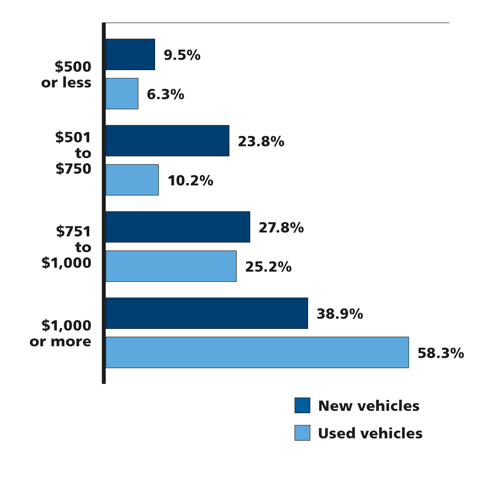
The average profit per new vehicle sold was $804.82, compared to $883.05 for used. The median average profit per vehicle retailed for new was $875.50 vs. $1,000 for used.
2. What Is Your GAP Penetration Rate?
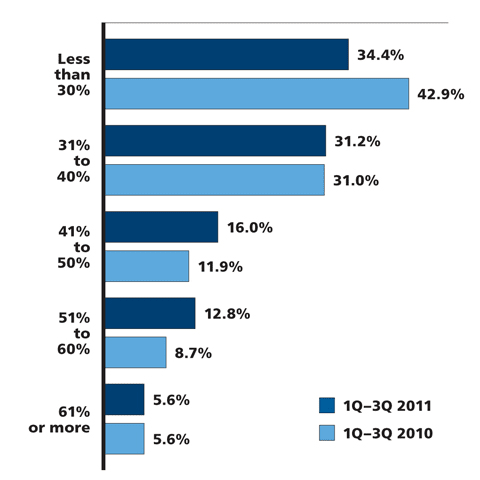
The average acceptance rate for GAP among respondents was 34.9 percent for the first three quarters of last year vs. 32 percent for the first three quarters of 2010.
3. What Is Your Vehicle Service Contract Penetration Rate?
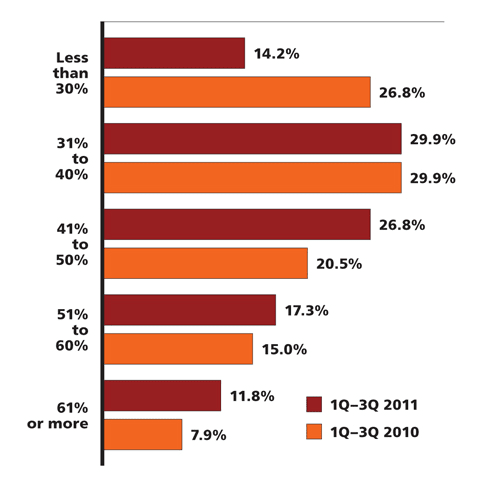
The average acceptance rate for service contracts increased from 35 percent for the first three quarters of 2010 to 46 percent for the first three quarters of last year.
[PAGEBREAK]
4. What Is Your Prepaid Maintenance Penetration Rate?
Customers accepted prepaid maintenance plans at a 21 percent clip for the first three quarters of 2011 vs. 19.1 percent for the same period in 2010.
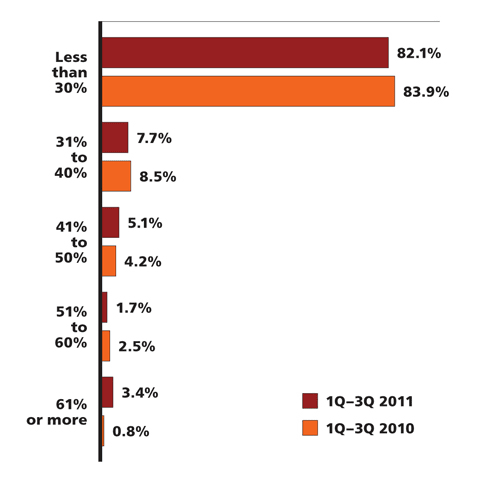
5. What Is Your Penetration Rate for All Other Products?
Theft-deterrent products and tire-and-wheel led the way for F&I managers last year, with appearance protection falling just below the 20 percent penetration mark.
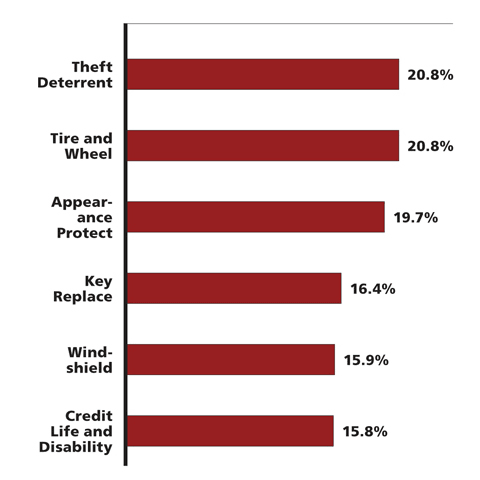
6. Which Sell Better, Aftermarket VSCs or Your OEM’s Coverage Plan?
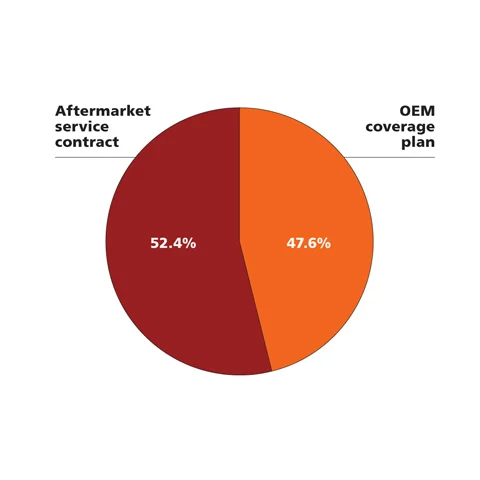
The disparity between aftermarket VSC plans and OEM plans wasn’t much. In last year’s study, 54 percent of respondents said aftermarket plans sold better vs. 46 percent for captive plans.
7. What Types of Plans Are You Currently Selling?
The breakdown virtually mirrored what was recorded in last year’s study, which had 91.4 percent of respondents indicating that they offer bumper-to-bumper plans.
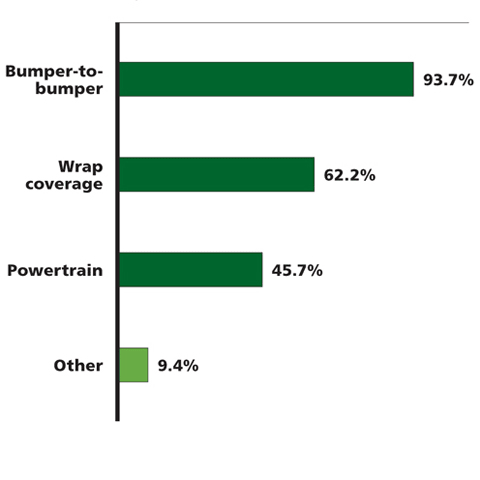
8. What Is Your Penetration Rate for Each Type of Plan?
The percentages were virtually identical to what was recorded in last year’s study, although powertrain acceptance rates dropped from 17.1 percent to 11.7 percent this year.
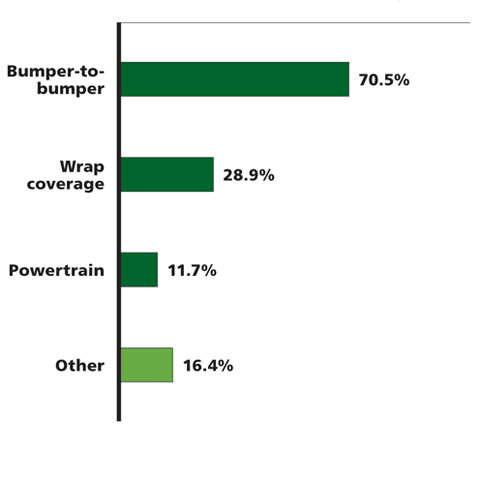
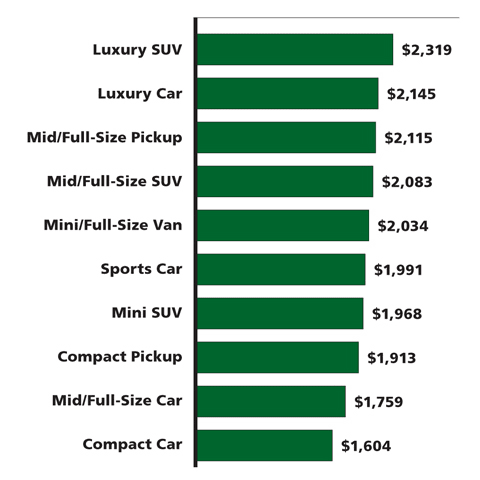
9. What Is the Average VSC Price New-Car Customers are Paying?
The study also asked readers about popular terms. Five-year, 100,000-mile plans led the way for new, followed by six-year, 75,000-mile and seven-year, 100,000-mile plans.
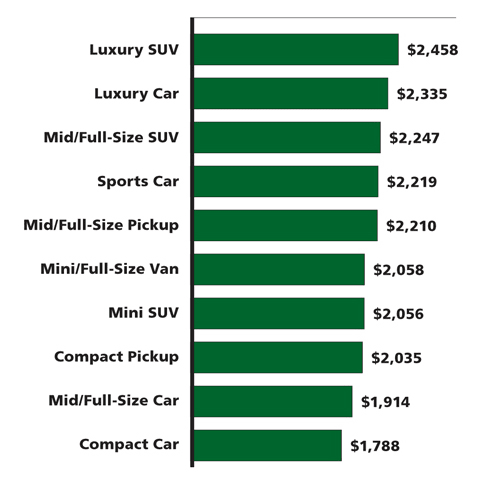
10. What Is the Average VSC Price Used-Car Customers are Paying?
The study also looked at popular terms for used. Three-year, 36,000-mile plans led the way, followed by four-year, 48,000-mile and five-year, 100,000-mile plans.
More Auto Finance

Interest Rates Further Squeeze Auto Consumers
Last month’s hike and a potential second increase this month add to a growing list of inflation woes that could continue to dent overall car sales.
Read More →
Mind Your Process
Consistent steps taken in various aspects of the F&I office can make valuable differences over time, similar to an outline for a best-selling book.
Read More →
Top Five Credit Application Fraud Flags
Compliance audits regularly reveal bad habits that can lead to fraud charges and should have been stamped out decades ago.
Read More →
More Auto Loans for the Taking in August
Riskier categories were on the uptick for the month as lenders loosened access in several areas while balancing out the exposure in another, Cox Automotive reported.
Read More →
July Was Hot for Auto Borrowers
Credit proved readily available for many, but most loans left buyers in negative territory, Cox Automotive said.
Read More →
Dealer Lender Preferences Revealed
When lenders provide consistent, fast service, their overall satisfaction scores with dealers greatly improve, according to JD Power research.
Read More →
Auto Refi Savings Surge
Consumers with 84-month auto loan terms who refinanced saved the most on monthly payments, according to a new report by auto refinancing provider Caribou.
Read More →
Subaru Enters Lending Business
The automaker follows other brands in adding captive financing in the U.S., and says the move will strengthen its position here.
Read More →
Positive Equity Reaches Record High
Mainstream vehicle owners who bought a car seven years ago are likely to have positive equity when trading in for a new vehicle, according to second-quarter Edmunds data.
Read More →
Dealerships Are Paying the Price for Extended Car Loans
Growing negative-equity scenarios mean such lengthy terms should be addressed in a forward-looking way to make them work for the dealer and the consumer down the road.
Read More →