
F&I
Consistency at Scale: Driving F&I Performance
With 75 rooftops across the Sunshine State, Morgan Auto Group has proven to Floridians that it knows a thing or two about driving performance in a competitive market. But it didn’t start at the top.


 MENU
MENU SEARCH
A high profit per-vehicle retail can create a false sense of strength that masks underlying problems, while a low one may not reveal an operation that's actually efficient and well-balanced.

Pexels/RDNE Stock Project
“There are three kinds of lies: lies, damn lies, and PVR.”
If Mark Twain were around the car business today, he might have added that last twist himself. Few metrics in retail automotive are quoted with more confidence or misunderstood more often than profit per vehicle retailed.
PVR has become the industry’s comfort number: quick to quote, easy to compare, and deceptively reassuring. It appears simple, a universal measure of success, yet that simplicity hides more than it reveals. The metric gives an illusion of precision while overlooking what truly drives profitability: consistency, customer trust, retention, and operational efficiency.
Understanding what builds that number matters far more than quoting it. F&I performance is best evaluated through three key dimensions: customer-focused, operational, and claims-based, each offering insights that PVR alone cannot.
The challenge with PVR is that it captures only one dimension of performance. It does not reflect modern dealership realities, such as fluctuating inventory, customer satisfaction, cost of sale, or long-term profitability. A high PVR can create a false sense of strength that masks underlying problems, while a low PVR may not reveal an operation that is actually efficient and well-balanced.

Pexels/Pixabay
To get a complete picture of F&I performance and long-term profitability, dealerships should track metrics that reflect sustainable profit rather than short-term gross.
To close this cautionary look at a PVR focus, it feels fitting to borrow a line from New York Yankee great Yogi Berra: "If you don't know where you are going, you'll end up someplace else." It is a perfect reminder that PVR is not the goal or proof of success. It is not even an accurate measure of a job well done. It is simply a byproduct of "the job."
In a dealership environment, ending up “someplace else” usually means discovering too late that the numbers looked good, but the foundation was weak. PVR is a result, not the roadmap. True performance is built through strong processes, aligned teams, and products that create lasting value.
ABOUT THE AUTHORS: Anne Revermann is Mountain States Area Manager at PRO Consulting, with more than 20 years of dealership experience and insight into sustainable profitability driver. Craig Almon is a founding member of the company with more than 30 years of experience in the retail auto industry and expertise on the balanced performance required for lasting profitability. This article was authored and edited according to F&I and Showroom editorial standards and style. Opinions expressed may not reflect that of the publication.
EDITOR’S NOTE: This article was authored and edited according to F&I and Showroom editorial standards and style. Opinions expressed may not reflect that of the publication.
Loading data...
F&I
With 75 rooftops across the Sunshine State, Morgan Auto Group has proven to Floridians that it knows a thing or two about driving performance in a competitive market. But it didn’t start at the top.






Industry
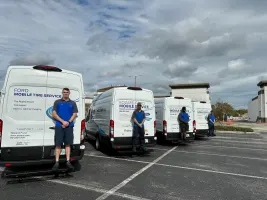
More auto dealerships are offering mobile servicing for today’s convenience-minded consumers to boost business and stand out from competition, though it may not fit every store.
Industry
Since finance-and-insurance was added to the auto dealership, most stores’ F&I teams have been separated from sales like a car’s trunk is separated from the engine. It doesn’t have to – and shouldn’t – be that way.
F&I
Finance has historically been the last step in the car-buying process, but it doesn’t have to be. The customer’s journey starts long before they arrive at the dealership, and so should F&I’s involvement.
Digital
Digital retailing has not made the F&I manager obsolete. If anything, it has revealed how valuable the role can become when technology is used correctly.
F&I
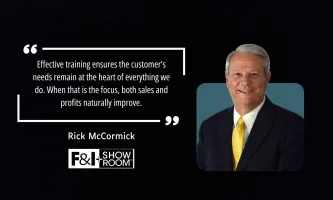
How can auto dealerships help F&I managers fulfill their vital role in the most effective ways? Industry expert Rick McCormick shares his insights on the best ways to train these professionals and help them maintain good habits.
Industry
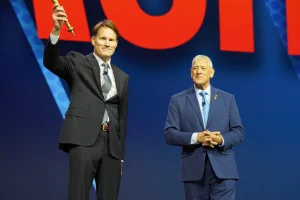
2026 NADA Chairman Rob Cochran knows a thing or two about leadership after decades in the business. He brings an emphasis on stewardship to his new role at the head of the country’s major auto retail trade group.
F&I
It may be human nature to back off when a customer seems to say no to a product or service. But experts say F&I managers should operate as though the answer will be the opposite.
F&I
A high profit per-vehicle retail can create a false sense of strength that masks underlying problems, while a low one may not reveal an operation that's actually efficient and well-balanced.
Industry
As America turns 250, explore how the automotive industry shaped jobs, culture, innovation, and mobility from Detroit assembly lines to today’s EV era.