
F&I
Consistency at Scale: Driving F&I Performance
With 75 rooftops across the Sunshine State, Morgan Auto Group has proven to Floridians that it knows a thing or two about driving performance in a competitive market. But it didn’t start at the top.


 MENU
MENU SEARCH
Digital retailing has not made the F&I manager obsolete. If anything, it has revealed how valuable the role can become when technology is used correctly.
The best digital retailing systems are not replacing F&I managers. They are helping them become more effective, transparent and customer-focused.
Canva
For years, dealers have wrestled with the question of how digital retailing will affect the traditional finance-and-insurance process. Some have suggested it will make F&I as we know it obsolete. The last thing online shoppers want, they argue, is to be pulled into an after-sale process pushing products and services they don’t understand at a time when they thought the car-buying process was complete.
During the pandemic, many believed the transition was already under way. With virtually all consumers shopping online, dealerships scrambled to implement start-to-finish digital tools, prompting some industry observers to predict the F&I process would soon become fully automated, if not go away altogether. It did not.
What actually happened is more interesting and far more encouraging, for F&I professionals and dealership profitability alike. Digital retailing has not made the F&I manager obsolete. If anything, it has revealed how valuable the role can become when technology is used correctly.
The challenge facing F&I managers today is not whether digital retailing will replace them. It is learning how to use it to create a better customer experience while improving dealership performance.
JD Power has years of analysis spanning digital retailing tools, customer behavior and dealership processes. During Covid, adoption accelerated rapidly because dealers and consumers had little choice. The drive to institute a fully online transaction process was sudden and urgent.
But once the market stabilized, the data revealed something important: Customers do not necessarily want a completely digital experience. They want a convenient and trustworthy experience.
Nearly every customer researches vehicles online today. That bridge was crossed years ago. But when it comes to financing, submitting personal information, or evaluating protection products, customers still want the reassurance and clarity that an in-person transaction provides.
Many are hesitant to enter sensitive information online. Others begin the process digitally but still prefer to complete the transaction in the dealership. That hybrid reality creates enormous opportunities for F&I managers who are willing to adapt.
Too often, digital retailing is framed as a battle between technology and people. That misses the point entirely. The best digital retailing systems are not replacing F&I managers but helping them become more effective, transparent and customer-focused.
One of the biggest opportunities involves how protection products are presented. Traditionally, many F&I offices relied heavily on face-to-face persuasion. The assumption was that products sold best when a manager could personally convince the customer of their value.
But data from Darwin Automotive, which JD Power acquired several years ago, showed us something surprising. Customers frequently make better and more confident purchasing decisions when their needs are recognized and buying pressure is reduced.
Before recommending products, you must first understand the customer. How many miles does the person drive each year? How long will he or she keep the vehicle? What is the comfort level with unexpected repair expenses? Once you understand those factors, software can recommend products that are more aligned with the buyer’s needs.
That changes the nature of the conversation completely. When customers feel the recommendations are tailored to their situations instead of being pushed indiscriminately, trust increases.
And interestingly, when customers are given time to review options privately, many choose more protection products than they would using traditional methods. They are not reacting to sales tactics. They are evaluating their own needs.
Customers today are highly informed. They don’t want to feel manipulated. But they absolutely want help understanding risk, budgeting for future repairs, and protecting their purchases. F&I managers who embrace a consultative approach can build stronger customer relationships while still driving profitability.
Process consistency is equally critical. One of the biggest frustrations consumers report is time spent in the dealership. Their time is critically important to them, and they are especially irritated by duplication of effort.
If customers spend time online entering information, structuring payments and submitting credit applications, they don’t want to arrive at the dealership and be asked to start over. That creates dissatisfaction before the conversation even begins.
The good news is that this problem is entirely solvable. Dealerships should consider fully integrating digital retailing into their in-store operations instead of treating it as a separate system.
If a customer completes part of the process online, dealership staff should seamlessly continue from that point forward. When implemented properly, digital retailing dramatically reduces transaction time and improves throughput for both sales and F&I.
At the same time, data science is opening entirely new possibilities. There is now the ability to analyze large amounts of transaction data in real time.
Using advanced AI tools, the analysis becomes a single source of truth for F&I performance, identifying patterns showing which products customers are most likely to purchase based on vehicle type, geography, ownership behavior and other factors. The result is a new level of precision that allows dealerships to make recommendations that are more personalized, timely and credible.
That is where the industry is heading: smarter recommendations, better customer alignment and less wasted effort. Importantly, none of this eliminates the need for experienced F&I professionals.
Compliance requirements alone ensure that knowledgeable managers remain essential. Beyond that, dealerships need to become more disciplined about measuring performance and benchmarking. If dealers understand how their F&I performance compares with industry averages and best practices, they can identify meaningful opportunities for growth.
The most successful F&I managers of the future will not simply be strong closers. They will be process leaders, technology adopters and trusted advisers. They will understand how to use digital tools to create efficiency while maintaining the human connection customers still value.
Far from becoming obsolete, F&I professionals will remain an essential part of any successful dealership operation.
Doug Betts, a veteran of the automotive industry, is president of JD Power's automotive and dealer solutions divisions.
Loading data...
F&I
With 75 rooftops across the Sunshine State, Morgan Auto Group has proven to Floridians that it knows a thing or two about driving performance in a competitive market. But it didn’t start at the top.
Industry
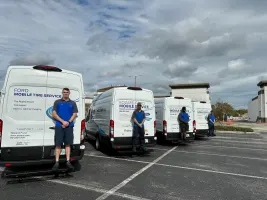
More auto dealerships are offering mobile servicing for today’s convenience-minded consumers to boost business and stand out from competition, though it may not fit every store.

Industry
Since finance-and-insurance was added to the auto dealership, most stores’ F&I teams have been separated from sales like a car’s trunk is separated from the engine. It doesn’t have to – and shouldn’t – be that way.
F&I
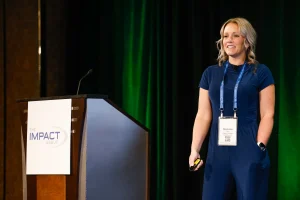
Finance has historically been the last step in the car-buying process, but it doesn’t have to be. The customer’s journey starts long before they arrive at the dealership, and so should F&I’s involvement.

Digital
Digital retailing has not made the F&I manager obsolete. If anything, it has revealed how valuable the role can become when technology is used correctly.
F&I
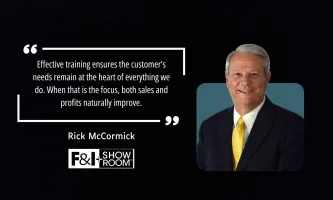
How can auto dealerships help F&I managers fulfill their vital role in the most effective ways? Industry expert Rick McCormick shares his insights on the best ways to train these professionals and help them maintain good habits.
Industry
2026 NADA Chairman Rob Cochran knows a thing or two about leadership after decades in the business. He brings an emphasis on stewardship to his new role at the head of the country’s major auto retail trade group.

F&I
It may be human nature to back off when a customer seems to say no to a product or service. But experts say F&I managers should operate as though the answer will be the opposite.

F&I
A high profit per-vehicle retail can create a false sense of strength that masks underlying problems, while a low one may not reveal an operation that's actually efficient and well-balanced.

Industry
As America turns 250, explore how the automotive industry shaped jobs, culture, innovation, and mobility from Detroit assembly lines to today’s EV era.