



ACSI: Customer Satisfaction Weakens as Recalls Continue
The American Customer Satisfaction Index showed declines for most automakers, with imports topping domestic brands. The nameplate with the highest score was Toyota’s Lexus.
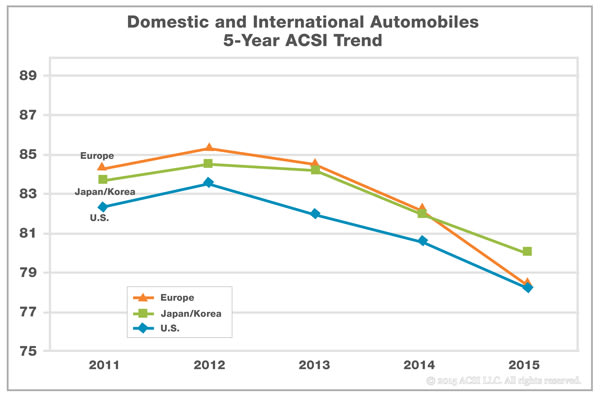
ANN ARBOR, Mich. — Car-buyer satisfaction is down for a third straight year as prices rise and recalls continue, according to new data from the American Customer Satisfaction Index (ACSI).
Customer satisfaction with automobiles fell 3.7% to 79 on ACSI’s 100-point scale, with car owners reporting a 40% increase in recalls compared to a year ago, which — along with rising prices — is damaging driver satisfaction and buyer satisfaction.
“While it is true that all cars are now much better than they were 10 to 20 years ago, it is alarming that so many of them have quality problems,” says Claes Fornell, ACSI chairman and founder. “The number of recalls is at an all-time high. This should not happen with modern manufacturing technology and has negative consequences for driver safety, costs and customer satisfaction.”
As for rising prices, David VanAmburg, ACSI director, noted: “Higher prices are clearly hurting car buyer satisfaction, but low prices also have artificially inflated satisfaction in the years prior. The government’s Cash for Clunkers program helped push driver satisfaction to its highest level ever in 2009 — and heavy discounting as the economy recovered kept satisfaction up for a while. The customer satisfaction levels the auto industry is seeing now are more consistent with historical ACSI data.”
Among 27 nameplates tracked by the ACSI, 15 lost ground in customer satisfaction and only two improved from a year ago — both foreign-made nameplates. Foreign-made cars have a significant advantage in customer satisfaction and 77% of the above-average nameplates in the ACSI are imports. The highest-scoring automakers remain Japanese and luxury brands in general. Considering domestic automakers only, Ford, which includes the Lincoln nameplate, is the sole manufacturer lead the way with an over satisfaction score of 81. General Motors slipped 3% to 79 and Fiat Chrysler fell 5% to 75.
At the top was Toyota’s Lexus, which overtook Mercedes-Benz (score fell 3% to 83) with a score of 84. Additionally, after a sharp drop to the bottom of the industry a year ago, Honda’s luxury brand Acura appears to have turned a corner. One of only two brands to improve this year, Acura rebounded 8% to 83, tying both Mercedes and Lincoln for second place.
BMW – the other gainer – saw its score rise 3% to 82. Also at 82 were Subaru (down 4%) and Toyota (down 1%), which made them the top-scoring mass market automakers. Volkswagen (down 5%), Buick (down 4%) and Honda (down 4%) all slip into a tie at 80. Cadillac and Mazda also scored an 80, unchanged since last year. Meanwhile, Ford (down 2%) and Chevrolet (down 4%) saw their scores fall to 79 alongside Volvo, which returns to the ACSI near the bottom of the luxury category.
The remaining automakers recorded below-average scores of 87, including GMC and Kia (each down 5%) as well as Audi (down 1%). Nissan (down 5%) and its luxury nameplate Infiniti recorded a score of 77, while Mitsubishi posted its first ACSI score of 77. BMW’s MINI entered the Index at 76, tying Fiat-Chrysler’s Dodge. At the bottom of the category are all four Fiat Chrysler brands: Dodge (down 3% to 76), Jeep (down 5% to 75) and Chrysler (down 9% to 74) and Fiat (73).
The ACSI report, which is based on 4,294 customer surveys collected in the second quarter of 2015, is available for free download.
More Auto Finance

More Auto Loans for the Taking in August
Riskier categories were on the uptick for the month as lenders loosened access in several areas while balancing out the exposure in another, Cox Automotive reported.
Read More →
July Was Hot for Auto Borrowers
Credit proved readily available for many, but most loans left buyers in negative territory, Cox Automotive said.
Read More →
Dealer Lender Preferences Revealed
When lenders provide consistent, fast service, their overall satisfaction scores with dealers greatly improve, according to JD Power research.
Read More →
Auto Refi Savings Surge
Consumers with 84-month auto loan terms who refinanced saved the most on monthly payments, according to a new report by auto refinancing provider Caribou.
Read More →
Subaru Enters Lending Business
The automaker follows other brands in adding captive financing in the U.S., and says the move will strengthen its position here.
Read More →
Positive Equity Reaches Record High
Mainstream vehicle owners who bought a car seven years ago are likely to have positive equity when trading in for a new vehicle, according to second-quarter Edmunds data.
Read More →
Dealerships Are Paying the Price for Extended Car Loans
Growing negative-equity scenarios mean such lengthy terms should be addressed in a forward-looking way to make them work for the dealer and the consumer down the road.
Read More →
Trade-Ins in Negative Equity Reach New Heights
As such trade-ins rise in frequency, so do monthly loan payment amounts and interest rates, according to second-quarter data compiled by Edmunds.
Read More →
Auto Credit Plentiful
June numbers show lenders are readily granting access, including to risky borrowers, as consumers leverage themselves to take on high prices.
Read More →
Automotive Consumers Sink Further in Debt
Most financing metrics hit records in the second quarter as more buyers locked themselves into long terms and high monthly payments.
Read More →