



A.M. Best Enterprise Risk Model Offers New Insight Into Risk-Adjusted Value of Company Earnings
NEW YORK -- A.M. Best Co. has introduced a new analytical model that provides a common standard for insurance companies worldwide to assess and manage risk and capital demands. The A.M. Best Enterprise Risk Model (Best's ERM), developed with Seabury Insurance Capital LLC, an advisory firm that specializes in the insurance and financial services industry, provides a view of an insurance enterprise's financial risk and gives insurers a systematic and scientific approach to managing it.
A number of major insurance organizations worldwide are participating in the beta test of Best's ERM. Following this test period, A.M. Best will begin to phase the model into its rating process. Analytical tools, such as the enterprise risk model and Best's Capital Adequacy Ratio (BCAR), help analysts to understand how well a company's asset, underwriting, and business risks are supported by its level of capital.
Best's ERM is based on value-at-risk (VaR) concepts that are widely used among commercial banks, investment banks, and asset management companies. Given financial services diversification and convergence, A.M. Best anticipates that the trend toward VaR analysis among insurers will grow, and views the integration of new analytics as essential to maintain the integrity of its insurer financial strength rating methodology. By incorporating VaR concepts, Best's ERM captures and considers standard risks associated with the financial services community at large, including both insurance and non-insurance risks. A.M. Best views the ERM as an important new tool that will complement its existing analytics, including BCAR, which will be maintained.
"Best's new enterprise model, together with BCAR, provides a comprehensive and dynamic view of insurers' capital adequacy," Michael Albanese, group vice president of A.M. Best's Global Financial Services, said. "This model," Albanese added, "affords a much-needed, macro-level view of an organization by quantifying the risk to its future surplus arising from changes in underlying variables such as credit or market risk. It also quantifies for an organization the benefits of its diversification."
Although the ability to identify diversification benefits offers enormous advantages for an insurer, not all models in use recognize those benefits. Among the models that do, some have a built-in, static assumption about the correlation between an insurer's assets and liabilities. The higher the correlation, the higher the risk. As a result, no matter how well a company diversifies and structures its business, it is not necessarily viewed any more favorably from a risk-based capital standard than a company that pays no attention to diversification and intelligent structuring.
"Best's Enterprise Risk Model is a rating as well as risk management tool," explained Timothy Freestone, Seabury's managing partner. "It will provide both A.M. Best and insurance companies with added insight into the risk-adjusted value of earnings. Insurers can use the A.M. Best Enterprise Risk Model to identify with greater accuracy their diversification benefits and to operate with a more efficient level of capital that will enable them to meet the needs of their policyholders and deliver higher returns on capital for shareholders."
The new model calculates both the risk of the public and private assets that tend to dominate insurance companies' investment portfolios as well as companies' insurance liabilities.
Most importantly, Best's ERM aggregates all of an insurance enterprise's financial risks into a single composite score for much greater transparency of relative risks between insurance companies.
More F&I

AI: Facilitator, Not Fixer, in F&I
The dealerships that thrive in the years ahead will be those that embrace technology while continuing to invest in the people who make customer interactions count.
Read More →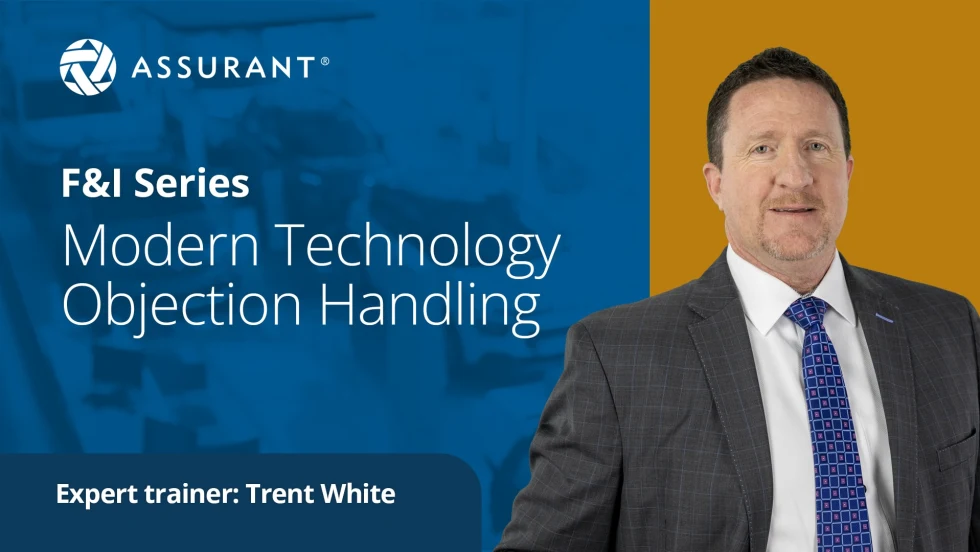
Modern Technology Objection Handling
In this video, Trent White shares how to confidently handle technology-based objections by helping customers understand the value of protection, even with modern vehicle technology.
Read More →
Consistency at Scale: Driving F&I Performance
With 75 rooftops across the Sunshine State, Morgan Auto Group has proven to Floridians that it knows a thing or two about driving performance in a competitive market. But it didn’t start at the top.
Read More →
Gitty Up on GAP
The foundational finance-and-insurance product hasn’t kept up with the latest conditions for auto dealers. Is the time ripe?
Read More →
How AI-Powered Coaching Is Transforming F&I Performance
See how AI-powered coaching can turn F&I customer conversations into actionable insights that support compliance, performance and profitability
Read More →
Sell Value, Build Trust
In this video, Trent White explains why selling on value, not fear, builds lasting customer trust, reduces cancellations, and drives long-term success.
Read More →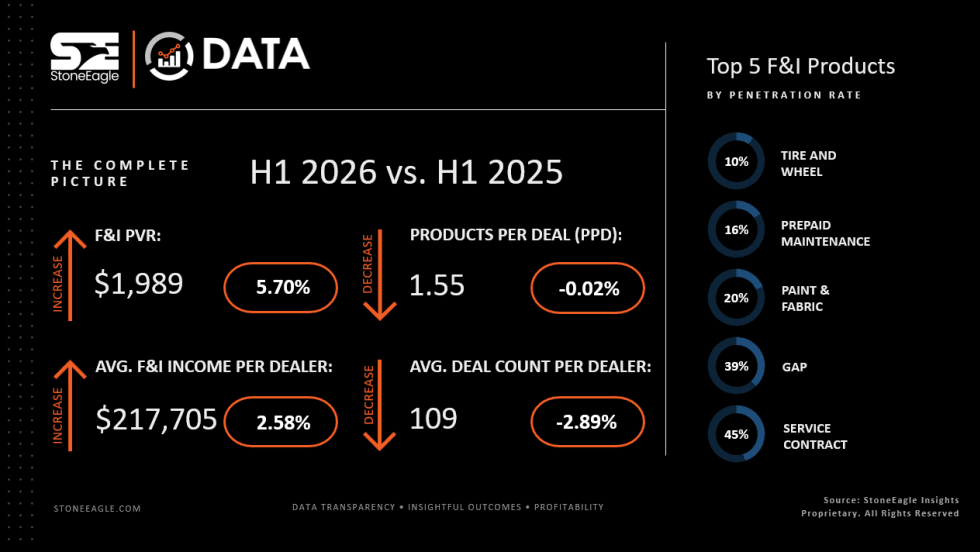
F&I Sales Give Dealers First-Half Lift
Product business shored up total profits to avoid an overall revenue tanking as product penetrations held steady, StoneEagle reported.
Read More →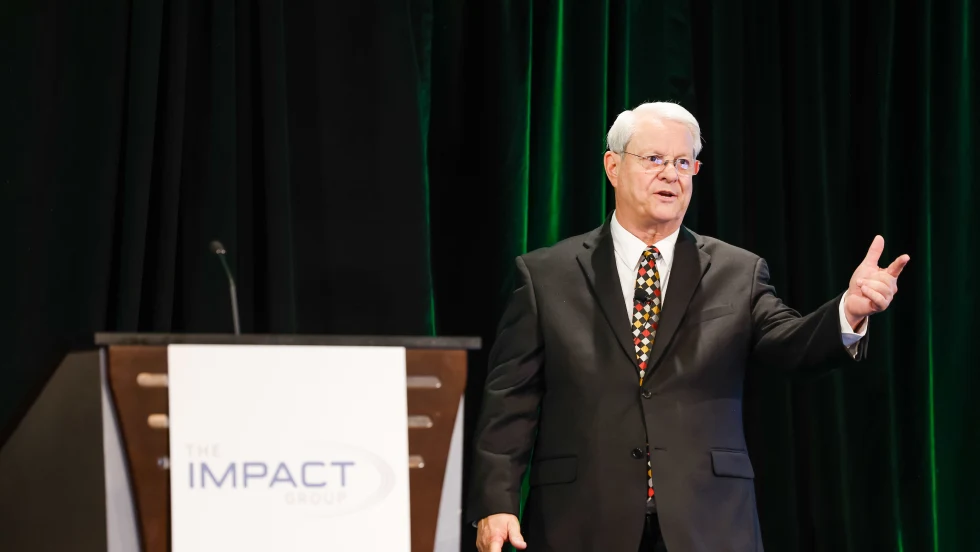
Targeted Training Drives Results
Today’s technology, instead of threatening F&I managers, can actually make them better, according to an industry veteran who’s watched market setbacks roil the unprepared.
Read More →
Double the Change, Double the Chance
When an F&I manager gets a customer refusal, it’s a wise move to tweak more than one thing in the product offering.
Read More →
Just Do It
F&I managers need training, but instead of resisting application or expecting perfection, they should improve by simply acting on what they learn.
Read More →