



Biden Announces Funds for EV Chargers at Auto Show
First $900 million coming to help 35 states build network of stations. President also promotes tax breaks to buy EVs built in North America.

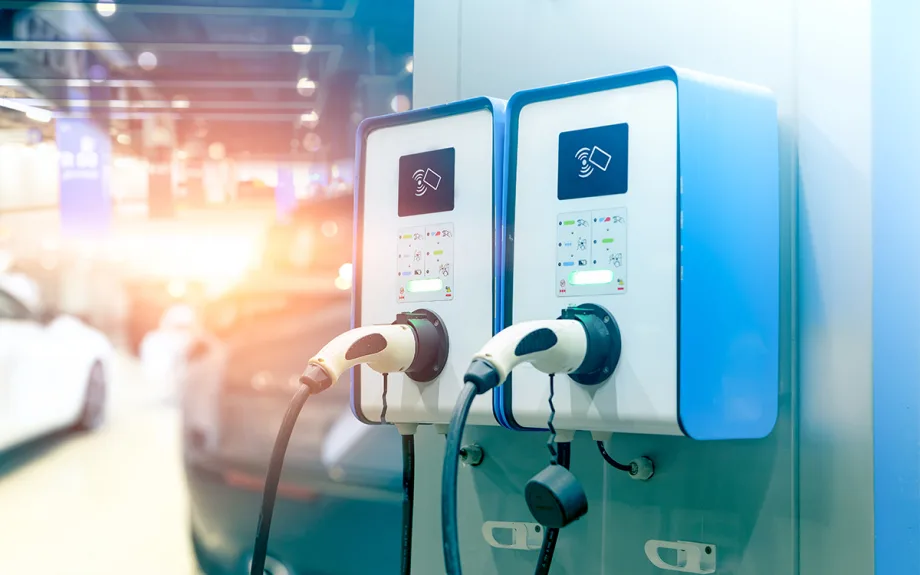
President Biden has a goal that up to half of vehicles sold in the U.S. be electric by 2030.
IMAGE: Getty Images/Fahroni
President Biden, attending the Detroit auto show Wednesday, was scheduled to announce $900 million in U.S. funding for electric vehicle charging stations in 35 states.
Biden promoted the Inflation Reduction Act passed in August that includes tax incentives to buy EVs, and he toured an array of U.S.-made electric, hybrid and combustion vehicles.
The president planned to announce the first $900 million for EV charger development. His 2021 infrastructure legislation provides $5 billion over five years to help states build a network of charging stations.
Meanwhile, the Inflation Reduction Act calls for EVs to be built in North America in order for owners to qualify for a new federal tax credit of as much as $7,500. The vehicles’ batteries must also be made on the continent, and battery minerals must be made or recycled here, all requirements intended to construct a U.S. EV supply chain to end dependence on Asia, particularly China.
The law spurred automakers to acquire compliant parts and materials so that their vehicles are eligible for the credit. Ford and GM ramped up EV production, though both had already planned new EV battery factories in joint ventures with battery makers.
After the act passed, other automakers followed with similar announcements for facilities in North America, though some had been planned for months. EV batteries are heavy, so it’s less expensive to build them stateside due to overseas shipping costs.
Biden has a goal that up to half of vehicles sold in the U.S. be electric by 2030.
READ MORE: U.S., Mexico Plan to Team Up on EV Production
Originally posted on Auto Dealer Today
More Auto Finance
Interest Rates Further Squeeze Auto Consumers
Last month’s hike and a potential second increase this month add to a growing list of inflation woes that could continue to dent overall car sales.
Read More →
Mind Your Process
Consistent steps taken in various aspects of the F&I office can make valuable differences over time, similar to an outline for a best-selling book.
Read More →
Top Five Credit Application Fraud Flags
Compliance audits regularly reveal bad habits that can lead to fraud charges and should have been stamped out decades ago.
Read More →
More Auto Loans for the Taking in August
Riskier categories were on the uptick for the month as lenders loosened access in several areas while balancing out the exposure in another, Cox Automotive reported.
Read More →
July Was Hot for Auto Borrowers
Credit proved readily available for many, but most loans left buyers in negative territory, Cox Automotive said.
Read More →
Dealer Lender Preferences Revealed
When lenders provide consistent, fast service, their overall satisfaction scores with dealers greatly improve, according to JD Power research.
Read More →
Auto Refi Savings Surge
Consumers with 84-month auto loan terms who refinanced saved the most on monthly payments, according to a new report by auto refinancing provider Caribou.
Read More →
Subaru Enters Lending Business
The automaker follows other brands in adding captive financing in the U.S., and says the move will strengthen its position here.
Read More →
Positive Equity Reaches Record High
Mainstream vehicle owners who bought a car seven years ago are likely to have positive equity when trading in for a new vehicle, according to second-quarter Edmunds data.
Read More →
Dealerships Are Paying the Price for Extended Car Loans
Growing negative-equity scenarios mean such lengthy terms should be addressed in a forward-looking way to make them work for the dealer and the consumer down the road.
Read More →