



Big Incentive: Edmunds.com Reports Record Highs in December
Edmunds.com estimated today that the average automotive manufacturer incentive in the U.S. was $2,902 per vehicle sold in December 2008, up $221, or 8.2 percent, from November 2008, and up $443, or 18.0 percent, from December 2007.
SANTA MONICA, Calif. — Automotive retail data provider Edmunds.com announced that the average manufacturer incentive in the U.S. was $2,902 per vehicle sold in December 2008, up $221, or 8.2 percent, from November 2008, and up $443, or 18.0 percent, from December 2007.
"Never before has the December average incentive been this high," stated Jesse Toprak, executive director of industry analysis for Edmunds.com. "Automakers have been pulling out all the stops to keep motivating shoppers during these tough times.”
According to Edmunds.com, combined incentives spending for domestic manufacturers averaged $3,778 per vehicle sold in December 2008, up from $3,554 in November 2008. From November 2008 to December 2008, European automakers increased incentives spending by $451 to $2,963 per vehicle sold; Japanese automakers increased incentives spending by $57 to $1,738 per vehicle sold; and Korean automakers decreased incentives spending by $141 to $2,466 per vehicle sold.
In December 2008, the industry's aggregate incentive spending is estimated to have totaled approximately $2.5 billion, up 23.8 percent from November 2008. Chrysler, Ford and General Motors spent an aggregate of $1.6 billion, or 65.4 percent of the total; Japanese manufacturers spent $536 million, or 21.7 percent; European manufacturers spent $232 million, or 9.4 percent; and Korean manufacturers spent $89 million, or 3.6 percent.
"No automaker and no market segment has been immune to the economic fallout," said Edmunds' AutoObserver.com senior editor Michelle Krebs. "Total unit sales remain pathetic compared to original expectations, incentives on SUVs and trucks are at record levels even though gas prices are below two dollars per gallon, and Toyota incentives are double what they were this time last year."
Among vehicle segments, premium luxury cars had the highest average incentives, $6,601 per vehicle sold, followed by large trucks at $5,434. Subcompact cars had the lowest average incentives per vehicle sold, $482, followed by compact cars at $1,194. Analysis of incentives expenditures as a percentage of average sticker price for each segment shows large trucks averaged the highest, 16.5 percent, followed by large cars at 11.8 percent of sticker price. Subcompact cars averaged the lowest with 3.0 percent and sport cars followed with 4.5 percent of sticker price.
Comparing all brands, in December, MINI spent virtually nothing, followed by Scion at $145 per vehicle sold. At the other end of the spectrum, Lincoln spent the most, $5,975, followed by SAAB at $5,508 per vehicle sold. Relative to their vehicle prices, Mercury and Jeep spent the most, 15.4 percent and 15.2 percent of sticker price, respectively; while MINI spent virtually nothing and Scion spent 0.9 percent.
Interestingly, leasing has become more popular since the financial industry collapse in September. Before the implosion, leasing represented only 10 percent of total new car sales, the lowest level in recent history. In December, leasing represented about 13 percent of all new car sales, and was close to or more than 50 percent for luxury brands such as Audi, BMW, Infiniti and Mercedes-Benz.
"Luxury automakers are finding their best success in marketing low lease rates now that consumers are very conscious of their monthly expenses," Toprak said. "Leasing allows consumers to get a lot of car for the money with no long term commitment, and that is a very desirable proposition in today’s economy."
More F&I

Modern Technology Objection Handling
In this video, Trent White shares how to confidently handle technology-based objections by helping customers understand the value of protection, even with modern vehicle technology.
Read More →
Consistency at Scale: Driving F&I Performance
With 75 rooftops across the Sunshine State, Morgan Auto Group has proven to Floridians that it knows a thing or two about driving performance in a competitive market. But it didn’t start at the top.
Read More →
Gitty Up on GAP
The foundational finance-and-insurance product hasn’t kept up with the latest conditions for auto dealers. Is the time ripe?
Read More →
How AI-Powered Coaching Is Transforming F&I Performance
See how AI-powered coaching can turn F&I customer conversations into actionable insights that support compliance, performance and profitability
Read More →
Sell Value, Build Trust
In this video, Trent White explains why selling on value, not fear, builds lasting customer trust, reduces cancellations, and drives long-term success.
Read More →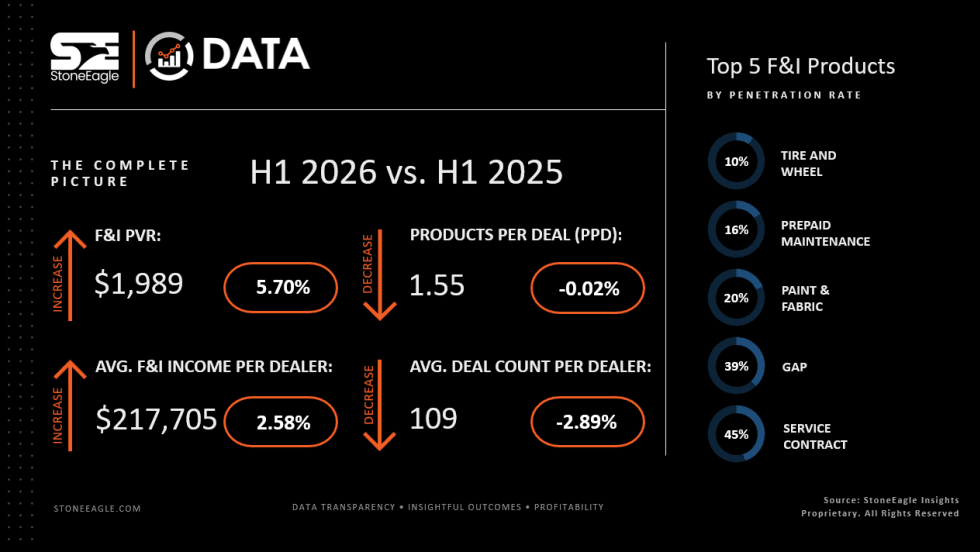
F&I Sales Give Dealers First-Half Lift
Product business shored up total profits to avoid an overall revenue tanking as product penetrations held steady, StoneEagle reported.
Read More →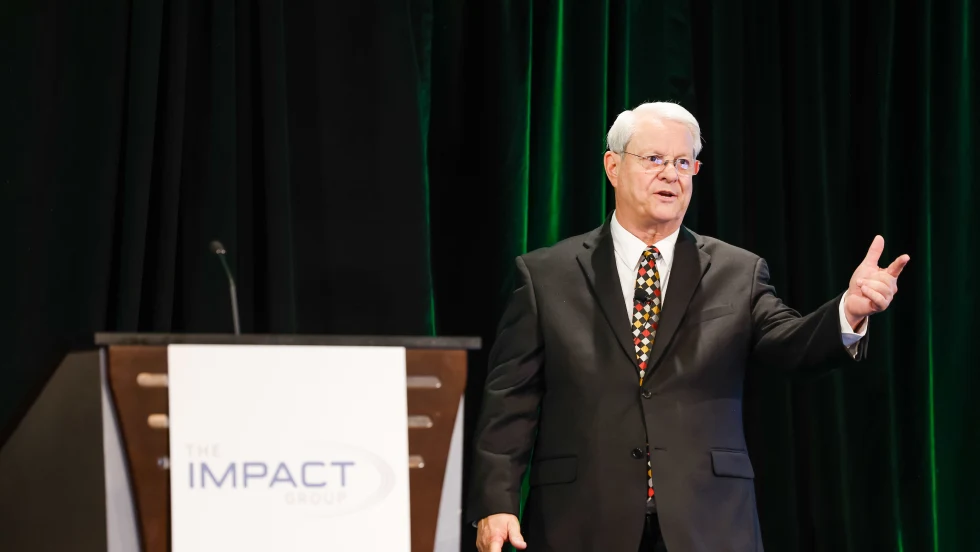
Targeted Training Drives Results
Today’s technology, instead of threatening F&I managers, can actually make them better, according to an industry veteran who’s watched market setbacks roil the unprepared.
Read More →
Double the Change, Double the Chance
When an F&I manager gets a customer refusal, it’s a wise move to tweak more than one thing in the product offering.
Read More →
Just Do It
F&I managers need training, but instead of resisting application or expecting perfection, they should improve by simply acting on what they learn.
Read More →
Dealer Lender Preferences Revealed
When lenders provide consistent, fast service, their overall satisfaction scores with dealers greatly improve, according to JD Power research.
Read More →