



CFPB to Oversee Nonbank Auto Finance Companies
The CFPB finalized last week its proposal to oversee nonbank auto finance companies. The finalized rule, which left out recommendations submitted by an auto finance trade group, will take effect 60 days after publication in the Federal Register.

WASHINGTON, D.C. — The Consumer Financial Protection Bureau (CFPB)’s proposal to extend its supervision to any nonbank auto finance company that makes, acquires or refinances 10,000 or more loan or leases in a year has cleared its last hurdle, with the bureau publishing last week its finalized rule and the examination procedures it will follow to ensure finance companies are complying with consumer financial laws.
The finalized rule, which officials said remained largely unchanged from the bureau’s original proposal last September, marks the first time auto finance companies will be regulated at the federal level. And under the rule, the bureau estimates it will have authority to supervise about 34 of the largest nonbank auto finance companies, including captive finance companies, and their affiliated companies that engage in auto financing. These companies, according to the CFPB, originate around 90% of nonbank auto loans and leases.
“Auto loans and leases are among the most significant and complex financial transactions in a typical consumer’s life,” said CFPB Director Richard Cordray. “Today’s rule will help ensure the largest auto finance companies treat consumers fairly.”
The American Financial Services Association, a national trade group representing the consumer credit industry, had requested in a memo submitted on Dec. 8, the last day of the rule’s public comment period, that the bureau raise its threshold to 50,000 loans and lease, noting that the 10,000-origination threshold contradicted the Small Business Administration’s small business definition. But the finalized rule didn’t reflect that recommendation.
“As anticipated, the [CFPB] only made minor changes to its original proposal to define larger participants in nonbank auto finance,” Chris Stinebert, the association’s president and CEO, said in a statement issued to F&I and Showroom. “The CFPB’s rule retained its original transaction threshold, meaning that nonbank auto finance companies that make, acquire or refinance 10,000 or more loans or leases in a year will come under CFPB supervision and enforcement.”
But not all of the association’s recommendations were ignored. “At the AFSA’s recommendation, the CFPB broadened the definition of asset-backed securities to ensure that they are excluded from the 10,000-transaction threshold,” Stinebert added. “In addition, the CFPB modified the definition of refinancing for the purpose of the threshold. Specifically, the bureau clarified that a refinancing must be secured by an automobile to be included in the definition.”
The finalized rule also defines additional automobile leasing activities for coverage by certain consumer protections afforded by the Dodd-Frank Act. The AFSA, however, had asked that the bureau refrain from overreach regarding leases.
“Basically, the final rule remains largely unchanged regarding auto leasing,” Stinebert noted.
To coincide with its new authority, the bureau updated its Supervisory and Examination Manual to provide guidance on how it will monitor the bank and nonbank auto finance companies that it supervises. Among other things, examiners will be evaluating whether auto finance companies are:
Fairly marketing and disclosing auto financing terms: The bureau will be examining auto finance companies that market directly to consumers to ensure they are not using deceptive tactics to market loans or leases. The bureau is also looking to ensure that consumers understand the terms they are getting.
Providing accurate information to credit bureaus: The bureau will assess whether information auto finance companies provide to credit bureaus is accurate. The CFPB recently took an enforcement action against an auto finance company that distorted consumer credit records by inaccurately reporting information like the consumers’ payment history and delinquency status to credit bureaus.
Treating consumers fairly when collecting debts: The bureau will assess whether auto finance companies are using illegal debt collection tactics. The Bureau will be looking to ensure that collectors are relying on accurate information and using legal processes when they collect on debts. The bureau also will review the repossession process, including the practices of third-party service providers that are employed to repossess autos.
Lending fairly: The bureau will assess whether auto finance companies’ practices comply with the ECOA and other bureau authorities protecting consumers.
A copy of the rule can be accessed by clicking here, while the Examination Procedures for Auto Finance can be accessed by clicking here.
More F&I

AI: Facilitator, Not Fixer, in F&I
The dealerships that thrive in the years ahead will be those that embrace technology while continuing to invest in the people who make customer interactions count.
Read More →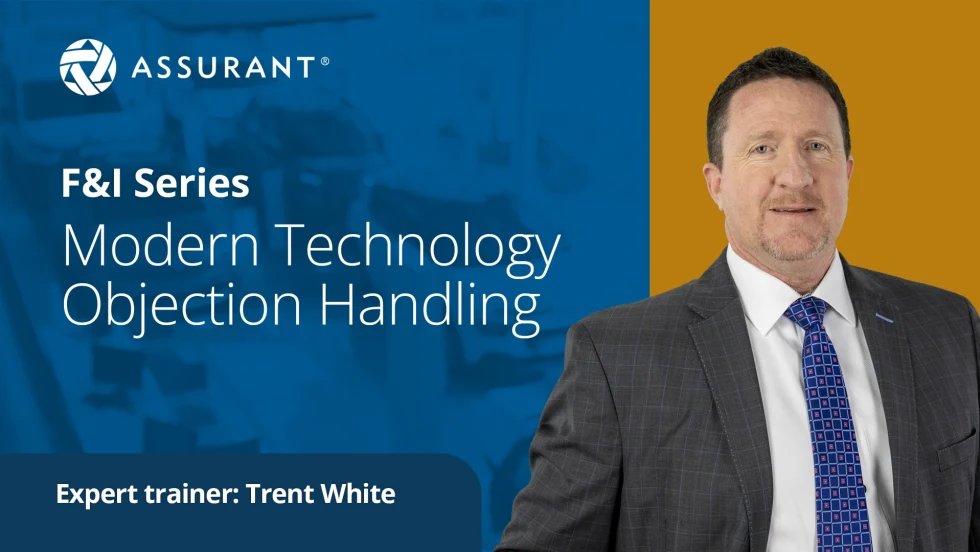
Modern Technology Objection Handling
In this video, Trent White shares how to confidently handle technology-based objections by helping customers understand the value of protection, even with modern vehicle technology.
Read More →
Consistency at Scale: Driving F&I Performance
With 75 rooftops across the Sunshine State, Morgan Auto Group has proven to Floridians that it knows a thing or two about driving performance in a competitive market. But it didn’t start at the top.
Read More →
Gitty Up on GAP
The foundational finance-and-insurance product hasn’t kept up with the latest conditions for auto dealers. Is the time ripe?
Read More →
How AI-Powered Coaching Is Transforming F&I Performance
See how AI-powered coaching can turn F&I customer conversations into actionable insights that support compliance, performance and profitability
Read More →
Sell Value, Build Trust
In this video, Trent White explains why selling on value, not fear, builds lasting customer trust, reduces cancellations, and drives long-term success.
Read More →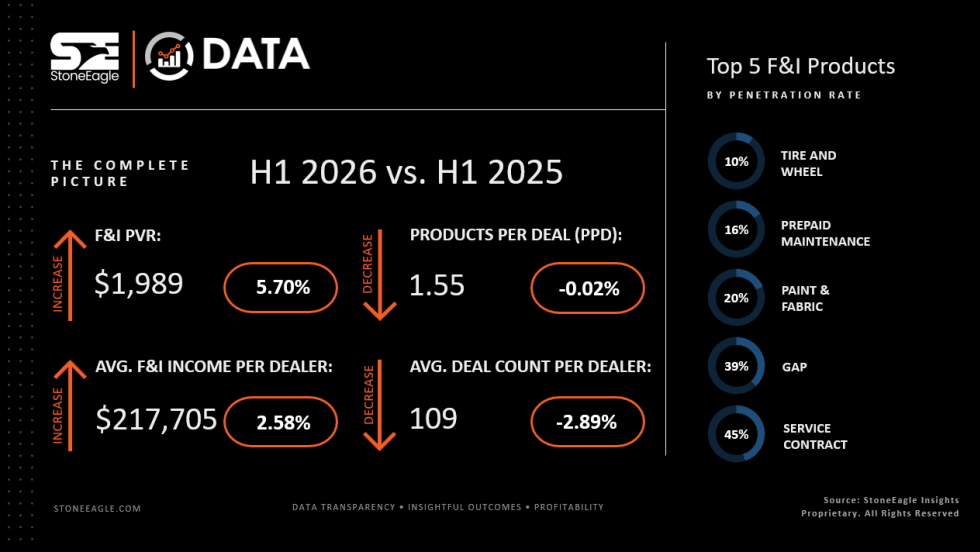
F&I Sales Give Dealers First-Half Lift
Product business shored up total profits to avoid an overall revenue tanking as product penetrations held steady, StoneEagle reported.
Read More →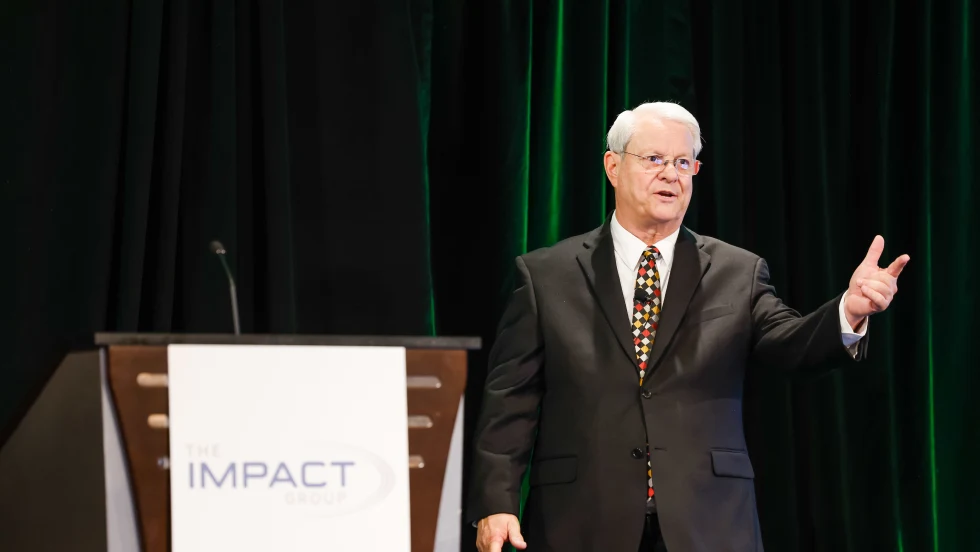
Targeted Training Drives Results
Today’s technology, instead of threatening F&I managers, can actually make them better, according to an industry veteran who’s watched market setbacks roil the unprepared.
Read More →
Double the Change, Double the Chance
When an F&I manager gets a customer refusal, it’s a wise move to tweak more than one thing in the product offering.
Read More →
Just Do It
F&I managers need training, but instead of resisting application or expecting perfection, they should improve by simply acting on what they learn.
Read More →