



Dealer Floorplan ABS Resilient Despite Recession and Automaker Bankruptcies
Auto dealer floorplan asset-backed securities (ABS) continue to perform and remain resilient despite the recession and the bankruptcies of two domestic automakers, said ratings firm DBRS.
Auto dealer floorplan asset-backed securities (ABS) continue to perform and remain resilient despite the recession and the bankruptcies of two domestic automakers, said ratings firm DBRS.
The pressure weighing against transaction performance peaked immediately following the bankruptcy filings of Chrysler LLC and General Motors Corporation (GM) in April and June, respectively.
“The immediate expectation from many market participants was for auto dealers to be decimated by the potential disruption in new vehicle production and consumer aversion to purchasing vehicles from bankrupt manufacturers, and for these circumstances to cause a dramatic slowing of payment rates on floorplan ABS collateral and spur rating downgrades,” DBRS analysts said. “Thus far, this situation has not materialized, in part due to the robustness of dealer floorplan transaction structures that seek to protect investors through the rapid amortization of the ABS notes.”
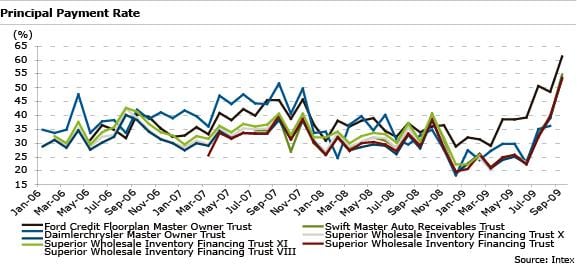
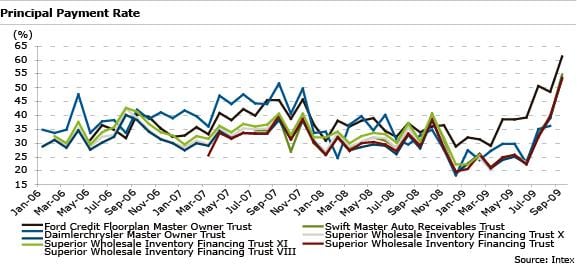
For example, at the time of the GM filing, DBRS placed the outstanding ratings of the Superior Wholesale Inventory Financing Trust XI (SWIFT XI) under review because of the rapid amortization event triggered by the manufacturer's bankruptcy filing, and its potentially negative impact on the performance of the collateral backing the floorplan transaction.
When DBRS made the rating action it believed the bankruptcy filing would not cause the trust’s payment rate to result in a ratings downgrade. Rather, DBRS believed that the rapid amortization event and the historically consistent payment rate on the underlying wholesale loans, would result in a pay down of the transaction notes before credit enhancement would be extinguished. In fact, the SWIFT XI transaction paid down in full on September 14, 2009, which is nearly 2.5 years ahead of schedule.
In another example, the DaimlerChrysler Master Owner Trust 2006-1 dealer floorplan transaction paid down the Class A notes in full on their most recent distribution date, which came five months after Chrysler LLC’s bankruptcy triggered early amortization and two months prior to the original expected maturity.
DBRS also said the “Cash for Clunkers” program provide more support for the historical strength of payment rates in dealer floorplan trusts by causing extraordinarily high dealer sales volumes and payment rates. Despite the program being discontinued, its benefits to the dealer floorplan sector are evident. Not only have payment rates increased, but the levels of previously financed inventory remaining on dealer lots are at all-time low, the ratings firm said.
More Auto Finance

July Was Hot for Auto Borrowers
Credit proved readily available for many, but most loans left buyers in negative territory, Cox Automotive said.
Read More →
Dealer Lender Preferences Revealed
When lenders provide consistent, fast service, their overall satisfaction scores with dealers greatly improve, according to JD Power research.
Read More →
Auto Refi Savings Surge
Consumers with 84-month auto loan terms who refinanced saved the most on monthly payments, according to a new report by auto refinancing provider Caribou.
Read More →
Subaru Enters Lending Business
The automaker follows other brands in adding captive financing in the U.S., and says the move will strengthen its position here.
Read More →
Positive Equity Reaches Record High
Mainstream vehicle owners who bought a car seven years ago are likely to have positive equity when trading in for a new vehicle, according to second-quarter Edmunds data.
Read More →
Dealerships Are Paying the Price for Extended Car Loans
Growing negative-equity scenarios mean such lengthy terms should be addressed in a forward-looking way to make them work for the dealer and the consumer down the road.
Read More →
Trade-Ins in Negative Equity Reach New Heights
As such trade-ins rise in frequency, so do monthly loan payment amounts and interest rates, according to second-quarter data compiled by Edmunds.
Read More →
Auto Credit Plentiful
June numbers show lenders are readily granting access, including to risky borrowers, as consumers leverage themselves to take on high prices.
Read More →
Automotive Consumers Sink Further in Debt
Most financing metrics hit records in the second quarter as more buyers locked themselves into long terms and high monthly payments.
Read More →
Porsche Financial Services Shifts Structure
After 36 years with Porsche, the Financial Services Chief Financial Officer Konrad Riedl is retiring, and the department is realigning its management structure.
Read More →