



Fed Raises Interest Rates a Quarter Point
The Federal Open Market Committee (FOMC) voted 9-1 on March 15 to raise the target range for the federal funds rate by a quarter percentage point to 0.75% to 1% — a move that was widely expected.
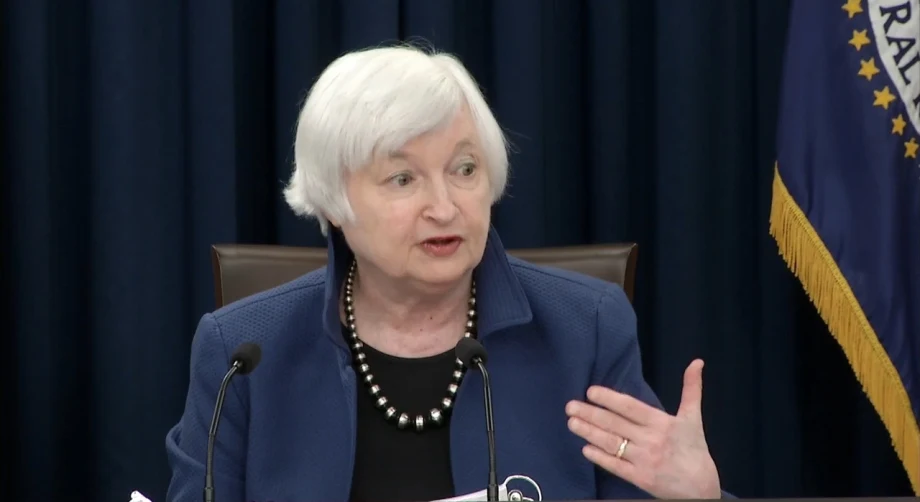
WASHINGTON, D.C. — The Federal Open Market Committee (FOMC) voted 9-1 on March 15 to raise the target range for the federal funds rate by a quarter percentage point to 0.75% to 1% — a move that was widely expected.
Speaking to reporters after the vote, Federal Reserve Board Chair Janet Yellen listed a strong economy, household income gains, relatively high levels of consumer sentiment, favorable business sentiment, and job gains as reasons for the rate hike.
“Our decision to make another gradual reduction in the amount of policy accommodation reflects the economy’s continued progress toward the employment and price stability objectives assigned to us by law,” Yellen said. “For some time, the committee has judged that, if economic conditions evolved as anticipated, gradual increases in the federal funds rate would likely be appropriate to achieve and maintain our objectives. Today’s decision is in line with that view and does not represent a reassessment of the economic outlook or of the appropriate course for monetary policy.
The lone dissenting vote was cast by Minneapolis Fed President Neel Kashkari, who preferred to keep the funds rate between 0.50% and 0.75%.
Yellen put the median projection for federal funds rate at 1.4% at the end of this year, 2.1% at the end of next year, and 3% at the end of 2019, which was in line with projection made in December.
“As always, the economic outlook is highly uncertain, and [FOMC] participants will adjust their assessments of the appropriate path for the federal funds rate in response to changes to their economic outlooks and views of the risks to their outlooks,” she said. “Changes in economics, including fiscal and other policies, could potentially affect the outlook. Of course, it is still too early to know how these policies will unfold.”
Yellen noted that job gains have averaged about 200,000 per month over the past three months. The unemployment rate was 4.7% in February, near its recent low. As for inflation, which played a critical role in the FOMC’s decision, the 12-month change in the price index for personal consumption and expenditures rose to nearly 2% in January, up from less than 1% last summer. That rise was largely the result of rising energy prices.
Core inflation, which excludes energy and food prices and is viewed by the FOMC as a better indicator of future inflation, has remained relatively unchanged in recent months at about 1.75%, Yellen noted. “We expect core inflation to move up and overall inflation to stabilize around 2% over the next couple of years, in line with our longer run objective,” she said.
Policymakers expect the gross domestic product to grow 2.1% this year, and the unemployment rate to fall to 4.5% by the end of the year.
While Wednesday’s rate hike is expected to push up rates for mortgages, auto loans, credit card debt and bank savings accounts, the impact should be nominal.
When the Federal Reserve elected to keep interest rates at the 0.25% to 0.50% level last September, Kelley Blue Book analyst Alex Guitierrez said then a full percentage point hike would only increase the monthly payment on a $33,000 vehicle financed for 60 months by about $10 to $15.
During an economic briefing ahead of the Los Angeles Auto Show in November, Steve Szakaly, chief economist for the National Automobile Dealers Association, said that even a 2% increase would add only $30 to a month payment.
“That’s really not much when we think about what most of these vehicles are running and costing,” he said at the time. “I think consumers will be able to pay that as we look at least out into 2017. I think we’re looking at a 50 basis-point rise by the end of 2017.”
More F&I

AI: Facilitator, Not Fixer, in F&I
The dealerships that thrive in the years ahead will be those that embrace technology while continuing to invest in the people who make customer interactions count.
Read More →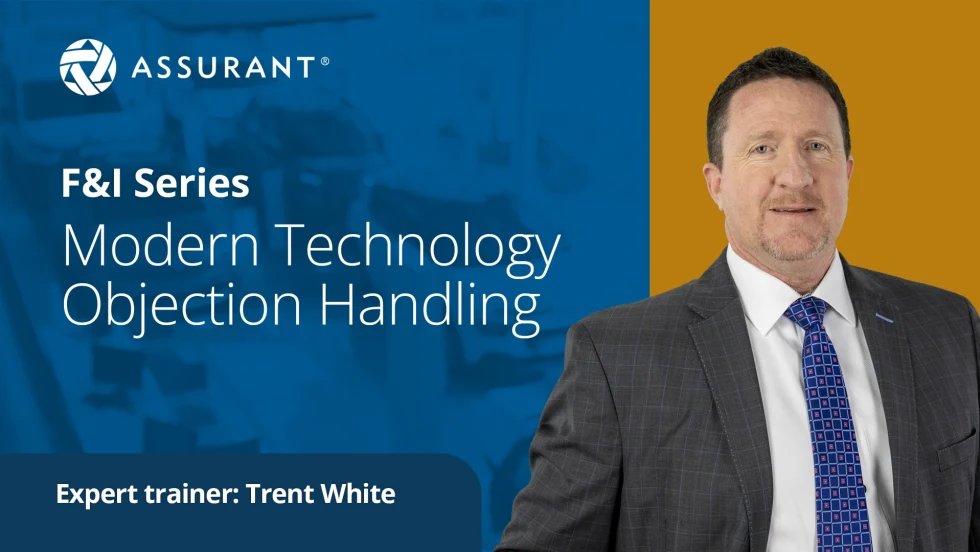
Modern Technology Objection Handling
In this video, Trent White shares how to confidently handle technology-based objections by helping customers understand the value of protection, even with modern vehicle technology.
Read More →
Consistency at Scale: Driving F&I Performance
With 75 rooftops across the Sunshine State, Morgan Auto Group has proven to Floridians that it knows a thing or two about driving performance in a competitive market. But it didn’t start at the top.
Read More →
Gitty Up on GAP
The foundational finance-and-insurance product hasn’t kept up with the latest conditions for auto dealers. Is the time ripe?
Read More →
How AI-Powered Coaching Is Transforming F&I Performance
See how AI-powered coaching can turn F&I customer conversations into actionable insights that support compliance, performance and profitability
Read More →
Sell Value, Build Trust
In this video, Trent White explains why selling on value, not fear, builds lasting customer trust, reduces cancellations, and drives long-term success.
Read More →
F&I Sales Give Dealers First-Half Lift
Product business shored up total profits to avoid an overall revenue tanking as product penetrations held steady, StoneEagle reported.
Read More →
Targeted Training Drives Results
Today’s technology, instead of threatening F&I managers, can actually make them better, according to an industry veteran who’s watched market setbacks roil the unprepared.
Read More →
Double the Change, Double the Chance
When an F&I manager gets a customer refusal, it’s a wise move to tweak more than one thing in the product offering.
Read More →
Just Do It
F&I managers need training, but instead of resisting application or expecting perfection, they should improve by simply acting on what they learn.
Read More →