



FTC Approves Consent Order in Texas Dealer’s Deceptive Advertising Case
The approval settles the FTC's December 2017 complaint against Dallas-based Cowboy Toyota regarding its Spanish-language newspaper ads. The regulator charged the dealership with violations of the FTC Act, TILA and the Consumer Leasing Act.
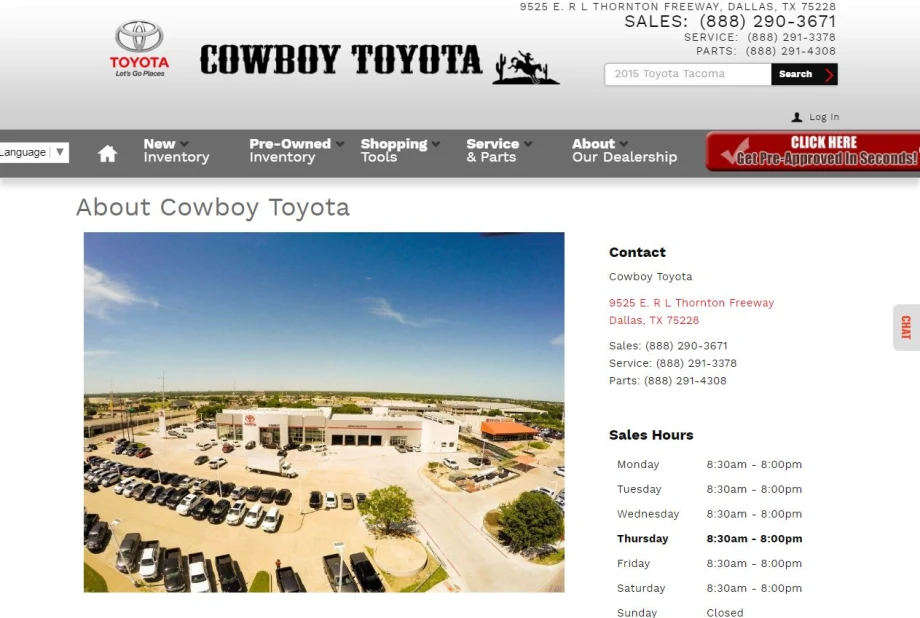
WASHINGTON, D.C. — Following a public comment period, the Federal Trade Commission (FTC) said this week it has approved the final consent order settling its deceptive advertising charges against Cowboy AG LLC, a Dallas-based company doing business as Cowboy Toyota and Cowboy Scion.
The announcement is related to a December 2017 compliant related to Cowboy Toyota’s Spanish-language newspaper ads. According to the FTC, the dealership violated the FTC Act by misrepresenting the cost of purchasing or leasing cars as well as the qualifications or restrictions for financing or leasing cars. It also mispresented the availability of vehicles for sale, according to the FTC's complaint.
The regulator also charged the dealership with failing to disclose credit or lease terms required under the Truth in Lending Act (TILA) or Consumer Leasing Act when it touted certain “triggering” terms of credit or lease, such as the monthly payment. The complaint also alleged that favorable terms were prominently stated in the Spanish-language ads, with material limitations to those terms provided only in fine-print English at the bottom.
The final order settling the FTC’s charges prohibits Cowboy Toyota from misrepresenting the cost of financing, buying, or leasing a vehicle. The order also requires the dealership to accurately represent any qualifications or restrictions on a consumer’s ability to obtain offered financing or lease terms, including restrictions based on their credit history.
The order also prohibits the dealership from misrepresenting the number of vehicles, makes, or models available for purchase or lease. Cowboy Toyota is also required to clearly and conspicuously disclose all financing and lease terms in its ads, as well as all related qualifications or restrictions. And if Cowboy Toyota makes a representation in one language, it must state clearly and conspicuously any material limitations in the same language, the FTC said.
More F&I

AI: Facilitator, Not Fixer, in F&I
The dealerships that thrive in the years ahead will be those that embrace technology while continuing to invest in the people who make customer interactions count.
Read More →
Modern Technology Objection Handling
In this video, Trent White shares how to confidently handle technology-based objections by helping customers understand the value of protection, even with modern vehicle technology.
Read More →
Consistency at Scale: Driving F&I Performance
With 75 rooftops across the Sunshine State, Morgan Auto Group has proven to Floridians that it knows a thing or two about driving performance in a competitive market. But it didn’t start at the top.
Read More →
Gitty Up on GAP
The foundational finance-and-insurance product hasn’t kept up with the latest conditions for auto dealers. Is the time ripe?
Read More →
How AI-Powered Coaching Is Transforming F&I Performance
See how AI-powered coaching can turn F&I customer conversations into actionable insights that support compliance, performance and profitability
Read More →
Sell Value, Build Trust
In this video, Trent White explains why selling on value, not fear, builds lasting customer trust, reduces cancellations, and drives long-term success.
Read More →
F&I Sales Give Dealers First-Half Lift
Product business shored up total profits to avoid an overall revenue tanking as product penetrations held steady, StoneEagle reported.
Read More →
Targeted Training Drives Results
Today’s technology, instead of threatening F&I managers, can actually make them better, according to an industry veteran who’s watched market setbacks roil the unprepared.
Read More →
Double the Change, Double the Chance
When an F&I manager gets a customer refusal, it’s a wise move to tweak more than one thing in the product offering.
Read More →
Just Do It
F&I managers need training, but instead of resisting application or expecting perfection, they should improve by simply acting on what they learn.
Read More →