



FTC Shuts Down Websites Offering Fake Pay Stubs for Sale
The operators of websites that sold fake pay stubs and other financial documents have agreed to permanently shut down their business as part of separate settlements with the Federal Trade Commission, the regulator announced this week.
WASHINGTON, D.C. — The Federal Trade Commission has taken a bite out of a major issue for F&I offices. The regulator announced this week that operators of websites that sold fake pay stubs and other financial documents used to facilitate identity theft and other frauds have agreed to permanently shut down their businesses as part of separate settlements with the Federal Trade Commission.
In separate cased filed by the FTC, the commission alleged that Katrina Moore, Steve Simmons, and George Jiri Strnad II and their affiliated companies operated websites that sold customers a variety of fake financial documents, including pay stubs, income tax forms, and medical statements.
“The sale of fake documents makes it easy for identity thieves and scammers to ply their trade,” said Andrew Smith, director of the FTC’s Bureau of Consumer Protection. “This action demonstrates the FTC’s determination to stop those who help people to commit identity theft and fraud.”
Identity theft was the No. 2 category of consumer complaints reported to the FTC in 2017, accounting for nearly 14% of all consumer complaints received by the regulator last year. Credit card fraud was the most common type of identity theft reported by consumers in 2017, followed by tax fraud.
The complaint against Moore and her business, Innovative Paycheck Solutions, alleges that she promoted the sale of a variety of financial documents on her website, FakePayStubOnline.com. In addition to fake paystubs, the business sold bank and profit-and-loss statements. The site stated that the documents looked authentic and sold for as little as $40 for a fake paystub to more than $150 for fake tax returns. The site offered to customize documents and to edit real bank statements.
The FTC alleged that Simmons and his business, Integrated Flight Solutions LLC, operated the NoveltyExcuses.com website from 2013 until October 2017. It sold a variety of financial, identity, and medical documents, including pay stubs, auto insurance cars, utility and cable bills, doctor’s excuses, and medical absence reports for $19.95. Like Moore’s website, Simmons’ NoveltyExcuses.com advertised that the documents were fake but looked authentic, claiming the documents were “Proven to Work!”
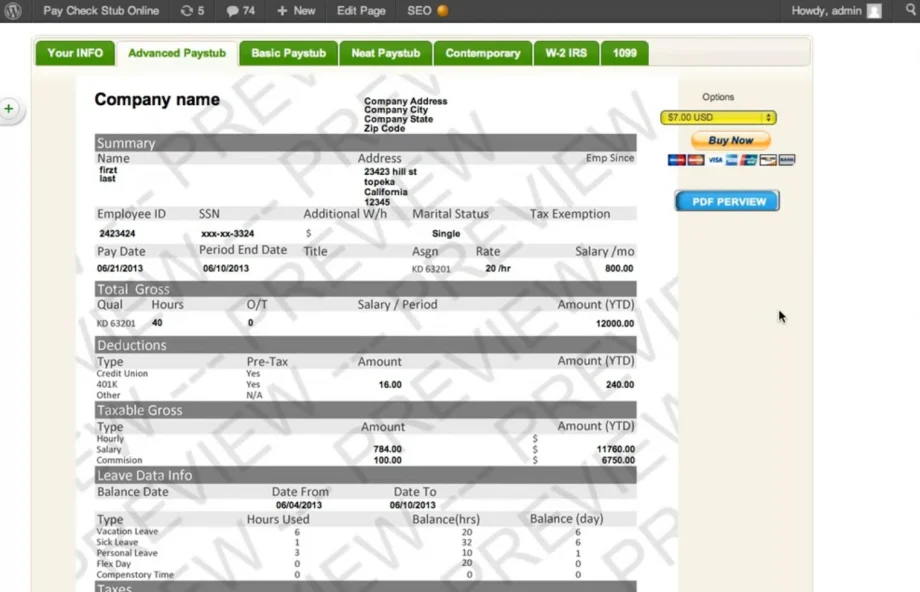
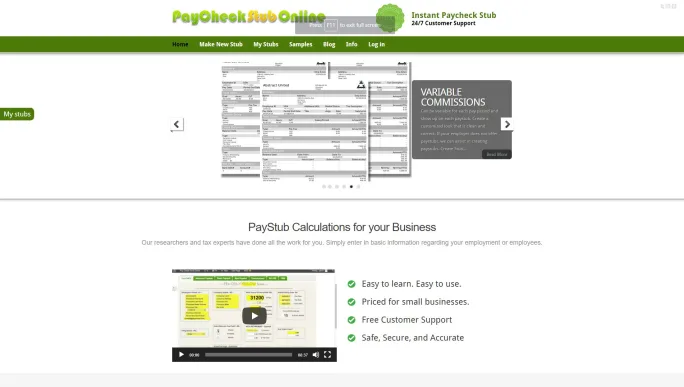
From about 2014 through March 2018, Strnad operated similar websites, including PayStubDirect.com and PaycheckStubOnline.com. The sites offered fake paystubs, tax forms, and bank statements, according to the FTC’s complaint. Strnad also operated iVerifyMe, a website that sold job verification services, the FTC charged. As with other defendants, Strnad’s website advertised that the documents were fake but look “authentic.” At the same time, his iVerifyMe site advertised it could verify the employment claims made using the fake paystubs offered from his other websites.
The sites offered by the defendants claim that the fake documents were for “novelty” and “entertainment” purposes but failed to clearly and prominently mark such documents as being for such purposes, the FTC charged. They also did not state on the documents themselves that they were fake, according to the complaints. The commission charged the operators with violating the FTC Act’s prohibition against unfair practices.
As part of the proposed settlement with the FTC, Moore is permanently prohibited from advertising, marketing, or selling any fake documents or services and providing any means to others to make misrepresentations about an individual’s identity, finances, residency, taxes, or employment. She also agreed to pay $169,000, all of which is suspended due to her inability to pay.
In his proposed settlement, Simmons agreed to similar prohibitions and to pay $15,000, which has also been suspended due to his inability to pay. The full amount will become due if either defendant is later found to have misrepresented their finances.
Strnad agreed to similar conduct restrictions in his proposed settlement and to pay $133,777.
The commission voted 5-0 to approve the three complaints and stipulated final orders. The FTC filed the proposed order with Moore in the U.S. District Court for the District of Oregon, Portland Division, and the proposed order with Strnad was filed in the U.S. District Court for the Southern District of Texas, Houston Division.
More F&I

AI: Facilitator, Not Fixer, in F&I
The dealerships that thrive in the years ahead will be those that embrace technology while continuing to invest in the people who make customer interactions count.
Read More →
Modern Technology Objection Handling
In this video, Trent White shares how to confidently handle technology-based objections by helping customers understand the value of protection, even with modern vehicle technology.
Read More →
Consistency at Scale: Driving F&I Performance
With 75 rooftops across the Sunshine State, Morgan Auto Group has proven to Floridians that it knows a thing or two about driving performance in a competitive market. But it didn’t start at the top.
Read More →
Gitty Up on GAP
The foundational finance-and-insurance product hasn’t kept up with the latest conditions for auto dealers. Is the time ripe?
Read More →
How AI-Powered Coaching Is Transforming F&I Performance
See how AI-powered coaching can turn F&I customer conversations into actionable insights that support compliance, performance and profitability
Read More →
Sell Value, Build Trust
In this video, Trent White explains why selling on value, not fear, builds lasting customer trust, reduces cancellations, and drives long-term success.
Read More →
F&I Sales Give Dealers First-Half Lift
Product business shored up total profits to avoid an overall revenue tanking as product penetrations held steady, StoneEagle reported.
Read More →
Targeted Training Drives Results
Today’s technology, instead of threatening F&I managers, can actually make them better, according to an industry veteran who’s watched market setbacks roil the unprepared.
Read More →
Double the Change, Double the Chance
When an F&I manager gets a customer refusal, it’s a wise move to tweak more than one thing in the product offering.
Read More →
Just Do It
F&I managers need training, but instead of resisting application or expecting perfection, they should improve by simply acting on what they learn.
Read More →