



Ghosn Claims ‘Plot and Treason’ Led to Charges
Former factory alliance leader Carlos Ghosn says Nissan executives conspired to concoct false charges of financial crimes to unwind a potential merger with Renault.

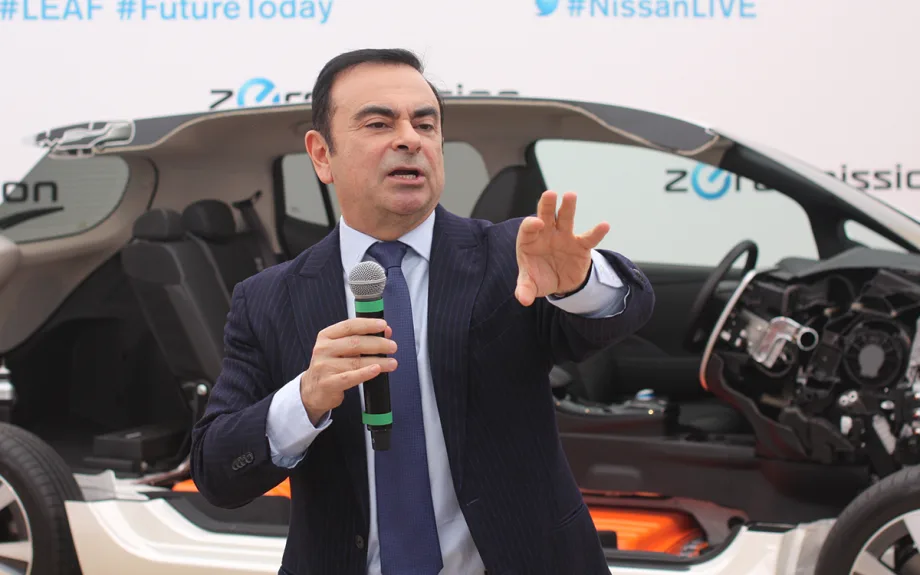
In his first interview since his Nov. 19 arrest, former global factory alliance chief Carlos Ghosn told Japan’s Nikkei news organization the charges of financial crimes leveled against him are the product of a conspiracy among Nissan executives.
Photo by Norsk Elbilforening via Flickr
TOYKO — In a 20-minute jailhouse interview with Japanese news organization Nikkei, former factory executive Carlos Ghosn leveled explosive accusations at his former colleagues at Nissan Motor Co. Ghosn said he is innocent of the charges of financial crimes leveled against him, claiming the internal investigation that led to his arrest was part of a conspiracy to derail a prospective merger between Nissan and Renault.
“Plot and treason” on the part of Nissan executives led to the charges, Ghosn said, refuting rumors he ran the company like a dictator. “People translated strong leadership to dictator, to distort reality” for the “purpose of getting rid of me,” he told Nikkei.
Ghosn was head of a three-way factory alliance that also includes Mitsubishi, also of Japan, and Renault, of which the French government is the dominant shareholder.
Numerous reports have suggested Ghosn and his one-time protégé, Nissan CEO Hiroto Saikawa, were at odds over the proposed merger. Saikawa was said to be seeking more leverage for Nissan, which is the larger of the two companies but owns a 15% non-voting share in Renault. Renault owns 43% of Nissan.
Saikawa said this month he will step down once new auditing processes and controls are in place. Ghosn is accused of underreporting $80 million worth of deferred income, which sources close to Nissan’s investigation have said ballooned starting in 2009. That year, the Japanese government began requiring that executive pay be made public. Tax laws there require all income be reported in the year it’s earned. Ghosn is also accused of using company money to temporarily cover investment losses suffered during the late-2000s global economic downturn.
Ghosn told Nikkei each of the deferred-pay arrangements and money transfers at the heart of his case were either made with board approval or failed to advance past the draft stage. He also claimed Japanese regulators had already looked into the transfers and found no evidence of criminal activity.
Nissan refuted Ghosn’s claims in a statement issued in response to the interview.
“The sole cause of this chain of events is the misconduct led by Ghosn and Kelly,” said a spokesman, referring to former Nissan executive Greg Kelly, who was indicted alongside his former boss.
Originally posted on Auto Dealer Today
More Compliance

Variations on a Theme – Lease Packing
Dealers must be careful they don’t run afoul of the law when it comes to such deceptive practices, as there are many cases pointing to the potential bad ends of such deals.
Read More →
Your 10-Point Compliance Checklist
Identify areas of concern and opportunities for training by updating, installing and enforcing a compliance checklist that requires specific actions for sales, F&I and accounting.
Read More →
A Continuing Antediluvian Dealer Fraud: Payment Packing
The longtime illegal practice, which can take many forms, can get a dealer and its employees in deep trouble. It’s a good idea to determine if anyone in your stores is doing it and to weed it out if so.
Read More →
Line 1 Is Not a Junk Drawer
Rolling products into the cash price — even if the bank told you to — misrepresents the vehicle’s value and runs afoul of four federal laws.
Read More →
Dueling Banjos in the Car Biz
Reports and accounts at variance show auto dealers’ trust profiles have risen in many consumers’ minds but that there remains a need for greater transparency by some.
Read More →
NADA and the Miracle on 34th Street
Automotive dealers should follow the National Automobile Dealers Association's consumer-friendly guidelines in order to minimize their legal risks.
Read More →
Another Look at a Recent Data Breach
Get caught up on the most pressing legal and regulatory matters facing dealers and F&I professionals, including data security, shotgun purchases, and inconsistent payment quotes.
Read More →


The Best Thing a Dealer Can Do to Avoid Legal Problems
Citing the issue is a strategy borrowed from the legal field itself.
Read More →