



Industry Analysts Discuss Rate Hike's Impact on Vehicle Sales
The Federal Reserve voted unanimously today to increase its target funds rate by a modest quarter point. One market research firm believes that could cut into sales by 150,000 units.
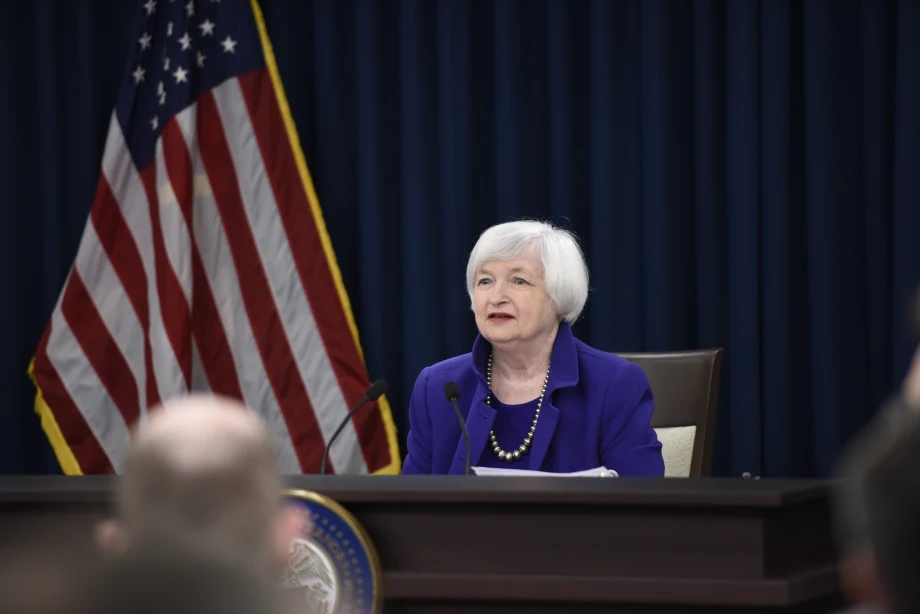
Photo courtesy of Federal Reserve Flickr.
WASHINGTON, D.C. — As expected, the Federal Reserve approved the first hike in the federal funds rate in nine years during the Federal Open Market Committee meeting this morning. The modest quarter-point increase takes the Fed’s target funds rate from zero percent to 0.25% to 0.25% to 0.5%.
In a statement released shortly after the unanimous vote, the committee cited improvement in labor market conditions and the expected rise in inflation as reasons for approving the increase.
“Given the economic outlook, and recognizing the time it takes for policy actions to affect future economic outcomes, the committee decided to raise the target range for the federal funds rate to ¼ to ½ percent,” the statement read. “The stance of monetary policy remains accommodative after this increase, thereby supporting further improvement in labor market conditions and a return to 2% inflation.”
Most market analysts expect the increase will have a minimal impact on car sales. Last week, J.D. Power said a quarter-point increase could cut into new-vehicle demand by 150,000 units. That amounts to a 0.83% reduction in the industry’s total sales given last month’s 18 million SAAR, noted Dave Sargent, vice president of Global Automotive at J.D. Power.
“With any hike, there will be a reduction in demand,” he said, noting that consumer spending habits aren’t likely to change. “Now, that doesn’t necessarily mean sales will fall by that much, but the natural level of demand will fall by 150,000.”
According to a survey conducted by J.D. Power prior to the committees vote, 36% of respondents believed an increase would be good for the economy. The majority of people who thought this way were from older generations that have seen first-hand what an interest rate hike means — that the economy is doing well. They also tend to have fewer loans they’re still paying off and have more interest-bearing accounts that will benefit from an interest rate hike.
Younger generations, however, weren’t so positive about the increase. J.D. Power noted that this demographic, which stands to take the bigger hit from the hike, is likely to be steered away from vehicle purchases as a result.
“Some consumers might think, ‘OK, the interest rate is going to go up, maybe this is not the time to buy a new vehicle. I may just delay the purchase and wait for things to settle down.’ Or they might just choose to spend a little less on the vehicle,” Sargent said. “There is that element to it … the danger that with the first increase in many years, some consumers may get spooked until they see what the actual impact will be on their monthly payment.”
With the Fed’s increase, consumers can expect to pay about $10 more a month on an average payment of $400. Sargent said it would take a hike of a couple of percentage points for consumers to really feel the impact on their loans. Kelley Blue Book analyst Jack Nerad agreed.
“The issue is not so much what a quarter point increase would do to the typical car payment but what a climate of increase interest rates would do to consumers’ perception of their personal finance situations,” he said. “Rising interest rates will negatively affect home values, and that, in turn, will negatively affect individuals’ perception of their own financial healthy. When people don’t feel positive about their financial situations, they don’t buy cars.”
Analysts also believe it will be the industry that will swallow the additional cost of the recent hike, which will cut into the profitability of automakers, dealers and finance companies. The expectation is that automakers, fearing the loss in sales, will increase incentive spending to offset the increase.
Tom Webb, chief economist for Cox Automotive, said he’s not concerned about industry-specific impacts, but rather the possible macro-economic reverberations that could derail an otherwise slow-growing U.S. economy. He noted that he will continue to monitor how the markets react.
“Even after several rate hikes, the cost of funds will remain exceptionally low and captive lenders won’t find it overly expensive to buy rates down to today’s attractive zero percent offers,” said Tom Webb, Cox Automotive’s chief economist. “In any event, the old industry truism that ‘the availability of credit is more important than the cost of credit.’”
More F&I

AI: Facilitator, Not Fixer, in F&I
The dealerships that thrive in the years ahead will be those that embrace technology while continuing to invest in the people who make customer interactions count.
Read More →
Modern Technology Objection Handling
In this video, Trent White shares how to confidently handle technology-based objections by helping customers understand the value of protection, even with modern vehicle technology.
Read More →
Consistency at Scale: Driving F&I Performance
With 75 rooftops across the Sunshine State, Morgan Auto Group has proven to Floridians that it knows a thing or two about driving performance in a competitive market. But it didn’t start at the top.
Read More →
Gitty Up on GAP
The foundational finance-and-insurance product hasn’t kept up with the latest conditions for auto dealers. Is the time ripe?
Read More →
How AI-Powered Coaching Is Transforming F&I Performance
See how AI-powered coaching can turn F&I customer conversations into actionable insights that support compliance, performance and profitability
Read More →
Sell Value, Build Trust
In this video, Trent White explains why selling on value, not fear, builds lasting customer trust, reduces cancellations, and drives long-term success.
Read More →
F&I Sales Give Dealers First-Half Lift
Product business shored up total profits to avoid an overall revenue tanking as product penetrations held steady, StoneEagle reported.
Read More →
Targeted Training Drives Results
Today’s technology, instead of threatening F&I managers, can actually make them better, according to an industry veteran who’s watched market setbacks roil the unprepared.
Read More →
Double the Change, Double the Chance
When an F&I manager gets a customer refusal, it’s a wise move to tweak more than one thing in the product offering.
Read More →
Just Do It
F&I managers need training, but instead of resisting application or expecting perfection, they should improve by simply acting on what they learn.
Read More →