



Latest Haig Report Tracks Trends in Auto Retail and Impact on Dealership Values
Highlights include a significant spike in dealership profits and skyrocketing demand from dealership groups that want to acquire more stores.

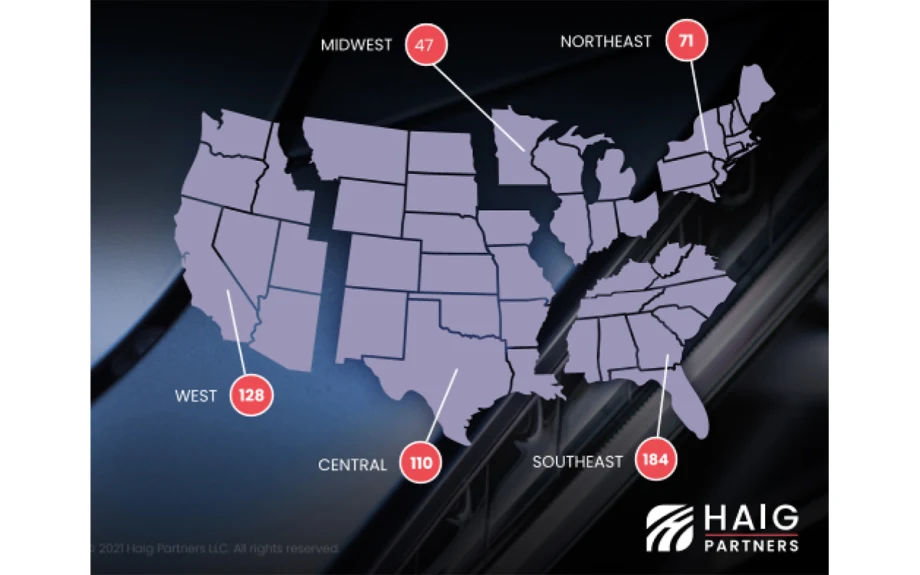
Highlights include a significant spike in dealership profits and skyrocketing deamnd from dealership groups that want to acquire more stores.
HAIG PARTNERS – Haig Partners released its Q3 2021 Haig Report, the leading industry quarterly report that tracks trends in auto retail and their impact on dealership values. Highlights include a significant spike in dealership profits and skyrocketing demand from dealership groups that want to acquire more stores. These trends have driven record‐shattering blue sky values for dealerships.
Key findings from the Q3 2021 Haig Report include:
The Chipdemic continues to create extraordinarily favorable conditions in auto retail
Dealership profits are erupting with the average privately‐owned dealership making $3.4M (excluding PPP) over the twelve‐month period ending September 2021
Buy‐sell activity is at record levels, reaching 575 this year, a 24% increase over the previous record of 463 in 2015
Blue sky values continue to shatter records, rising to an estimated 61% from the end of 2019
Public company spending on US auto acquisitions may reach $8B by year end 2021, 10xpre‐ Pandemic levels
Public equity valuations are 108% higher than they were before the Chipdemic
“We are seeing plenty of dealers come to market to sell their stores. Profits are high, dealer confidence is high and interest rates remain low,” shared Alan Haig. “The high value for stores today is stimulating dealers to consider exiting even if they are not at retirement age. Average single point dealerships are worth about $25M all‐in. Midsized groups are valued in the hundreds of millions of dollars. Large groups bring billions of dollars. At these values, dealers and their families are having conversations about the pros of remaining dealers, but also the risks and capital investments required if they remain dealers. We expect 2022 to be another excellent year for transactions,” he continued.
For more findings from the Q3 2021 Haig Report, download it here. In addition, Alan Haig will be sharing current trends in auto retail and their impact on dealership values, during a live Q&A session on Thursday, November 18that 1:00 pm ET. Register for the event at HaigPartners.com.
Originally posted on Auto Dealer Today
More Auto Finance

Interest Rates Further Squeeze Auto Consumers
Last month’s hike and a potential second increase this month add to a growing list of inflation woes that could continue to dent overall car sales.
Read More →
Mind Your Process
Consistent steps taken in various aspects of the F&I office can make valuable differences over time, similar to an outline for a best-selling book.
Read More →
Top Five Credit Application Fraud Flags
Compliance audits regularly reveal bad habits that can lead to fraud charges and should have been stamped out decades ago.
Read More →
More Auto Loans for the Taking in August
Riskier categories were on the uptick for the month as lenders loosened access in several areas while balancing out the exposure in another, Cox Automotive reported.
Read More →
July Was Hot for Auto Borrowers
Credit proved readily available for many, but most loans left buyers in negative territory, Cox Automotive said.
Read More →
Dealer Lender Preferences Revealed
When lenders provide consistent, fast service, their overall satisfaction scores with dealers greatly improve, according to JD Power research.
Read More →
Auto Refi Savings Surge
Consumers with 84-month auto loan terms who refinanced saved the most on monthly payments, according to a new report by auto refinancing provider Caribou.
Read More →
Subaru Enters Lending Business
The automaker follows other brands in adding captive financing in the U.S., and says the move will strengthen its position here.
Read More →
Positive Equity Reaches Record High
Mainstream vehicle owners who bought a car seven years ago are likely to have positive equity when trading in for a new vehicle, according to second-quarter Edmunds data.
Read More →
Dealerships Are Paying the Price for Extended Car Loans
Growing negative-equity scenarios mean such lengthy terms should be addressed in a forward-looking way to make them work for the dealer and the consumer down the road.
Read More →