



Prime Auto ABS Losses at Historic High, Reports Fitch Ratings
Despite record high annualized net losses (ANL) on U.S. prime auto loan asset-backed securities (ABS) in August, negative rating actions in 2008 have been minimal, according to Fitch Ratings.
Despite record high annualized net losses (ANL) on U.S. prime auto loan asset-backed securities (ABS) in August, negative rating actions in 2008 have been minimal, according to Fitch Ratings.
Even with these elevated levels of losses, structural features and credit enhancement along with transactions deleveraging, have limited negative ratings actions in 2008. Fitch has upgraded 29 prime auto ABS subordinate tranches in 2008, down from 66 in 2007. During August, Fitch upgraded 11 tranches from four prime transactions including upgrades on transactions of U.S. domestic captives.
Additionally, Fitch continues to issue upgrades on subordinate notes, albeit at a slower rate than in 2007. ‘In the historically weak fall months, Fitch expects ANL may approach the 2% level as predicted at the beginning of the year,’ said Managing Director John Bella.
U.S. prime auto loan asset-backed securities (ABS) hit a record high of 1.73% in August, just above the previous high set in early 2003. Auto ABS performance in 2008 continues to be impacted by the poor state of the U.S. economy including rising unemployment, deteriorating consumer health, and lower wholesale vehicle values. The 2007 vintage is producing the highest levels of losses when compared to vintages going back to 2000, driving Fitch’s ANL index higher in 2008.
In the prime sector, Fitch’s 60+ days delinquency index was unchanged at 0.71% in August over July, 20% above 2007 levels. ANL rose 22% in August over July driving losses 101% higher when compared to August 2007.
The subprime auto ABS 60 days-or-more delinquency index was at 3.85% in August, 6% higher than July. ANL were at 7.45% in August, 14% over July, and on a year-over-year basis 31% higher than in August 2007. The weakest period of performance for subprime losses was in late 2003 when losses were approximately 9.50%-10%, so current levels remain below this range.
Fitch’s indexes track the performance of 101 prime and subprime auto ABS transactions outstanding, totaling $61.42 billion, of which 68% are prime auto ABS and the remaining 32% subprime auto ABS.
More F&I
Plug Your Profit Leaks
By building in clear processes, your dealership can realize more profits in plugged leaks to maximize sales opportunities.
Managing Expectations
Learn how proactive communication, setting clear expectations, and providing solutions when plans change can strengthen customer trust and improve the overall service experience.

The F&I Manager's Report Card
The best managers take the time and attention to measure the behaviors behind the numbers.

AI: Facilitator, Not Fixer, in F&I
The dealerships that thrive in the years ahead will be those that embrace technology while continuing to invest in the people who make customer interactions count.

Modern Technology Objection Handling
In this video, Trent White shares how to confidently handle technology-based objections by helping customers understand the value of protection, even with modern vehicle technology.

Consistency at Scale: Driving F&I Performance
With 75 rooftops across the Sunshine State, Morgan Auto Group has proven to Floridians that it knows a thing or two about driving performance in a competitive market. But it didn’t start at the top.

Gitty Up on GAP
The foundational finance-and-insurance product hasn’t kept up with the latest conditions for auto dealers. Is the time ripe?

How AI-Powered Coaching Is Transforming F&I Performance
See how AI-powered coaching can turn F&I customer conversations into actionable insights that support compliance, performance and profitability

Sell Value, Build Trust
In this video, Trent White explains why selling on value, not fear, builds lasting customer trust, reduces cancellations, and drives long-term success.
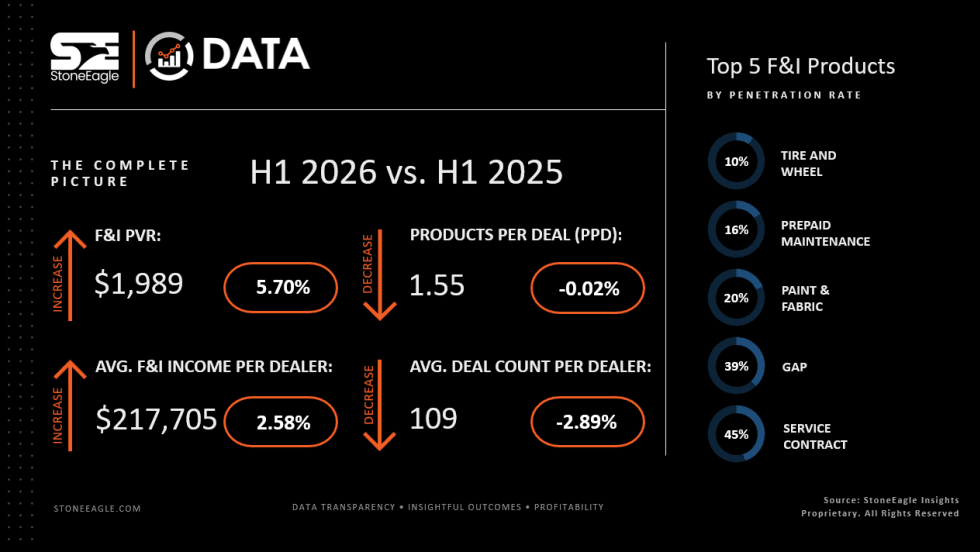
F&I Sales Give Dealers First-Half Lift
Product business shored up total profits to avoid an overall revenue tanking as product penetrations held steady, StoneEagle reported.