



Used-Car Prices Fall 2.5% in November
Black Book’s final depreciation report of 2018 finds prices for used cars and trucks decreased by 2.7% and 2.3%, respectively, with declines among compacts, minivans, and full-size utilities setting the pace.

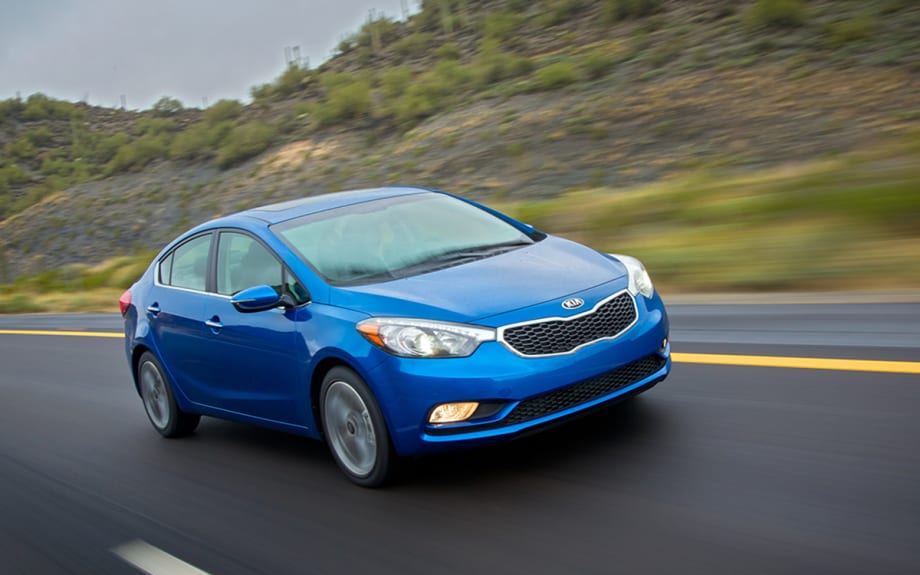
Black Book reports prices for pre-owned compacts such as the Kia Forte fell by 3.3% in November, depreciating at the same rate as minivans and full-size SUVs and CUVs.
Photo courtesy Kia Motors Corp.
LAWRENCEVILLE, Ga. — According to Black Book data, the average price of a used vehicle for model years 2013–’17 fell by 2.5% in November. Car prices decreased 2.7% during the month and trucks fell by 2.3%. Average 12-month depreciation at the end of November for all vehicles was -12.5%.
Three segments saw monthly depreciation less than -1.0% during November: subcompact luxury CUVs (-0.8%), subcompact CUVs (-0.9%), and full-size vans (-0.9%). The subcompact luxury CUVs segment, which includes such models as the Audi Q3, BMW X1, Mercedes-Benz GLA-Class, and Mini Cooper Countryman, finished November with an average segment value of $16,325, a 15.9% decline from a year earlier.
Conversely, three segments shared the heaviest depreciation at -3.3%: minivans, full-size SUVs and CUVs, and compact cars. While only one of the three was a car segment, cars represented six of the 10 segments with the largest depreciation in November.
Six of the top seven segments with the lowest monthly depreciation were truck segments. In addition to the aforementioned three, also included are mid-size luxury SUVs and CUVs, compact vans, and compact luxury SUVs and CUVs. Each saw monthly depreciation of -1.6%.
“Entering the final month of the year we’re seeing typical depreciation trends across many of the segments listed, with most of the heavier depreciation affecting car segments this deep in the year,” said Anil Goyal, executive vice president of operations at Black Book. “Car segments for much of the year held very strong from healthy demand, but this momentum has stalled out in the final quarter of 2018.”
More Auto Finance

More Auto Loans for the Taking in August
Riskier categories were on the uptick for the month as lenders loosened access in several areas while balancing out the exposure in another, Cox Automotive reported.
Read More →
July Was Hot for Auto Borrowers
Credit proved readily available for many, but most loans left buyers in negative territory, Cox Automotive said.
Read More →
Dealer Lender Preferences Revealed
When lenders provide consistent, fast service, their overall satisfaction scores with dealers greatly improve, according to JD Power research.
Read More →
Auto Refi Savings Surge
Consumers with 84-month auto loan terms who refinanced saved the most on monthly payments, according to a new report by auto refinancing provider Caribou.
Read More →
Subaru Enters Lending Business
The automaker follows other brands in adding captive financing in the U.S., and says the move will strengthen its position here.
Read More →
Positive Equity Reaches Record High
Mainstream vehicle owners who bought a car seven years ago are likely to have positive equity when trading in for a new vehicle, according to second-quarter Edmunds data.
Read More →
Dealerships Are Paying the Price for Extended Car Loans
Growing negative-equity scenarios mean such lengthy terms should be addressed in a forward-looking way to make them work for the dealer and the consumer down the road.
Read More →
Trade-Ins in Negative Equity Reach New Heights
As such trade-ins rise in frequency, so do monthly loan payment amounts and interest rates, according to second-quarter data compiled by Edmunds.
Read More →
Auto Credit Plentiful
June numbers show lenders are readily granting access, including to risky borrowers, as consumers leverage themselves to take on high prices.
Read More →
Automotive Consumers Sink Further in Debt
Most financing metrics hit records in the second quarter as more buyers locked themselves into long terms and high monthly payments.
Read More →