



Edmunds: Used-Vehicle Prices Hit Record High in Q1
Although shoppers continue to flock toward pricier trucks and SUVs, steadily rising gas prices are beginning to stimulate consumer demand and increase residual values for smaller vehicles.
SANTA MONICA, Calif. — Shoppers seeking bargains on used vehicles might find them harder to come by when they head to the dealership this summer, at least according to Edmunds’ latest Used Car Report.
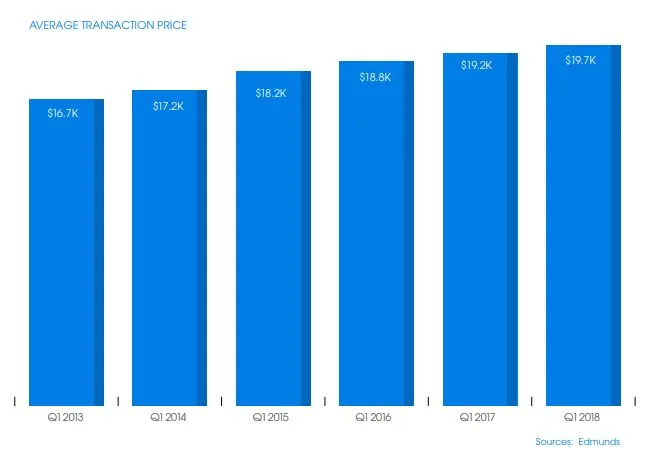
In the first quarter of 2018, the average transaction price for a used vehicle was $19,657, a 2.2% increase from the prior-year period and a 17.6 increase from the first quarter of 2013. Edmunds experts attribute this increase to the ever-growing supply of near-new vehicles coming off expiring leases and a greater demand for vehicles of all sizes and ages, thanks to shifting market factors.
"Used-car shoppers are typically more price-sensitive to changes in the market, but this is the first time in years that we're seeing renewed demand for smaller vehicles," said Ivan Drury, senior manager of industry analysis at Edmunds. "With rising fuel costs breathing fresh air into this segment, subcompact and compact cars are finally retaining value again."
Edmunds analysts report that fuel costs hit a four-year high in the first quarter of 2018, prompting some price-sensitive consumers to reconsider making the switch from a car to an SUV or truck. As a result, smaller cars are moving quicker off dealer lots.
According to the firm’s report, the average price for a three-year-old compact car has increased by 3.9 percent, while days to turn decreased by 7% in the first quarter to the year-ago period. The average price for a three-year-old subcompact car has increased by 3%, while DTT has decreased by 8.5% in the first quarter compared to a year ago.
Rising fuel costs, however, have yet to translate into a drop in residual values for SUV and trucks. Edmunds experts note that there continues to be an abundance of shoppers who still place enough value on increased cargo capacity, ride height, and other SUV and truck features to bear the costs of lower fuel economy and higher price tags. However, Edmunds analysts caution that this could change if gas prices continue on an upward trajectory.
"Newer SUVs and trucks are nothing like their counterparts from 10 years ago, during the gas crisis of 2008; however, they still lag behind their car segment counterparts in fuel economy," said Drury. "For now, SUV and truck segments are insulated from rising fuel costs, but a large spike or steady creep past the $4-a-gallon threshold could spell disaster for resale values."
Edmunds analysts note that the risk posed to used SUV and truck residual values is further compounded by the shift in lease type in recent years, reflecting consumer preferences for larger vehicles.
"For the last few years, car-based products reigned as the dominant vehicle type in the off-lease market, which was unfortunate timing for those lease returns given that low fuel costs shifted consumer preference from cars to SUVs and trucks," said Drury. "As we enter the timeframe for SUVs and trucks to take over a larger share of lease returns, fuel costs are showing signs of rising and disrupting a market that has been stable for years."
More Auto Finance

Interest Rates Further Squeeze Auto Consumers
Last month’s hike and a potential second increase this month add to a growing list of inflation woes that could continue to dent overall car sales.
Read More →
Mind Your Process
Consistent steps taken in various aspects of the F&I office can make valuable differences over time, similar to an outline for a best-selling book.
Read More →
Top Five Credit Application Fraud Flags
Compliance audits regularly reveal bad habits that can lead to fraud charges and should have been stamped out decades ago.
Read More →
More Auto Loans for the Taking in August
Riskier categories were on the uptick for the month as lenders loosened access in several areas while balancing out the exposure in another, Cox Automotive reported.
Read More →
July Was Hot for Auto Borrowers
Credit proved readily available for many, but most loans left buyers in negative territory, Cox Automotive said.
Read More →
Dealer Lender Preferences Revealed
When lenders provide consistent, fast service, their overall satisfaction scores with dealers greatly improve, according to JD Power research.
Read More →
Auto Refi Savings Surge
Consumers with 84-month auto loan terms who refinanced saved the most on monthly payments, according to a new report by auto refinancing provider Caribou.
Read More →
Subaru Enters Lending Business
The automaker follows other brands in adding captive financing in the U.S., and says the move will strengthen its position here.
Read More →
Positive Equity Reaches Record High
Mainstream vehicle owners who bought a car seven years ago are likely to have positive equity when trading in for a new vehicle, according to second-quarter Edmunds data.
Read More →
Dealerships Are Paying the Price for Extended Car Loans
Growing negative-equity scenarios mean such lengthy terms should be addressed in a forward-looking way to make them work for the dealer and the consumer down the road.
Read More →