



5 Ways Trump Can Alter Finance
Auto dealer regulations face an uncertain future under the Trump presidency. Two California-based attorneys take a look at the road ahead for the CFPB, the FTC, and state regulators.
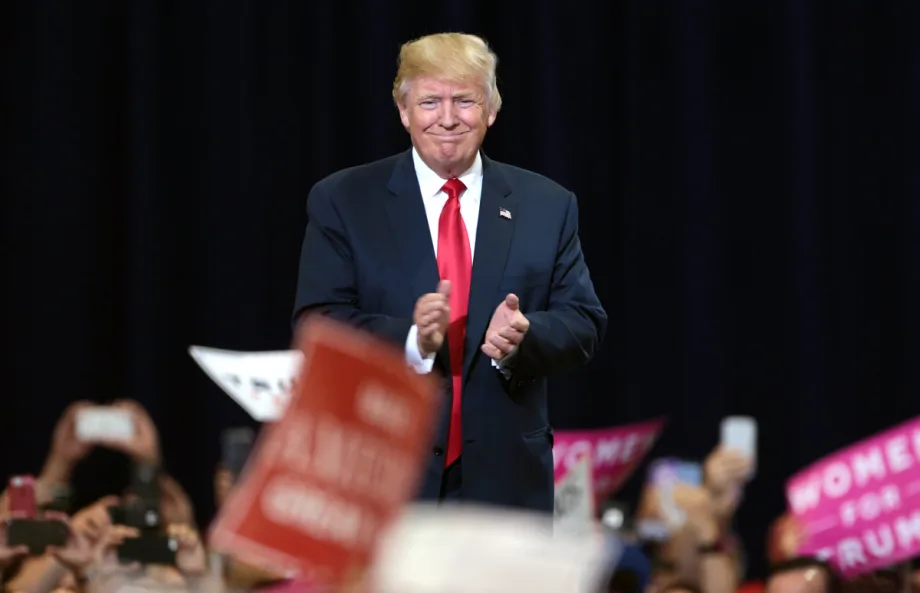
President Donald Trump promised sweeping regulatory reform on the campaign trail and could play a pivotal role in easing or eliminating some regulations affecting the auto finance industry. Photo by Gage Skidmore
The wave of regulatory enforcement disruption being perpetuated by the Trump administration in various ways looms for auto dealers in the form of shakeups at the Consumer Financial Protection Bureau (CFPB) and Federal Trade Commission (FTC).
What can dealers expect?
1. The CFPB: The Consumer Financial Protection Bureau has been a political lightning rod in recent years, especially for the automotive industry. The new administration will have multiple opportunities to reshape the CFPB’s enforcement actions and regulation in the coming year.
The CFPB was created by the Dodd-Frank Act in the wake of the 2008 financial crisis to regulate the financial services industry in the interest of consumers. Its director, Richard Cordray, is invested with a great deal of independence. Cordray has been criticized for his overzealous approach to enforcement and lack of accountability to Congress, especially when pressed by members of both parties to provide support for some of the policies and guidance issued by the CFPB during his tenure, including the CFPB’s Auto Finance Guidance.
Auto dealers are exempt from the authority of the CFPB. But the CFPB has authority over auto finance companies with whom auto dealers must do business. Auto finance companies provide the credit consumers need to buy a vehicle from an auto dealer. They take assignment of the sale contract in exchange for compensation, usually stated as a percentage of the spread between the interest rate at which the finance company buys the contract from the dealer and the interest rate the dealer charges the customer for the purchase of the vehicle.
Dealers have discretion to adjust this rate. This “dealer participation” has been under attack since the CFPB issued its Auto Finance Guidance in March 2013, questioning the use of dealer participation to compensate a dealer for the assignment of a sale contract as creating an unlawful, discriminatory disparate impact on consumers. The CFPB’s theory is that compensation to dealers in the form of discretionary dealer participation allows auto dealers, and therefore finance companies, to offer higher interest rates to racial minorities.
2. Auto Finance Guidance: With a Republican Congress and a Republican President, we are likely to see legislation rescinding the Auto Finance Guidance. In 2016, the House passed HR 1737, which would have rescinded the CFPB’s guidance and directed the CFPB to reissue guidance after public comment and input from various federal agencies.
Also in 2016, Texas Congressman Jeb Hensarling, the Republican chairman of the House Financial Services Committee, introduced HR 5983, which sought to restructure the CFPB. It would have replaced the Bureau’s sole director with a five-member bipartisan commission, repealed the CFPB’s Auto Finance Guidance and make its budget subject to Congressional appropriations as opposed to the CFPB receiving automatically a percentage of the Federal budget as it does today. Both of these bills died with the 114th Congress, but received significant support and could be reintroduced in 2017.
However, any change to the Auto Finance Guidance will take time to work its way through Congress. In addition, several lending institutions have entered into consent decrees with the CFPB that place restrictions on how dealers are compensated for initiating loans. These agreements will continue to be legally binding.
3. Class-Waiver Arbitration Rule: Another brewing fight at the CFPB that impacts the automotive industry is a proposed regulation limiting the use of binding arbitration agreements in finance contracts. The Dodd-Frank Act directed the CFPB to analyze and potentially restrict the use of arbitration agreements in consumer finance contracts.
The CFPB conducted its study in 2015 and issued proposed regulations in 2016. These regulations, if adopted, would prohibit lending institutions from using class action waivers in arbitration clauses in finance contracts such as car loans, effectively thereby preventing dealerships from using them as well. Public comment on the proposed rule ended last August.
The Trump administration issued an executive order on Inauguration Day calling for a regulatory freeze across all federal agencies. Many observers predicted that the CFPB would attempt to move forward with the arbitration rule prior to the inauguration, but it didn’t. It therefore appears that the regulation is subject to review by the new administration and unlikely to become effective in its proposed form.
4. FTC Enforcement: The FTC has actively regulated the auto industry’s advertising and finance practices over the last few years. By way of examples, the FTC, in conjunction with 32 law enforcement agencies, announced Operation Ruse Control in 2015, a crackdown that resulted in 252 enforcement actions targeting what it described as fraudulent and deceptive dealership advertisements.
In 2016, the FTC sued a California dealership group and its principals for so-called “yo-yo” practices that it claims deceptively resulted in consumers paying higher down payments and finance charges than originally agreed to.
Former FTC Chairwoman Edith Ramirez announced her resignation effective Jan. 20. President Trump named Republican Commissioner Maureen Ohlhausen as acting chairwoman. There are also three open commissioner seats, at least one of which must be filled by a Democrat, as the FTC is a bipartisan body.
With the choice of Ohlhausen and the three open seats, it is unlikely that the FTC will make any major changes in policy in the short term. However, many observers predict that the FTC will not as aggressively engage in enforcement actions under this administration, which is widely seen as more friendly to businesses than the Obama administration.
5. Potential Increase in State and Local Enforcement: The FTC worked with state and local law enforcement in bringing many of its enforcement actions over the past few years. If the FTC pursues fewer actions in the future, more state and local agencies may initiate enforcement actions on their own. Historically, state attorneys general in more liberal states take a more aggressive enforcement stance during Republican administrations, and that trend may continue in consumer advertising.
For example, attorneys general for many of the more liberal states announced in November that they would be “the first line of defense” to protect consumers against any unconstitutional activities out of the new White House. In California, district attorneys have in recent years increased their scrutiny of dealership advertising and sales practices.
And in his Jan. 24 State of the State Address, Gov. Jerry Brown announced that California will fight the Trump administration on many policies, particularly healthcare, immigration and climate change. But California is expected to pick up any slack by the federal government in enforcing laws protecting minorities.
This is telegraphed by Brown’s pick for attorney general, Xavier Becerra, confirmed by the state senate, who has vowed to defend minorities against policies he sees as regressive. California also hired former U.S. Attorney General Eric Holder to defend the state against what the state might see as illegal or unconstitutional activities out of the Trump administration.
Christian Scali and Monica Baumann are attorneys with The Scali Law Firm, recognized by the Daily Journal as California’s top boutique automotive law firm. For more, click here.
More Auto Finance

Interest Rates Further Squeeze Auto Consumers
Last month’s hike and a potential second increase this month add to a growing list of inflation woes that could continue to dent overall car sales.
Read More →
Mind Your Process
Consistent steps taken in various aspects of the F&I office can make valuable differences over time, similar to an outline for a best-selling book.
Read More →
Top Five Credit Application Fraud Flags
Compliance audits regularly reveal bad habits that can lead to fraud charges and should have been stamped out decades ago.
Read More →
More Auto Loans for the Taking in August
Riskier categories were on the uptick for the month as lenders loosened access in several areas while balancing out the exposure in another, Cox Automotive reported.
Read More →
July Was Hot for Auto Borrowers
Credit proved readily available for many, but most loans left buyers in negative territory, Cox Automotive said.
Read More →
Dealer Lender Preferences Revealed
When lenders provide consistent, fast service, their overall satisfaction scores with dealers greatly improve, according to JD Power research.
Read More →
Auto Refi Savings Surge
Consumers with 84-month auto loan terms who refinanced saved the most on monthly payments, according to a new report by auto refinancing provider Caribou.
Read More →
Subaru Enters Lending Business
The automaker follows other brands in adding captive financing in the U.S., and says the move will strengthen its position here.
Read More →
Positive Equity Reaches Record High
Mainstream vehicle owners who bought a car seven years ago are likely to have positive equity when trading in for a new vehicle, according to second-quarter Edmunds data.
Read More →
Dealerships Are Paying the Price for Extended Car Loans
Growing negative-equity scenarios mean such lengthy terms should be addressed in a forward-looking way to make them work for the dealer and the consumer down the road.
Read More →