



Dealer Principal as Big Brother
Dealers who undertake electronic surveillance of employees’ emails and phone calls must be aware of state consent requirements and tread carefully to avoid violating a maze of federal laws.


Photo ©GettyImages.com/Xesai
George Orwell immortalized the notion of an all-seeing and intrusive government as “Big Brother” in his classic novel “1984.” The recent Supreme Court decision in Carpenter v. United States reminds us that Big Brother does, in fact, exist. And some of the same issues that arose in Carpenter can arise at your dealership.
For those of you who don’t read Supreme Court decisions as part of your normal workday, here’s the Carpenter case in a nutshell: Every time your phone connects to a cell tower, it generates a time-stamped record called cell site location information. Timothy Carpenter was convicted for four robberies, in part because his CSLI placed him near the scene of those four robberies at the time they were committed.
In short, Big Brother was watching. Carpenter was able to get his conviction overturned, arguing that his CSLI could not be obtained without a warrant based upon probable cause. Five justices agreed and today he is a free man (who, presumably, will never again take his cellphone to “work”).
We live in a connected, archived digital world. What rights do dealers have to listen to, record, and review employee and customer communications in such a world? What can a dealer do as Big Brother?
The short answer is “a lot.” But there are legal rules and limits to such behavior, as well as ethical and business considerations.
1. Incoming Calls to the Dealership
Incoming calls to a dealership may be monitored and recorded, provided the dealership notifies callers of this fact. We are all familiar with the standard “This call may be monitored or recorded” disclaimer when we dial a customer service number. If you intend to monitor or record incoming phone calls, you should adopt this practice.
In addition, employees need to be made aware. In writing is best; it may be included in your dealership’s employee handbook, and a process put in place to document that the employee received it and agrees to be bound by its terms.
2. Outbound Calls
Outgoing calls are more difficult to monitor or record than inbound calls for the obvious reason that the employee making the call must provide the disclosure. Ensuring that is difficult, and the downside is huge: allegations of illegal wiretapping.
When it comes to consent to recordings, there are two main positions: one-party consent and all-party consent. In states with the former, only one party to the recording (presumably the caller) needs to consent to the recording. Consult the map below. If you are in an “all-party” state, everyone on the call must know of the recording and consent to it. Since employees do not always make the required disclosure, most employers in all-party consent states only monitor incoming calls to avoid litigation.
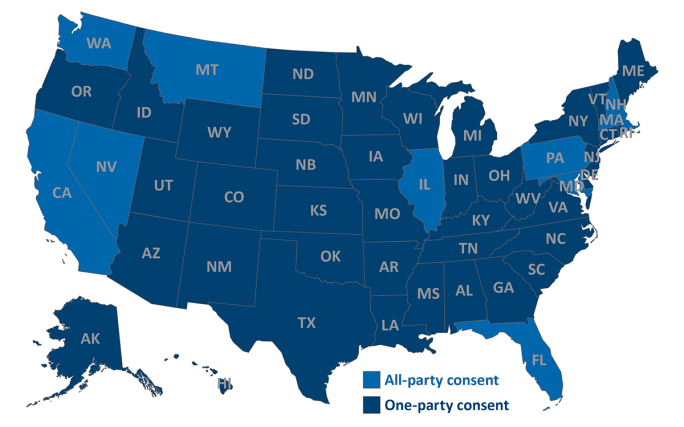
States of Consent: Dealers operating in all-party consent states must inform every party on a phone call if it is being recorded.
3. Reasonable Expectations of Privacy and the ECPA
Employees have no reasonable expectation of privacy even when employers have promised it. In Smyth v. Pillsbury (1996), the court held that an employer could read personal emails even when it had told employees it would not.
In Quon v. City of Ontario (2010), the Supreme Court held that a police officer had no expectation of privacy in the text messages he sent over an employer-issued device, even though his commanding officer promised him his messages would not be monitored. The court reasoned that the officer should have ignored what his commanding officer told him and relied upon the boilerplate language in a form he was given with the device.
Dealerships have a legitimate interest in ensuring their employees treat customers well on the phone and don’t make misrepresentations in those calls. From this flows the general right to monitor and record calls as described above. There is a federal law, however, that puts some limitations on that right. The Electronic Communications Privacy Act restricts individuals and organizations, including dealerships, from intercepting personal wire, oral, or electronic communications.
Under the ECPA, even if a call is being monitored for legitimate business reasons, if a personal call comes in, the employer must hang up as soon as it becomes obvious the call is personal. A dealership may monitor a personal call only if the employee knows the particular call is being monitored — and consents to it.

Dealers may not monitor employee phone calls of a personal nature, even if they are made on company time with company phones. Photo ©GettyImages.com/Wavebreakmedia
All of this assumes the calls (or emails) are passing through dealership phone equipment or computer networks. Recording private calls made on employee-owned cellphones remains a very big no-no, unless the employee consents.
What if employees consent to having their own phones monitored? If they consent, you could install some truly creepy software. How creepy? Imagine every text message they send, every website they visit, and every phone call they make being logged and forwarded to you. Even their locations can be recorded and disclosed. Think I’m making this up? Check out Mobile-Spy.com and see for yourself.
4. Video Monitoring
When I was a boy (back in the Carter administration), video monitoring was fairly rare. Cameras were big and clunky, low-resolution, and black and white. Recording happened on VHS or Betamax tapes, which were limited in their capacity. And all of it was very expensive, so video recording was most often seen in connection with high-security environments and, of course, casinos.
But now, video recording equipment is small, high-resolution, and in living color. It is also cheap, and therefore showing up in ever more locations, such as building lobbies, 7-Elevens, and along highways — and, incidentally, within dealerships.
It is now possible for you to record and store virtually everything that happens anywhere on your premises. Keeping an eye on inventory on the lot and in the parts department seems innocuous enough. But how about the restrooms?
This gets us back to the concept of reasonable expectation of privacy. The expectation of privacy in public spaces is low. The expectation of privacy in the bathroom is high. Most of the dealership space falls somewhere in between those two extremes — the F&I office, for example.
Articles have been written about the wisdom and procedures for recording the F&I transaction; I will not repeat their substance here. But for all the reasons set forth above, be sure to give notice to customers before video (and audio) recording of the delivery process. And if you’re conducting video surveillance on dealership property, post that fact around the perimeter and near the building entrances.
What all this drives home is that Big Brother is, in fact, watching. And if you want to be Big Brother, you need to be very, very careful.
James S. Ganther Esq. is the co-founder and CEO of Mosaic Compliance Services. He is a dealer compliance expert and a prolific writer and speaker. The author gratefully acknowledges the assistance of Tony Molino Esq. in researching the legal precedents and regulations discussed in this article. Email Ganther at jim.ganther@bobit.com.
Originally posted on Auto Dealer Today
More Opinion

Combative UAW Demands Leave No Room For Constructive Negotiations
Compensation for workers' contributions during the panedmic is justified but not at this level.
Read More →
Curing Your COVID Hangover
It’s time to get re-connected with our customers and stay there.
Read More →
Uber Doubles Q2 Revenue
The company saw revenue more than double to $8.1 billion as customers continued to hail rides and order takeout food.
Read More →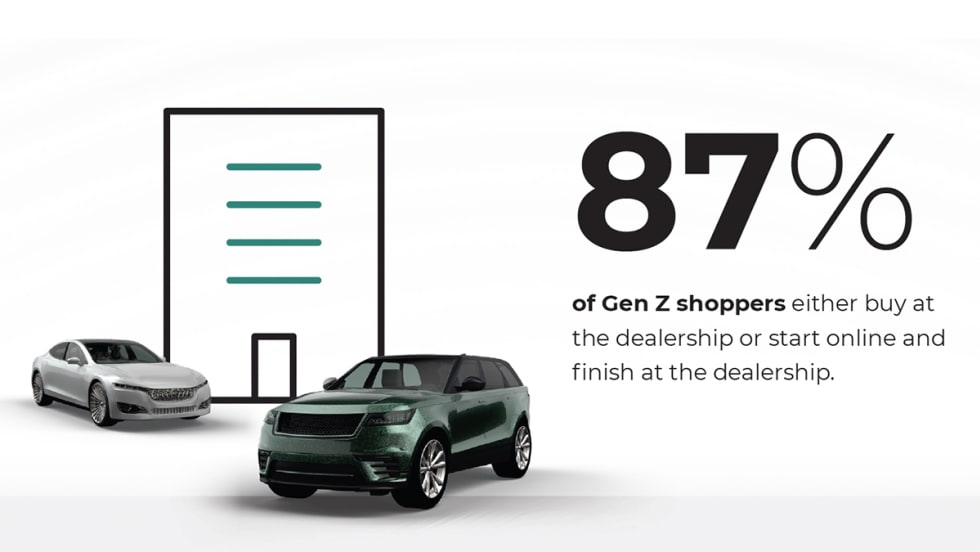
Study Finds Gen-Z Car Shoppers Spend More Time Researching and Find Purchase Process More Difficult Than Older Generations
Gen Z shoppers report they experience more problems compared to Baby Boomers, including 45% of Gen Z frustrated with waiting on a salesperson and 52% with additional fees.
Read More →
The Remote Evolution In F&I
F&I profits have consistently increased since my departure from “the box” — and it’s all happening in conjunction with my fuzzy slippers.
Read More →
LMP Automotive Holdings Receives Notification of Deficiency from Nasdaq
The Nasdaq notice has no immediate effect on the listing or trading of the Company’s common stock on the Nasdaq Capital Market.
Read More →
Auto Experts Weigh in on the Semiconductor Shortage
Experts suggest automakers focus their attention on the user experience and greater collaboration as they content with limited semiconductor chip supplies.
Read More →
LMP Automotive Holdings Announces its Board of Directors Approved an Immediate Pursuit of Strategic Alternatives
The Company intends to terminate all of its pending acquisitions in accordance with the terms of their respective acquisition agreements, primarily due to the inability to secure financial commitments and close within the timeframes set forth in such agreements.
Read More →
Blockade of Ambassador Bridge Costs Auto Industry Millions
Total losses add up to $300 million, with a $155 million hit to automakers and $145 million in lost direct wages.
Read More →
8 Ways Small Dealers Can Compete With Big Franchises
The digitization of the auto retail and finance industry has helped level the playing field for dealers who are willing to invest in new tools — no matter your size or location.
Read More →