



Engage Employees Now!
To our credit, we have proven that we can work remotely, but as employees return to work, you must ensure your levels of employee engagement remain high as they acclimate to a new reality.

To our credit, we have proven that we can work remotely, but as employees return to work, you must ensure your levels of employee engagement remain high as they acclimate to a new reality.
IMAGE: GettyImages.com
Last March 2020 when COVID-19 hit, a team member of mine, with scared and nervous eyes, asked me, “Do you think coronavirus will come here?” As we have all experienced now, it did arrive here and everywhere, and like most other establishments, we all left the office environment and did an immediate transfer to remote work from home situations. Along with all our problems surrounding the office withdrawal, we had to take on new problems no one ever thought about, like where to score some toilet paper. In all seriousness, when we left the office suddenly, our work environment became a minuscule issue. Our personal situations, our health, the health of our loved ones, and the crisis going on all over the world took center stage and mattered above all else.
Having a workforce comprised of highly engaged employees is a significant competitive advantage.
To our credit, we have collectively proven that we can work remotely from home or anywhere. Today, some of the workforce is migrating back into workspaces and trying to pick up where they left off. However, we are facing the reality that we are still dealing with COVID-19, and the office environment from which we left is not the same as it was. Companies are faced with critical issues like health and safety regarding employee management. There is an essential need to integrate health screenings, COVID-testing, and vaccinations, but there is another significant issue looming that isn’t clearly being addressed — the need to re-engage with our employees.
Increasing Employee Engagement
Improving employee engagement has a direct impact on employee performance. There is a clear, direct link between engagement and contribution that has a real effect on a business’ bottom line. To deliver outstanding business results, we need engaged employees now more than ever. Engaged employees are those that are emotionally invested in their work, consistently give their best, and make significant efforts to further the company’s overall success. Engaged employees take pride in having their company succeed because they feel they are part of driving that success.
Having a divisive culture doesn’t allow for a good work environment. You want to avoid an “us versus them” or “sales versus administration” disengaged philosophy in your company. It’s not sustainable to have one group inevitably feeling less important than another. It is very important to recognize that the success of our internal departments are often contingent on each other. A positive attitude that influences the behavior of employees should be proliferated. To create engagement, companies must earn it though conduct, climate, and fostering a positive atmosphere where those behaviors develop.
Recognizing the Signs of a Disengaged Workforce
Have you ever experienced a workplace environment where the employee’s behaviors mirrored any of these inherent characteristics?
Lack of effort; minimal amount of contribution; person does just enough not to get fired
No initiative because of no interest; no one wants to stick their neck out
Lack of communication and absence of helpful feedback
Defensive and disruptive behaviors
Self-interest ahead of team or company
Increased bureaucracy and friction
Silo mentality; reluctance to share information
High turnover in some or all departments/functions
High rate of absenteeism
If you have or currently are experiencing this, you may have been (or are), part of a disengaged workforce.
Create a Culture of Opportunity
Here’s the good news: It is never too late to turn things around and facilitate improvements. But, where or how do you start? You start by welcoming every employee back with open arms. You need to provide reassurance that the company will not disregard employees if they or someone they love and care for falls ill. Provide essentials including masks and hand sanitizer, and display signs regarding good hygiene and social distancing markers. Consider investing in a program that allows you to provide digital daily health screening, contactless temperature checks at entry ways, COVID-19 testing, tele-medicine options, paid time off for COVID-19 related illness, and contact tracing devices. After getting your office environment set-up, you can move forward with productivity.
You can start by recognizing and praising your employee’s contributions. Think back to the days when there was a “gold star” chart in the classroom. Everyone worked hard to get that star. I remember as a child, all my classmates and I wanted to do something to make the chart and get that praise and recognition. It was an incentive to do better and do more, which is very similar in the adult working world. While employees may not need (or say they do not need) praise, everyone enjoys positive feedback and a “thank you” for doing a great job. Consider investing in a rewards and recognition program.
Another way to jumpstart and sustain employee engagement is by creating a strategy, outlining best practices, and holding yourself and your management team accountable for not only performance, but engagement. Provide your employees, regardless of job level, with training and coaching.
The Numbers Tell the Story
Before you dismiss the importance of employee engagement, review these numbers and statistics:
Companies with top employee engagement scores are 21% more productive than those with love levels of engagement. (Gallup)
Companies with top 25% employee engagement scores delivered 2.6 times earnings per share and 12% higher profitability than those in the bottom half of the engagement scores. (Falde)
Engaged employees deliver 44% more productivity than workers who merely feel satisfied. (Bain & Company)
Organizations with above-average employee engagement exceed the financial performance of their peers by 73%. (Wharton)
Having a workforce comprised of highly engaged employees is a significant competitive advantage. Keeping them feeling safe and secure, well that just makes you the “Employer of Choice.”
Gina Dewar is chief human resources officer at Spectrum Automotive Holdings.
Originally posted on P&A Magazine
More Opinion

Combative UAW Demands Leave No Room For Constructive Negotiations
Compensation for workers' contributions during the panedmic is justified but not at this level.
Read More →
Curing Your COVID Hangover
It’s time to get re-connected with our customers and stay there.
Read More →
Uber Doubles Q2 Revenue
The company saw revenue more than double to $8.1 billion as customers continued to hail rides and order takeout food.
Read More →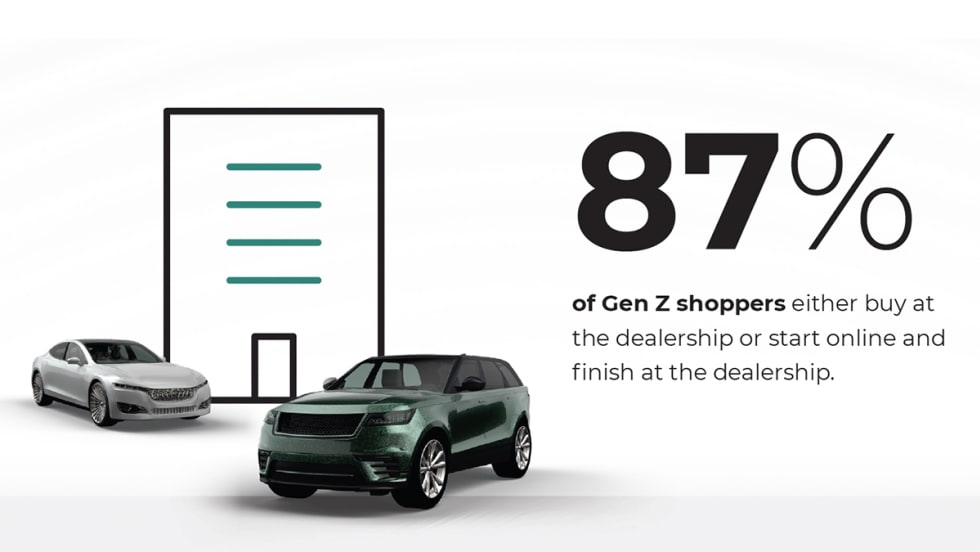
Study Finds Gen-Z Car Shoppers Spend More Time Researching and Find Purchase Process More Difficult Than Older Generations
Gen Z shoppers report they experience more problems compared to Baby Boomers, including 45% of Gen Z frustrated with waiting on a salesperson and 52% with additional fees.
Read More →
The Remote Evolution In F&I
F&I profits have consistently increased since my departure from “the box” — and it’s all happening in conjunction with my fuzzy slippers.
Read More →
LMP Automotive Holdings Receives Notification of Deficiency from Nasdaq
The Nasdaq notice has no immediate effect on the listing or trading of the Company’s common stock on the Nasdaq Capital Market.
Read More →
Auto Experts Weigh in on the Semiconductor Shortage
Experts suggest automakers focus their attention on the user experience and greater collaboration as they content with limited semiconductor chip supplies.
Read More →
LMP Automotive Holdings Announces its Board of Directors Approved an Immediate Pursuit of Strategic Alternatives
The Company intends to terminate all of its pending acquisitions in accordance with the terms of their respective acquisition agreements, primarily due to the inability to secure financial commitments and close within the timeframes set forth in such agreements.
Read More →
Blockade of Ambassador Bridge Costs Auto Industry Millions
Total losses add up to $300 million, with a $155 million hit to automakers and $145 million in lost direct wages.
Read More →
8 Ways Small Dealers Can Compete With Big Franchises
The digitization of the auto retail and finance industry has helped level the playing field for dealers who are willing to invest in new tools — no matter your size or location.
Read More →