



Make Women Safer Behind the Wheel
Lack of crash-test dummies modeled to represent adult females is a regulatory gap that should be filled.


Most U.S. auto crash-test standards are still tailored to men’s bodies.
IMAGE: Pixabay/Pixel-mixer
I was struck like being blindsided by a car pulling out nowhere when I read an article in my alma mater’s magazine about the fact that U.S. auto crash-test standards are tailored to men’s bodies.
The piece talked about a female graduate, severely injured in a 2019 crash along with her mother in the back seat of a rental car while her father and brother were unharmed in the front seat, learning sometime later that crash-test dummies are based on an average man’s body. That body shape has led to decades of auto-safety design being based on how men are affected in crashes but not women.
The graduate recovered and has since become an advocate for changing that reality so that women’s safety is factored into automotive regulation. Maria Weston Kuhn founded Drive US Forward, a nonprofit group waging an awareness campaign about the issue.
Accurate female crash-test dummies don’t even exist, and most of the male ones used by government regulators and the insurance industry are based on a 5-foot-9-inch, 171-pound man, the average U.S. man when the dummies were standardized in the 1970s, Consumer Reports said in a 2019 article. That’s even though today’s average man is about 26 pounds heavier, it said.
The report said female drivers and front passengers are about 17% more likely to be killed in a crash than males of the same age, according to the National Highway Traffic Safety Administration, the federal agency that conducts the government’s auto crash tests, and that a female occupant wearing a seatbelt has 73% greater odds of serious injury in the same scenario, it said, citing a 2019 study by the University of Virginia.
Consumer Reports said that regulators asked for a female test dummy standard in 1980 and multiple automakers petitioned for it in 1996, but that the NHTSA didn’t respond until 2003, and then with a scaled-down version of the male dummy that “represents only the smallest 5 percent of women by the standards of the mid-1970s — so small that it can work double-duty as a 12- or 13-year-old child.”
The consumer publication said the female test dummy is also never put in the driver’s seat for frontal crash tests of either the NHTSA or the nonprofit Insurance Institute for Highway Safety.
I’d like to think that if the auto industry can design cars so complicated that they include hundreds of computers each that they could design and employ an accurately designed female model to start to course-correct such an egregious miss and make traveling America’s roads a lot safer for women.
Originally posted on Auto Dealer Today
More Showroom

California Sees Quarterly Gains
California’s new-vehicle market saw a boost in hybrids in the third quarter and its first overall quarterly market gain of the year.
Read More →
New-Vehicle Prices Stay Put
Affordability pressures and model availability shaped new-vehicle sales in September, according to an analysis by Kelley Blue Book.
Read More →
EV Buyer Consideration Shifts
What drives American consumers to purchase an electric vehicle is shifting as the question moves away from Should I?' to 'Which features and experience do I want to have?'
Read More →
Year-to-Date Auto Sales Holding Their Own
A forecast through August shows that automakers have shifted strategies to keep deliveries and revenues up despite tariffs and other economic challenges.
Read More →
Slow to Robo
Ten years of polling consumers shows autonomous vehicles’ profiles have risen considerably, but even more people now want at least some level of control if they go that route.
Read More →
Dealers a Little Down
A third-quarter Cox Automotive survey finds them in a mixed mood, bummed by fallen customer traffic but encouraged by better profits, costs and EV interest.
Read More →
European EV Sales Skyrocket
The EV market on the continent held strong in July with almost 25% of new-car sales being fully electric units, a stark contrast to the U.S., where EV sales declined about 42%.
Read More →
Mitsubishi Unveils U.S. Plan
The automaker announced a strategy that includes an expanded lineup and dealership presence, along with more ‘rugged’ and electric models.
Read More →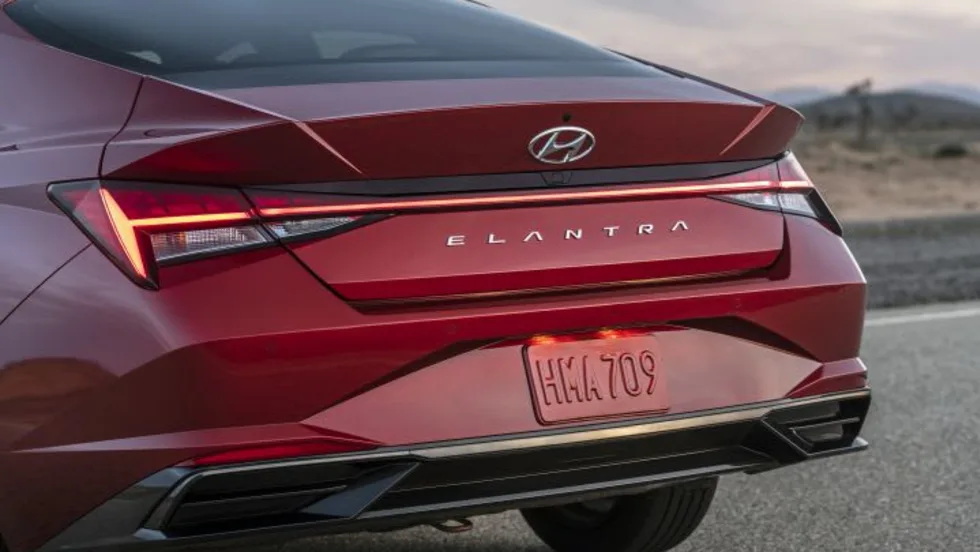
Used Lots Getting the Business
Many consumers are seeking out the units to save money, and the demand – higher in July than normal – is keeping supply limited and prices up.
Read More →
Used Market Stabilizes
The Carfax Used Car Index noted a major drop in used-vehicle price increases in July after several months of hikes.
Read More →