
F&I
Consistency at Scale: Driving F&I Performance
With 75 rooftops across the Sunshine State, Morgan Auto Group has proven to Floridians that it knows a thing or two about driving performance in a competitive market. But it didn’t start at the top.


 MENU
MENU SEARCH
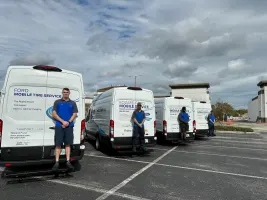
More auto dealerships are offering mobile servicing for today’s convenience-minded consumers to boost business and stand out from competition, though it may not fit every store.
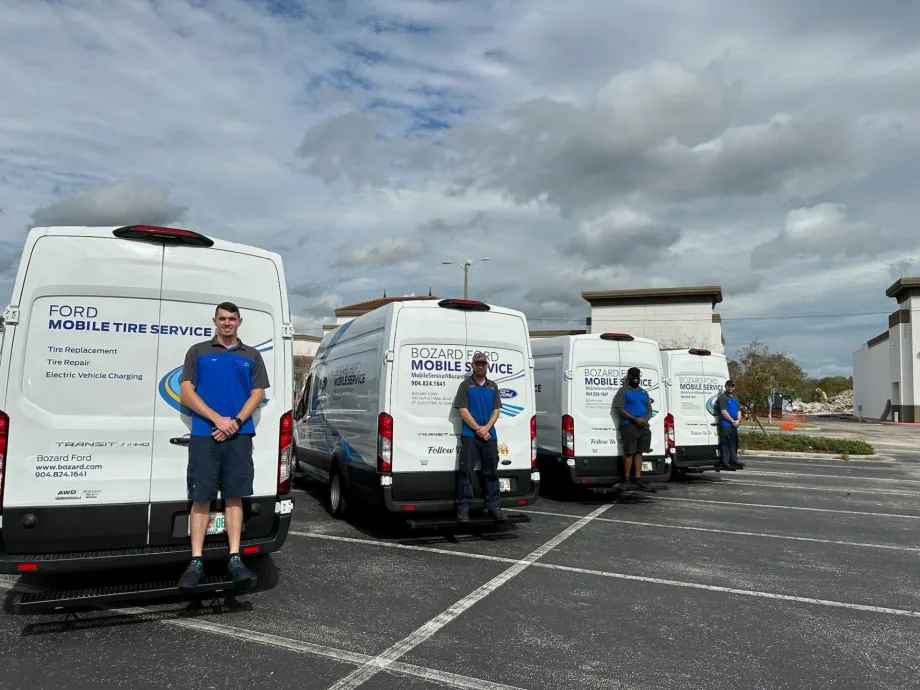
Ford has led the way on mobile servicing in the U.S., including at Bozard Ford Lincoln in Saint Augustine, Fla.
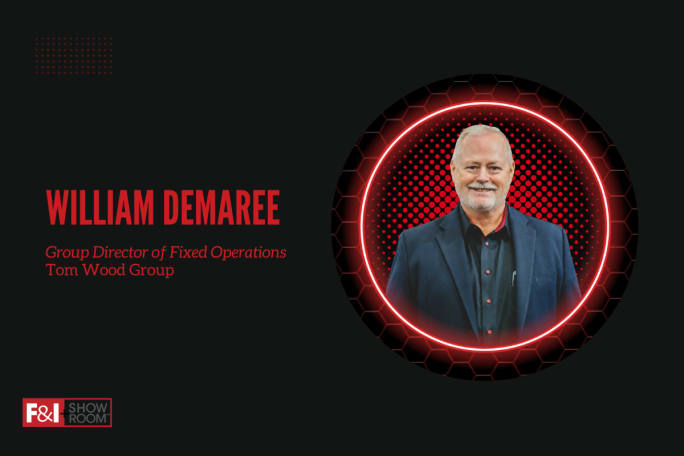
Talk about operating ahead of the curve: Dealership fixed-operations director Bill Demaree worked on customers’ cars from a van starting in 1996.
That was during his 24-year stint as a service manager. Though the Chrysler Dodge Jeep Ram dealership he worked for went out of business in 2010 – and not because of its mobile servicing, by any means – Demaree didn’t forget how much customers liked mechanics coming to them rather than the other way around.
“Nobody was doing it,” he said of mobile car servicing, which has started to catch on in recent years. “I think the customers we went to back then really appreciated what we were doing.”
Since Demaree’s trailblazing days, other mobile options have cropped up like revolving door knocks, including car washing and non-pizza food delivery. Consumers have gotten used to being catered to at home, so why should they sit in a waiting room for an hour or two to get their cars serviced?
The concept kicked into a higher gear during the Covid pandemic, when many people wanted to limit human contact in public spaces. Direct electric-vehicle sellers Tesla and Rivian, with fewer service outlets, have relied on mobile service from their beginnings in the 2000s and still do as much of 30% of it on the road today, according to JD Power.
Demaree now manages fixed operations for Indiana-based Tom Wood Auto Group, which started offering mobile servicing five years ago for its Audi, Ford, Honda, Jaguar, Land Rover, Lexus, Nissan, Porsche, Subaru, Toyota, Volkswagen and Volvo franchise customers.
The group offers basic services, including oil and tire changes, software updates and recall repairs, avoiding major mechanical work due to its complexities.
In fact, Demaree said he’d advise dealerships planning to add mobile servicing to avoid trying to send their whole service drives on the road.
“Sometimes we try to take on too much out in the field, and it causes all kinds of problems. Being intentional on things we can be experts in,” he said, is the best approach.
“We’ve tried getting into the brake job side and some mechanical repair. What happens is you need more parts – the vehicle is torn down – you have to call for help and try to get another van on site.”
As dealers lean more on back-end revenues, including their fixed-operations business, to balance out thin front-end margins, they’ve also failed to hang onto service drive customers, even as many consumers require more servicing due to hanging onto their cars longer.
A 2025 Cox Automotive survey of 2,000 consumers who’d had their cars serviced in the previous 12 months found that dealerships were getting 12% fewer service drive visits than in 2018. The biggest losses came in vehicles 5 years old or newer.
The research found that consumers opting for other servicing providers were tapping mobile service outlets or visiting independent repair shops or quick oil-changers.
The phenomenon hasn’t been lost on automakers. Though mobile servicing for retail customers is still at a low 2%, according to JD Power data, more brands have started offering it or are exploring it.
Ford has been leading the OEM response to consumer demand for mobile service, piloting a 100-dealer program in late 2019, just a couple of months before Covid hit the West. It shortly thereafter added mobile to its Lincoln luxury line.
Now nearly 70% of Ford’s 2,800 franchises serving 80% of its customers offer it, said Todd Rabourn, who heads the automaker’s customer experience and service performance.
The automaker dipped its toe in stay-at-home service for customers when the Lincoln line started offering car pickups in 2016. The two options made up a combined 16%, or 3.8 million, of its 2025 repair orders.
“Our customers identified the convenience was something they all really valued, and this is a great way to provide convenience,” he said.
With the emergence of more home delivery led by Amazon and DoorDash, Ford saw that it must start to “compete with the customer’s last best experience,” Rabourn added.
Ford helps its dealers scale the program, which Rabourn says has given the brand about a 12-point lift in net promoter scores.
“The feedback from customers is phenomenal. We see a lot of continued growth for retail customers and also commercial customers.”
Other brands are getting in on the action.
“Most brands, to a degree or another, are exploring mobile service right now,” said Chris Sutton, who leads customer success for JD Power’s Dealer Solutions.
“A lot of brands are looking for a way they can differentiate themselves, and this is a way, whether I’m comparing myself to Tesla, Rivian or other dealers in my market.”
Hyundai rolled out a nationwide U.S. dealer-based mobile servicing program in June through participating stores.
The South Korean brand said it’s meant to address both customer convenience demand and stretch its servicing capacity, which it said has been challenged by vehicle sales growth.
In fact, auto brands have struggled with service capacity issues since the pandemic, an issue that can make it challenging for people to get their vehicles dispatched in a timely manner, Sutton said.
The Hyundai program, which started as a pilot, is handling routine maintenance jobs, such as oil changes, tire rotations, software updates, brake pad and rotor replacements, and even car washing.
“Through the mobile service program, dealers will improve service retention by keeping routine maintenance in‑network and strengthen owner loyalty throughout the vehicle lifecycle,” Hyundai Motor America said in announcing the program.
Brands that have bigger commercial sales footprints, including General Motors and Stellantis, are also expressing more interest in mobile, according to Sutton.
“It’s a great loyalty driver,” he said. “You can work on five to 10 vehicles at once, keeping that fleet’s vehicles on the road.”
Bozard Ford Lincoln in St. Augustine, Fla., started mobile service for its fleet customers in 2016, several years before the brand. Small and large fleets must minimize vehicles’ and drivers’ down time, he explained.
The store would service up to 75 vehicles at a time on the customer’s site. At the time, it dabbled in retail mobile service, then expanded it during the pandemic.
“The take rate was much better than we ever anticipated,” said dealership Chief Operating Officer and General Manager Ed Roberts.
“What we found was the customer would make an appointment when they needed service done on a vehicle, but when it got down to the time, fear would set in and they’d say, ‘We’ll do it another time.’ We said, ‘Why don’t we come out to you?’”
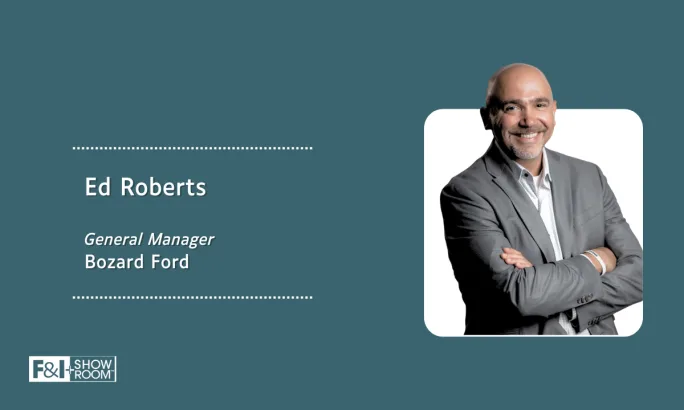
Bozard Ford Lincoln
Bozard started by offering basic maintenance but now offers every type of service except engines and transmissions. Though 30% of its repair orders are done via mobile, Roberts believes that can grow to 70% in the next five years.
Further north, an Alabama Ford store even took the mobile concept to the philanthropy level when it sent five service vans to a local hospital for an entire day, working on 30 employee vehicles for a discounted rate. The community outreach, though, gave it positive business exposure.
Woody Anderson Ford was on the right track, as some healthcare facilities have started to order mobile servicing for their doctors and nurses, said Matthias Stoever, CEO of platform RockED, which helps train U.S. dealership employees, as well as customers of automakers and vendors.
The company partnered with BizzyCar early this year to offer a mobile servicing certification for training dealers on the concept. The program helps dealers decide if they should go that route or not.
“It’s a lot of investment,” Stoever said. “It’s not as easy as just putting another bay into your store if you have the space. This requires equipment, a change in strategy, and it’s something that a dealer needs to think through.”
The program walks dealers through opportunities in mobile, how to build a program and how to promote it. Dealers who decide to add the convenience generate business they wouldn’t otherwise have, said Stoever, who pointed out that mobile can differentiate a dealership from rivals.
He’s even heard about a dealership’s mobile van acting as a moving advertisement, attracting passersby who inquire about getting their cars serviced that way.
“A lot of customers are simply not able to visit your dealership. They’d probably rather go to an independent competitor,” Stoever said. “This is a way for the franchise dealership to compete with businesses that they usually don’t compete with.”
LEARN MORE: Early Intervention Saves Retention
Sources: Bill Demaree of Tom Wood Auto Group; Ed Roberts of Bozard Ford Lincoln; and JD Power
Loading data...
F&I
With 75 rooftops across the Sunshine State, Morgan Auto Group has proven to Floridians that it knows a thing or two about driving performance in a competitive market. But it didn’t start at the top.






Industry
More auto dealerships are offering mobile servicing for today’s convenience-minded consumers to boost business and stand out from competition, though it may not fit every store.
Industry
Since finance-and-insurance was added to the auto dealership, most stores’ F&I teams have been separated from sales like a car’s trunk is separated from the engine. It doesn’t have to – and shouldn’t – be that way.
F&I
Finance has historically been the last step in the car-buying process, but it doesn’t have to be. The customer’s journey starts long before they arrive at the dealership, and so should F&I’s involvement.
Digital
Digital retailing has not made the F&I manager obsolete. If anything, it has revealed how valuable the role can become when technology is used correctly.
F&I
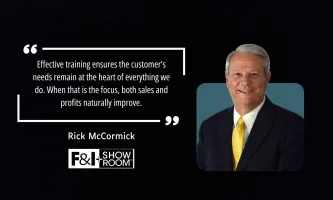
How can auto dealerships help F&I managers fulfill their vital role in the most effective ways? Industry expert Rick McCormick shares his insights on the best ways to train these professionals and help them maintain good habits.
Industry
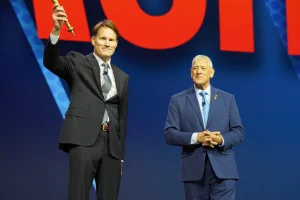
2026 NADA Chairman Rob Cochran knows a thing or two about leadership after decades in the business. He brings an emphasis on stewardship to his new role at the head of the country’s major auto retail trade group.
F&I
It may be human nature to back off when a customer seems to say no to a product or service. But experts say F&I managers should operate as though the answer will be the opposite.
F&I
A high profit per-vehicle retail can create a false sense of strength that masks underlying problems, while a low one may not reveal an operation that's actually efficient and well-balanced.
Industry
As America turns 250, explore how the automotive industry shaped jobs, culture, innovation, and mobility from Detroit assembly lines to today’s EV era.