



Opinion: For Dealers, Carsharing Is About Revenue, Not Miles
Former dealer is convinced that miles mean money for dealers in the shared economy, where a large and growing customer base of ride-hail drivers is poised to add incremental income to idle units and offer new opportunities for sales.

The author believes dealers have the inventory, proximity, and infrastructure they need to capitalize on the growing demand for ride-hailing units from an increasingly part-time (and lower-mileage) workforce.
Photo by freestocks-photos via Pixabay
Some say that sharing is caring. As a car dealer, I’ve often said “Carsharing is daring.” But today, I’ve changed my religion.
Along with many in the retail dealership world, I had a real fear about how the new sharing economy would affect my retail business. I associated carsharing and ride-hailing as something that accelerated mileage and depreciation on vehicles, along with increased wear-and-tear, all while losing retail customers to “on-demand” transportation.
I envisioned more people taking advantage of these options and buying fewer personal cars. Frankly, I had good reason to fear those things.
Early drivers for the rideshare industry tended to be disenfranchised taxi and limo drivers. They were used to driving 12 hours a day and 5,000 miles a month or more. Several companies entered this new mobility or transportation as a service (MaaS or TaaS) economy early and lost big. Bank and OEM captives suffered large losses on long-term loans with high-mileage owners.
Things were not pretty in the early days of the shared world in automotive, especially if you owned or financed the vehicles used on rideshare platforms.
Today, it’s a different story.
It’s Just a Part-Time Thing
Data submitted with Lyft and Uber’s IPO filings validate what I’ve been experiencing lately: The vast majority of ride-hail drivers are now part-timers supplementing their income.
In fact, Lyft reported in its S1 filing that 91% of its drivers drive less than 20 hours per week. In most metropolitan areas that ridesharing serves, it takes about one hour to drive 16 miles. Bottom line, Lyft drivers are averaging about 1,400 miles a month, plus the driver’s personal mileage.
So, what’s the opportunity for the dealer? Everything!
Your proximity to the ridesharing marketplace allows you to best serve and engage with rideshare drivers and the MaaS/TaaS community. You already have the infrastructure, resources, and service department in place. You can enter the MaaS/TaaS business at the lowest cost. In fact, a dealer can start with not one dollar of additional capital investment.
Every day, you have idle inventory sitting on your lot, not earning income but costing bundles in real estate, flooring, depreciation, and marketing. The airlines learned a long time ago that, if the plane is on the ground, it’s the money that’s flying away.
Driver Accountability Is Improving
One of the myths of the MaaS/TaaS industry is that rideshare drivers do not take care of their vehicles. Many equate rideshare vehicle wear-and-tear risk with experience from the taxi industry. My recent experience, backed by extensive data, tends to prove the opposite.
Today, rideshare drivers for companies like Uber and Lyft are incentivized for higher client experience ratings. Rideshare drivers strive to gain five-star ratings to earn a variety of benefits in addition to income. In order to earn stellar ratings, drivers must have clean and well-maintained vehicles.
It is not rare to see a rideshare driver clean a windshield, replenish complementary water bottles, or even apply tire dressing. In many cases, drivers have seat covers to preserve the interior and all-weather floormats. The vehicle is their office, their income, and they earn more providing a better environment for the client.
Another positive trend is that the quality of rideshare driver applicants is appreciating quickly. Any stigma of being a “rideshare” driver is nonexistent in conversations I have today. Some friends are now comfortable posting “Uber dude” as a job status on LinkedIn.
Many part-time and retired professionals (including law enforcement and military veterans) are supplementing income with ride-sharing. Some very qualified people drive for TaaS services because they find it interesting to meet new people, or even just to get out of the house!
If we do experience anything close to a recession in the future, I think the quality of rideshare drivers will only improve further.
Headwinds and Tailwinds
I strongly believe the dealer is closest to the MaaS/TaaS customer and enjoys the competitive advantages to serve them best. You have a chance to earn incremental revenue from assets you’ve already invested in, and many of your new customers will strive to buy the vehicles they’re driving. Carsharing means car-selling.
More importantly, if headwinds are approaching for traditional retail sales, dealers who leverage the shared economy will have the beneficial tailwinds to offset them.
My new religion? Miles used to be the measure of a vehicle’s value; today, it’s revenue.
Brian Allan is senior director of strategic partnerships for HyreCar, the company he joined after a 30-year executive tenure with Galpin Premier Automotive Group (div. Galpin Motors).
Originally posted on Auto Dealer Today
More Opinion

Combative UAW Demands Leave No Room For Constructive Negotiations
Compensation for workers' contributions during the panedmic is justified but not at this level.
Read More →
Curing Your COVID Hangover
It’s time to get re-connected with our customers and stay there.
Read More →
Uber Doubles Q2 Revenue
The company saw revenue more than double to $8.1 billion as customers continued to hail rides and order takeout food.
Read More →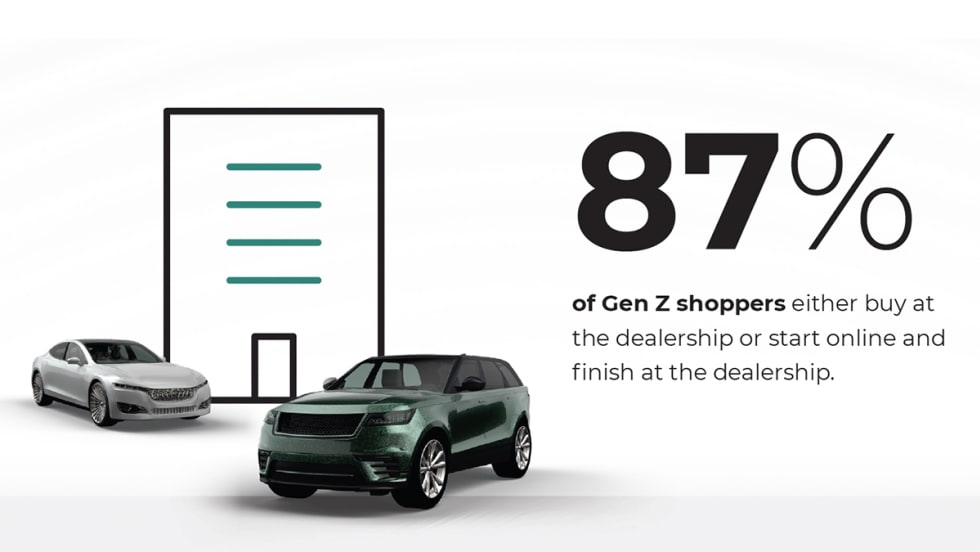
Study Finds Gen-Z Car Shoppers Spend More Time Researching and Find Purchase Process More Difficult Than Older Generations
Gen Z shoppers report they experience more problems compared to Baby Boomers, including 45% of Gen Z frustrated with waiting on a salesperson and 52% with additional fees.
Read More →
The Remote Evolution In F&I
F&I profits have consistently increased since my departure from “the box” — and it’s all happening in conjunction with my fuzzy slippers.
Read More →
LMP Automotive Holdings Receives Notification of Deficiency from Nasdaq
The Nasdaq notice has no immediate effect on the listing or trading of the Company’s common stock on the Nasdaq Capital Market.
Read More →
Auto Experts Weigh in on the Semiconductor Shortage
Experts suggest automakers focus their attention on the user experience and greater collaboration as they content with limited semiconductor chip supplies.
Read More →
LMP Automotive Holdings Announces its Board of Directors Approved an Immediate Pursuit of Strategic Alternatives
The Company intends to terminate all of its pending acquisitions in accordance with the terms of their respective acquisition agreements, primarily due to the inability to secure financial commitments and close within the timeframes set forth in such agreements.
Read More →
Blockade of Ambassador Bridge Costs Auto Industry Millions
Total losses add up to $300 million, with a $155 million hit to automakers and $145 million in lost direct wages.
Read More →
8 Ways Small Dealers Can Compete With Big Franchises
The digitization of the auto retail and finance industry has helped level the playing field for dealers who are willing to invest in new tools — no matter your size or location.
Read More →