



Service Advisors Are Exempt From Overtime Rules
Auto dealers finally have an answer to a critical compensation question thanks to a 5-4 Supreme Court decision in the Navarro v. Encino Motorcars case.
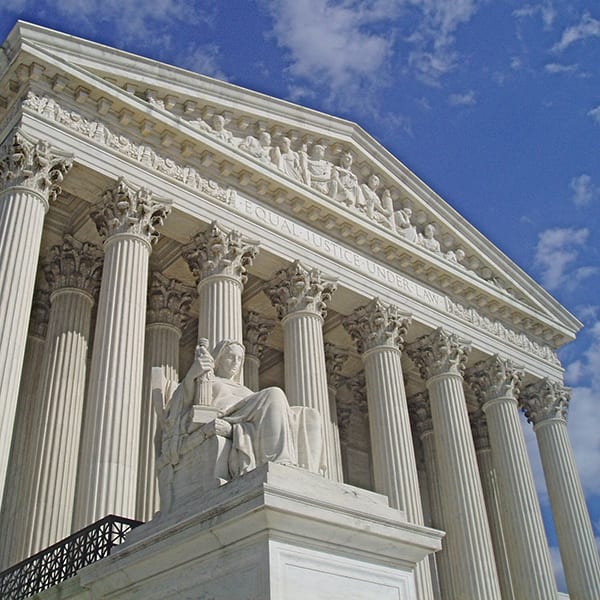
The Supreme Court officially declared automotive service advisors exempt from the Fair Labor Standards Act’s overtime rules. Photo by Matt Wade via Flickr
On April 2, the U.S. Supreme Court judicially closed the door on federal overtime eligibility for service advisors in car dealerships.
The case on the justices’ docket was Navarro v. Encino (Calif.) Motorcars LLC, which has played out in a back-and-forth between the U.S. Ninth Circuit Court of Appeals and the Supreme Court over whether the blanket overtime exemption set forth in Section 13(b)(10)(a) of the federal Fair Labor Standards Act covers service advisors. This provision exempts from federal overtime pay any “salesman, partsman, or mechanic primarily engaged in selling or servicing automobiles.”
Exemption Timeline
In the first Navarro case in 2015, the Ninth Circuit ruled that service advisors are outside the FLSA exemption, relying on the Obama administration’s Department of Labor reversal of the agency’s previous longstanding position that service advisors are covered by this overtime exemption.
In 2016, the Supreme Court vacated that decision, finding that the Ninth Circuit’s reliance on the new DOL’s position was not proper, and remanded the case. In its second review of the case, the Ninth Circuit once again found in favor of the service advisors based on its determination that service advisors do not sell or service vehicles under the language of Section 13(b)(10)(a).
As this ruling conflicted with other U.S. Circuit Court of Appeals and district court rulings, the Supreme Court once again granted review of this case and heard oral arguments in January 2018. The Supremes ultimately rejected the Ninth Circuit’s position that a service advisor does not function as a “salesman, partsman or mechanic primarily engaged in selling or servicing automobiles.”
The court’s opinion was authored by Justice Clarence Thomas, who was joined in the majority by Chief Justice John Roberts and Associate Justices Samuel Alito, Neil Gorsuch, and Anthony Kennedy. It states that a service advisor is a “salesman” because service advisors sell services to customers, and that service advisors are also engaged in servicing automobiles because they are integral to the servicing process.
Specifically, the court noted that a service advisor’s active and essential participation in the automobile service process — meeting customers, listening to their concerns, suggesting and discussing repairs, selling parts and accessories, recording repair orders, and following up with customers — qualified these employees as “primarily engaged in servicing automobiles,” even though the service advisors are not actually performing the mechanical service work on vehicles. As such, the majority chose to interpret the statutory language in a disjunctive sense, i.e., applying the “selling or servicing” phrase to each of the salesman, partsman or mechanic job categories.
The dissent, which was authored by Justice Ruth Bader Ginsberg and joined by Justices Stephen Breyer, Elena Kagan, and Sonia Sotomayor, argues that the majority’s decision essentially creates a new category for an exempt position that was not intended in the drafting of the FLSA provision. The dissent also applied the distributive approach to interpreting the statutory language, arguing that the term “salesman” in the statute only applies to the “selling” function, and not “servicing” as well, but that in any event, service advisors do not service vehicles as they are not performing the repairs and maintenance.
The dissent also noted that, independent from the Section 13(b) exemption, employers may also avail themselves of the FLSA’s Section 207(i) overtime exemption for any employee of a retail or service establishment whose pay is comprised of more than half in commissions, so long as the employee’s “regular rate of pay” is more than one-and-one-half times the minimum wage.
A Bellwether for Fairness
The broader policy and political lines that can be inferred from the Supreme Court’s decision are not surprising. We previously predicted where each of the justices would land in this decision, with Justice Kennedy’s position being the most in question.
Without a doubt, the tension between the Ninth Circuit’s approach to this issue and that of the Supreme Court’s more conservative palate (with the recent addition of Justice Gorsuch) mirrors the broader regional and philosophical divides that are playing out in many current national issues. And there is every indication that the current administration (including the DOL) will continue to ease up on the Obama administration’s previous pro-employee agenda.
In fact, today’s decision was a departure from some previous narrow interpretations of FLSA exemptions, which have generally fallen in favor of a fair reading of those exemptions. Though this could be as much due to the history of judicial interpretations of this particular exemption, as Douglas Greenhaus points out in the amicus brief he co-authored for the National Automobile Dealers Association (NADA), arguing that the entire franchised motor vehicle dealer industry has relied on previous court interpretations of this exemption for the past 40 years, holding service advisors exempt thereunder, as it could be a “bellwether” of a new age of fair interpretations of FLSA exemptions.
In any event, car dealers who have been on pins and needles regarding this issue for years are undoubtedly grateful to have a resolution — although, as we noted previously, certain states, including California, have their own overtime pay requirements for dealership employees, including service advisors. As such, it is important for all employers to confirm whether any additional overtime pay obligations may exist.
Christian Scali is an attorney with Scali Rasmussen. This article includes reporting by Jack Schaedel and Jennifer Woo Burns. Contact the author at christian.scali@bobit.com.
More F&I

AI: Facilitator, Not Fixer, in F&I
The dealerships that thrive in the years ahead will be those that embrace technology while continuing to invest in the people who make customer interactions count.
Read More →
Modern Technology Objection Handling
In this video, Trent White shares how to confidently handle technology-based objections by helping customers understand the value of protection, even with modern vehicle technology.
Read More →
Consistency at Scale: Driving F&I Performance
With 75 rooftops across the Sunshine State, Morgan Auto Group has proven to Floridians that it knows a thing or two about driving performance in a competitive market. But it didn’t start at the top.
Read More →
Gitty Up on GAP
The foundational finance-and-insurance product hasn’t kept up with the latest conditions for auto dealers. Is the time ripe?
Read More →
How AI-Powered Coaching Is Transforming F&I Performance
See how AI-powered coaching can turn F&I customer conversations into actionable insights that support compliance, performance and profitability
Read More →
Sell Value, Build Trust
In this video, Trent White explains why selling on value, not fear, builds lasting customer trust, reduces cancellations, and drives long-term success.
Read More →
F&I Sales Give Dealers First-Half Lift
Product business shored up total profits to avoid an overall revenue tanking as product penetrations held steady, StoneEagle reported.
Read More →
Targeted Training Drives Results
Today’s technology, instead of threatening F&I managers, can actually make them better, according to an industry veteran who’s watched market setbacks roil the unprepared.
Read More →
Double the Change, Double the Chance
When an F&I manager gets a customer refusal, it’s a wise move to tweak more than one thing in the product offering.
Read More →
Just Do It
F&I managers need training, but instead of resisting application or expecting perfection, they should improve by simply acting on what they learn.
Read More →