



AAA Spills the Truth on Oil Changes
The motor club found that synthetic oil performs nearly 50% better than conventional oil in tests. AAA also found, however, that most U.S. drivers are either unsure or do not believe the more expensive synthetic oil is better for a vehicle’s engine.
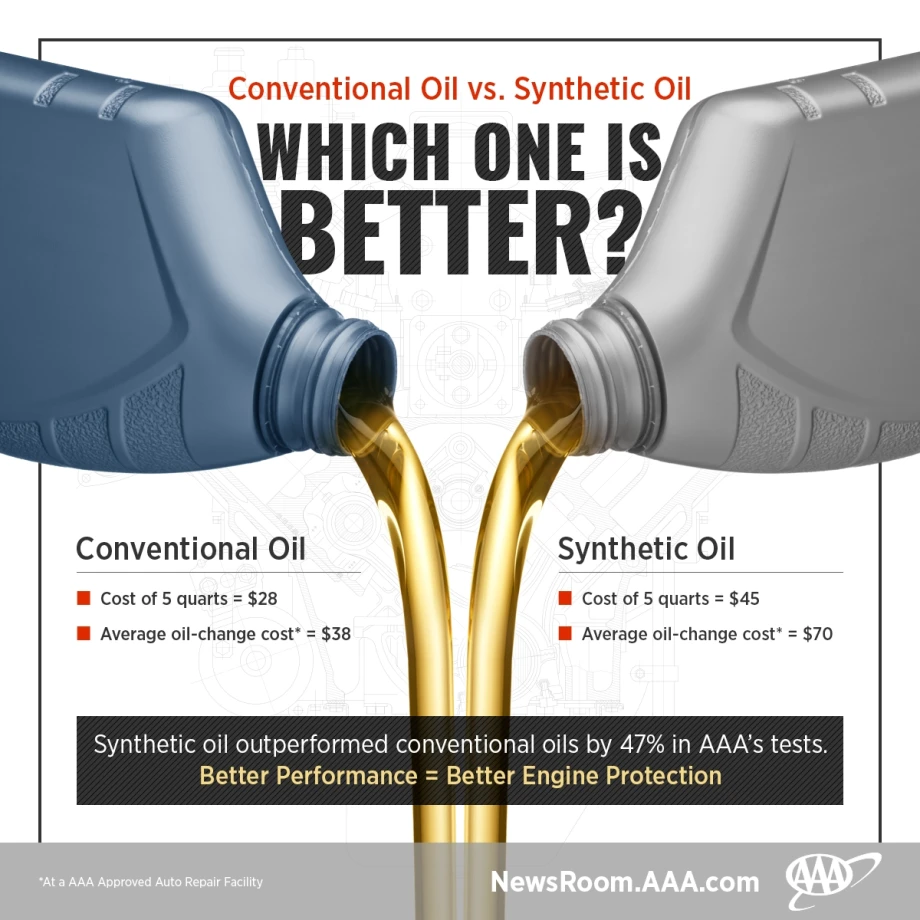
ORLANDO, Fla. — AAA found that synthetic oil outperformed conventional oil by an average of nearly 50% in its independent evaluation, offering vehicles significantly better engine protection for only $5 more per month when following a factory-recommended oil change schedule.
Switching from conventional oil to synthetic oil will cost the average driver $64 more per year, or an extra $5.33 per month. A survey of AAA’s Approved Auto Repair facilities reveals that the average cost of a conventional oil change is $38, while a synthetic oil change is $70. For those that change their vehicle’s oil themselves, the average cost of five quarts of conventional oil is approximately $28, while synthetic oil is $45.
“Oil protects critical engine components from damage and AAA found that synthetic engine oils performed an average of 47% better than conventional oils in a variety of industry-standard tests,” said John Nielsen, AAA’s managing director of Automotive Engineering and Repair. “With its superior resistance to deterioration, AAA’s findings indicate that synthetic oil is particularly beneficial to newer vehicles with turbo-charged engines and for vehicles that frequently drive in stop-and-go traffic, tow heavy loads or operate in extreme hot or cold conditions.”
AAA’s survey also found that vast majority (83%) of service professionals select synthetic oil for their personal vehicles.
In a companion AAA nationwide survey of U.S. drivers, 44% of respondents said they are either unsure (27 percent) or do not believe (17 percent) that the more expensive synthetic oil is better for a vehicle’s engine. Reasons cited for regularly choosing the cheaper, conventional oil include feeling that synthetic oil is too expensive, offers no benefit, that the upgrade to synthetic oil is an unnecessary up-sell by a repair facility, or they are simply not offered the choice.
“It’s understandable that drivers may be skeptical of any service that is nearly twice the cost of the alternative,” Nielsen said. “While manufacturer-approved conventional oil will not harm a vehicle’s engine, the extra $30 per oil change could actually save money in the long run by protecting critical engine components over time.”
The hesitation to select synthetic oil may stem from American distrust in repair facilities. Another recent AAA survey found that two-thirds of U.S. drivers do not trust repair facilities, with most citing concern over the recommendation of unnecessary services.
AAA’s engine oil research focused on eight industry-standard ASTM (American Society for Testing and Materials) tests to evaluate the quality of both synthetic and conventional engine oils in terms of shear stability, deposit formation, volatility, cold-temperature pumpability, oxidation resistance and oxidation-induced rheological changes. At the time of testing, all tested oils were licensed by the American Petroleum Institute and advertised to meet the International Lubricants Standardization and Approval Committee’s GF-5 specifications.
For more, visit www.AAA.com.
More F&I

AI: Facilitator, Not Fixer, in F&I
The dealerships that thrive in the years ahead will be those that embrace technology while continuing to invest in the people who make customer interactions count.
Read More →
Modern Technology Objection Handling
In this video, Trent White shares how to confidently handle technology-based objections by helping customers understand the value of protection, even with modern vehicle technology.
Read More →
Consistency at Scale: Driving F&I Performance
With 75 rooftops across the Sunshine State, Morgan Auto Group has proven to Floridians that it knows a thing or two about driving performance in a competitive market. But it didn’t start at the top.
Read More →
Gitty Up on GAP
The foundational finance-and-insurance product hasn’t kept up with the latest conditions for auto dealers. Is the time ripe?
Read More →
How AI-Powered Coaching Is Transforming F&I Performance
See how AI-powered coaching can turn F&I customer conversations into actionable insights that support compliance, performance and profitability
Read More →
Sell Value, Build Trust
In this video, Trent White explains why selling on value, not fear, builds lasting customer trust, reduces cancellations, and drives long-term success.
Read More →
F&I Sales Give Dealers First-Half Lift
Product business shored up total profits to avoid an overall revenue tanking as product penetrations held steady, StoneEagle reported.
Read More →
Targeted Training Drives Results
Today’s technology, instead of threatening F&I managers, can actually make them better, according to an industry veteran who’s watched market setbacks roil the unprepared.
Read More →
Double the Change, Double the Chance
When an F&I manager gets a customer refusal, it’s a wise move to tweak more than one thing in the product offering.
Read More →
Just Do It
F&I managers need training, but instead of resisting application or expecting perfection, they should improve by simply acting on what they learn.
Read More →