



AEB Systems More Common But Could Be Better
Safety groups says many automakers now include such systems in most light vehicles.

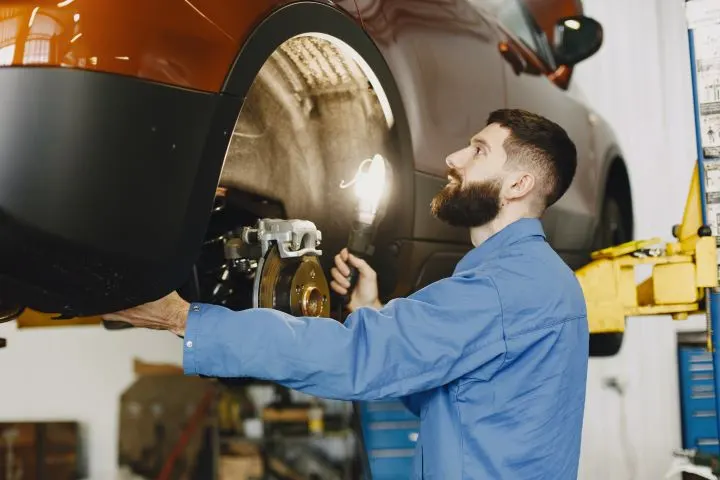
IIHS says front crash-prevention systems aren’t as effective in collisions with motorcycles and large trucks as with cars.
IMAGE: Pexels/Gustavo Fring
Nearly two dozen automakers have started to include automatic emergency braking in most light vehicles they make for U.S. consumers, though a safety group that helped forge the agreement says front crash-prevention systems could be improved.
The nonprofit Insurance Institute for Highway Safety said 20 vehicle producers met a voluntary commitment to equip new vehicles with the technology, installing it in 95% of the light vehicles they made by the year ended Aug. 31.
The fulfillment met the deadline of an agreement made in 2016 by the automakers that was brokered by the institute and federal safety regulator the National Highway Traffic Safety Administration. Consumer Reports monitored progress.
“Car buyers today will find that almost any new vehicle they buy comes standard with a city-speed AEB system, typically with pedestrian detection. This is significant progress, and it sets the stage for the strong federal safety standards that have been proposed,” said Consumer Reports Associate Director of Safety Policy William Wallace in a statement.
The pledge required automakers to install AEB on 95% of their light vehicles up to 8,500 pounds that slows the vehicle in low-speed tests that determine whether a model meets the institute’s advanced rating in a front crash-prevention evaluation.
This year, the NHTSA proposed that all new passenger vehicles with gross weight of 10,000 pounds or less have AEB that can avoid crashes at up to 50 mph.
The institute, meanwhile, says front crash-prevention systems aren’t as effective in collisions with motorcycles and large trucks as with cars. It says they cut rear-end crashes with the former vehicle types by 41% and 38%, respectively, but by 53% with cars.
“These reductions are impressive for all vehicle types, but the safety benefits could be even larger if front crash prevention systems were as good at mitigating and preventing crashes with big trucks and motorcycles as they are with cars,” said institute Vice President of Research Jessica Cicchino.
Originally posted on Auto Dealer Today
More F&I

AI: Facilitator, Not Fixer, in F&I
The dealerships that thrive in the years ahead will be those that embrace technology while continuing to invest in the people who make customer interactions count.
Read More →
Modern Technology Objection Handling
In this video, Trent White shares how to confidently handle technology-based objections by helping customers understand the value of protection, even with modern vehicle technology.
Read More →
Consistency at Scale: Driving F&I Performance
With 75 rooftops across the Sunshine State, Morgan Auto Group has proven to Floridians that it knows a thing or two about driving performance in a competitive market. But it didn’t start at the top.
Read More →
Gitty Up on GAP
The foundational finance-and-insurance product hasn’t kept up with the latest conditions for auto dealers. Is the time ripe?
Read More →
How AI-Powered Coaching Is Transforming F&I Performance
See how AI-powered coaching can turn F&I customer conversations into actionable insights that support compliance, performance and profitability
Read More →
Sell Value, Build Trust
In this video, Trent White explains why selling on value, not fear, builds lasting customer trust, reduces cancellations, and drives long-term success.
Read More →
F&I Sales Give Dealers First-Half Lift
Product business shored up total profits to avoid an overall revenue tanking as product penetrations held steady, StoneEagle reported.
Read More →
Targeted Training Drives Results
Today’s technology, instead of threatening F&I managers, can actually make them better, according to an industry veteran who’s watched market setbacks roil the unprepared.
Read More →
Double the Change, Double the Chance
When an F&I manager gets a customer refusal, it’s a wise move to tweak more than one thing in the product offering.
Read More →
Just Do It
F&I managers need training, but instead of resisting application or expecting perfection, they should improve by simply acting on what they learn.
Read More →