



AmTrust 2020 Extended Auto Warranty Advisor Analyzes 2.4 Million Auto Warranty Claims
Claims paid exceed $1.5 billion over five-year period.

Claims paid exceed $1.5 billion over five-year period.
IMAGE: AmTrust
NEW YORK – AmTrust Financial Services, Inc. (“AmTrust” or the “Company”), a global specialty property and casualty insurer and leading underwriter of extended warranties, today released its first “AmTrust 2020 Extended Auto Warranty Advisor.” The report identifies common trends for extended warranties and claim payouts based on more than 2.4 million auto warranty claims totaling approximately $1.5 billion across all major car and truck manufacturers over the five-year period from 2015 to 2019.
Analyzing five years of data has given us new insights into what vehicle owners need to consider when evaluating whether they need all forms of extended auto warranty.
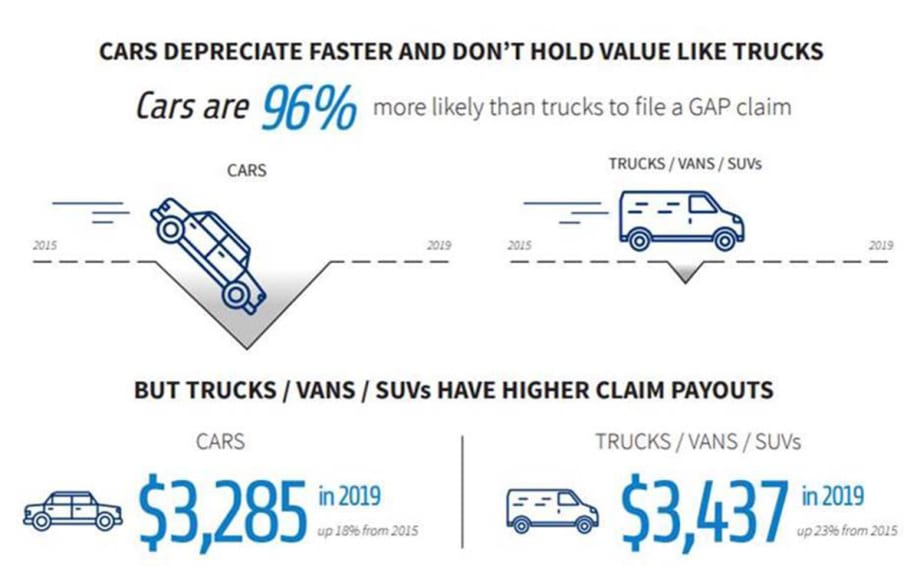
Car owners who purchased Guaranteed Asset Protection (GAP) are almost twice as likely as van, truck, or SUV owners (96% higher frequency of a claim) to file a claim. One of the leading reasons for this is that vans, trucks, and SUVs, on average, are holding more value, depreciating less than cars and leading to less total losses. However, once claims are filed, the claim payout for a van, truck, or SUV ($3,437 in 2019) is slightly higher than for a car ($3,285 in 2019) due to a higher average ticket price for a van, truck, or SUV versus a car.
GAP coverage helps consumers protect their investment from the moment they drive off the lot. GAP protects the driver in cases where primary auto insurance carriers deem a vehicle “totaled” or stolen and there is a “GAP” between the amount the owner owes on loans or leases and what the vehicle is worth.
“Analyzing five years of data has given us new insights into what vehicle owners need to consider when evaluating whether they need all forms of extended auto warranty,” said Bruce Saulnier, President of AmTrust Specialty Risk, a division of AmTrust Financial. “GAP average claim payouts are rising and more vehicle owners are getting value from these policies.”
AmTrust also analyzed Vehicle Service Contract (VSC) claims across the U.S. by region - Northeast, Midwest, South and West. Claim payouts in the Midwest increased by 94% over the five-year period. The largest increase in claim payouts was related to windshield protection offerings, with claims increasing by 79% from 2015 to 2019. Although the Northeast had by far the lowest average windshield claim payouts at $368, this region had the highest costs for the repair and replacement of wheels covered by tire and wheel protection offerings, with an average claim payout of $321. This likely reflects winter weather conditions that create and worsen potholes and other bad road conditions.
The “AmTrust 2020 Extended Auto Warranty Advisor” also found that claims for repairs on new cars are lower than for used cars -- $947 versus $1,169 in 2019. As vehicles age, the likelihood of a major component (i.e., engine, transmission) breakdown increases, causing the average claim payouts of used cars to exceed new vehicles.
“Whether or not to purchase an auto extended warranty can be a challenging decision for consumers,” said Saulnier. “Our analysis of 2.4 million claims provides quantitative proof that GAP is needed now more than ever for borrowers taking out loans greater than their cars are worth and that the continued rise in vehicle repair costs over the last five years prove that auto extended warranties protect against out of pocket costs. There are also regional differences in claim frequency and repair costs for different components that should also be considered.”
“We hope our inaugural study of claims paid provides good insight for consumers, dealers and administrators on the value of these important protections,” Saulnier concluded.
The full report is available in AmTrust’s Resource Center.
Originally posted on Auto Dealer Today
More F&I

Gitty Up on Gap
The foundational finance-and-insurance product hasn’t kept up with the latest conditions for auto dealers. Is the time ripe?
Read More →
How AI-Powered Coaching Is Transforming F&I Performance
See how AI-powered coaching can turn F&I customer conversations into actionable insights that support compliance, performance and profitability
Read More →
Sell Value, Build Trust
In this video, Trent White explains why selling on value, not fear, builds lasting customer trust, reduces cancellations, and drives long-term success.
Read More →
F&I Sales Give Dealers First-Half Lift
Product business shored up total profits to avoid an overall revenue tanking as product penetrations held steady, StoneEagle reported.
Read More →
Targeted Training Drives Results
Today’s technology, instead of threatening F&I managers, can actually make them better, according to an industry veteran who’s watched market setbacks roil the unprepared.
Read More →
Double the Change, Double the Chance
When an F&I manager gets a customer refusal, it’s a wise move to tweak more than one thing in the product offering.
Read More →
Just Do It
F&I managers need training, but instead of resisting application or expecting perfection, they should improve by simply acting on what they learn.
Read More →
Dealer Lender Preferences Revealed
When lenders provide consistent, fast service, their overall satisfaction scores with dealers greatly improve, according to JD Power research.
Read More →
Leading with Purpose
In this video, Trent White explains how understanding your people’s 'why' is a key leadership responsibility of F&I professionals and how that mindset drives dealership engagement, trust and performance.
Read More →
Integrating Nontraditional F&I Products
The niche presents a strategic advantage for auto dealerships as they move to adapt to fast-changing consumer expectations in today’s market.
Read More →