



Appeals Court Rules CFPB Structure Is Constitutional
On Wednesday, the D.C. Court of Appeals ruled 7-3 that a provision in the Dodd-Frank Act that says the CFPB director can only be removed for cause does not unconstitutionally constrain the president.

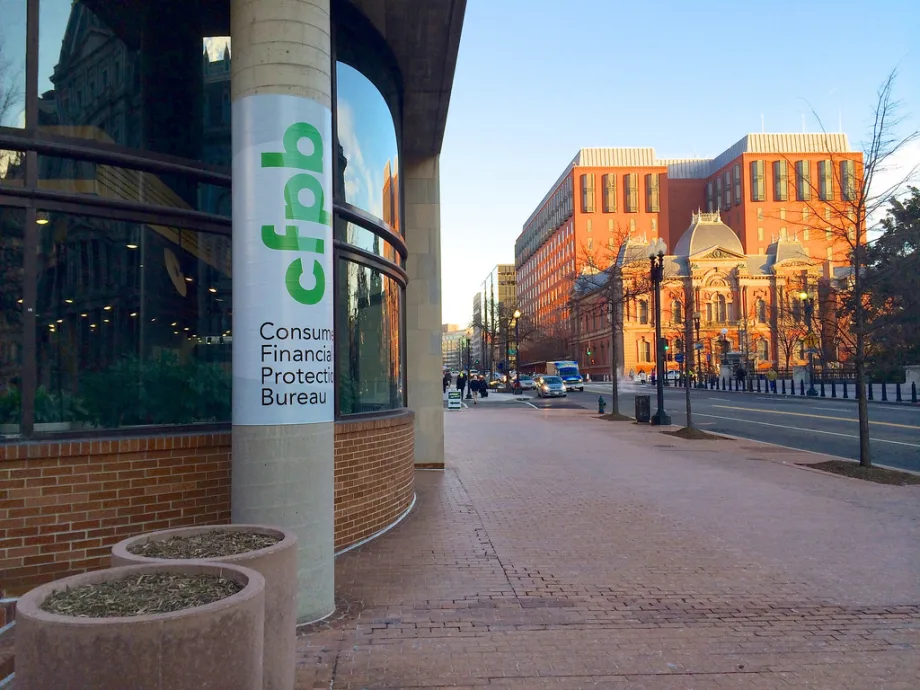
Photo courtesy of Flickr user Ted Eytan
WASHINGTON, D.C. — Nineteen days after the deputy director of the Consumer Financial Protection Bureau kicked off the next phase in her battle for control of the bureau, a federal appeals court upheld the constitutionality of the CFPB’s structure.
On Jan. 31, the D.C. Court of Appeals ruled 7-3 that a provision in the Dodd-Frank Act that says the CFPB director can only be removed for cause does not unconstitutionally constrain the president. The court also noted in its ruling, written by Judge Cornelia Pillard, that the way the CFPB is funded “fits within the tradition of independent financial regulators.”
“Applying binding Supreme Court precedent, we see no constitutional defect in the statute preventing the president from firing the CFPB director without cause. We thus uphold Congress’ choice,” Pillard wrote, adding that “no relevant consideration gives us reason to doubt the constitutionality of the independent CFPB’s single-member structure.”
The decision reverses the court’s October 2016 decision that declared the CFPB’s leadership unconstitutional by a 2-1 ruling and vacated a $103 million fine the bureau levied against New Jersey-based PHH Corp. in 2015 for allegedly accepting kickbacks from mortgage insurers.
The court did reject the bureau’s penalty against PHH in its ruling.
That same court will now hear CFPB Deputy Director Leandra English’s appeal of last month’s ruling by U.S. District Timothy J. Kelly, who sided with the White House for a second time and denied the bureau official’s request for a preliminary injunction to remove Mick Mulvaney as acting head of the CFPB.
English, who has requested an expedited review of her case, argues that she is the rightful acting director, having been appointed as deputy director by former CFPB Director Richard Cordray the same day he officially resigned from his post on Nov. 24.
Citing his authority through the Federal Vacancies Act (FVRA), President Trump appointed Mulvaney as acting director hours after Cordray elevated the title of his former chief of staff. English filed suit two days later to block the appointment, arguing that a successor statute in the Dodd-Frank Act made her the lawful acting director until the Senate confirms Trump’s permanent appointee.
On Nov. 28, Judge Kelly denied English’s request for a temporary restraining order to block Mulvaney’s appointment on grounds that the FVRA gives the president the authority to appoint a replacement. English’s attorneys then filed an amended complaint on Dec. 6 requesting a preliminary injunction.
Unlike the temporary restraining order, an injunction can be appealed to the U.S. Court of Appeals if not granted. That’s what English’s attorneys did just two days after Judge Kelly denied her request.
“The President has designated Mulvaney the CFPB’s acting director, the CFPB has recognized him as the acting director, and it is operating with him as acting director,” Kelly wrote in his Jan. 11 ruling. “Granting English an injunction would not bring about more clarity; it would only serve to muddy the waters.”
More F&I

AI: Facilitator, Not Fixer, in F&I
The dealerships that thrive in the years ahead will be those that embrace technology while continuing to invest in the people who make customer interactions count.
Read More →
Modern Technology Objection Handling
In this video, Trent White shares how to confidently handle technology-based objections by helping customers understand the value of protection, even with modern vehicle technology.
Read More →
Consistency at Scale: Driving F&I Performance
With 75 rooftops across the Sunshine State, Morgan Auto Group has proven to Floridians that it knows a thing or two about driving performance in a competitive market. But it didn’t start at the top.
Read More →
Gitty Up on GAP
The foundational finance-and-insurance product hasn’t kept up with the latest conditions for auto dealers. Is the time ripe?
Read More →
How AI-Powered Coaching Is Transforming F&I Performance
See how AI-powered coaching can turn F&I customer conversations into actionable insights that support compliance, performance and profitability
Read More →
Sell Value, Build Trust
In this video, Trent White explains why selling on value, not fear, builds lasting customer trust, reduces cancellations, and drives long-term success.
Read More →
F&I Sales Give Dealers First-Half Lift
Product business shored up total profits to avoid an overall revenue tanking as product penetrations held steady, StoneEagle reported.
Read More →
Targeted Training Drives Results
Today’s technology, instead of threatening F&I managers, can actually make them better, according to an industry veteran who’s watched market setbacks roil the unprepared.
Read More →
Double the Change, Double the Chance
When an F&I manager gets a customer refusal, it’s a wise move to tweak more than one thing in the product offering.
Read More →
Just Do It
F&I managers need training, but instead of resisting application or expecting perfection, they should improve by simply acting on what they learn.
Read More →