



April's Average Transaction Price Rises to $35,411
Less price-sensitive buyers splurged for the latest models in April, with the industry’s average transaction price rising 2% from a year ago despite rising fuel prices.
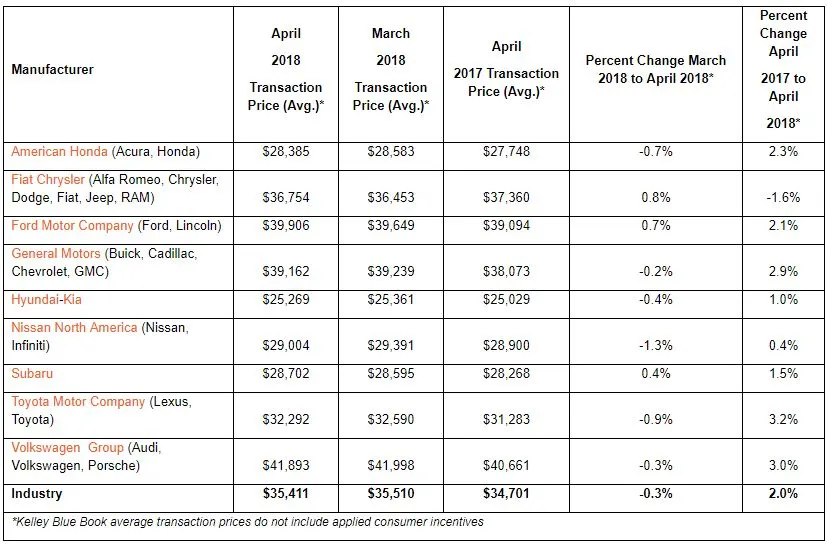
IRVINE, Calif. — April’s estimated average transaction price for light vehicles was $35,411, a $710 increase from a year ago but a $99 decrease from March, according to Kelley Blue Book.
The 2% year-over-year increase comes at a time of rising fuel prices, with most manufacturers reporting year-over-year increase in their average transaction prices.
“Although fuel prices rose for the second month in a row and are nearing a $3 national average, Kelley Blue Book saw greater price increases for SUV models than with cars,” said Tim Fleming, analyst for Kelley Blue Book. “Luxury SUVs performed particularly well, as less price-sensitive luxury buyers splurged for the latest models, such as the Lincoln Navigator (up 30%), Volvo XC60 (up 16%) and Infiniti QX50 (up 12%).”
Toyota Motor Co. led the way among manufacturers, with its transaction prices climbing more than 3% behind the redesigned Camry’s 11% increase in its average transaction price. The refreshed Sienna minivan also was up 4%, while the Prius’ average transaction price climbed 5%.
The Lexus brand registered a 4% increase in its average transaction price behind the redesigned LS sedan’s 15% increase in its average. The RX, now offering a three-row variant, also realized a 1% increase in its average transaction price.
Volkswagen Group also showed transaction price strength in April. With all brands reporting large improvement, the automaker realized a 3% increase in its average transaction price. The Volkswagen brand’s average alone was up 9%, thanks to the new Atlas and Tiguan SUVs.
Porsche’s average transaction price was up 7%, with the new Panamera leading the way with a 20% increase in its average transaction price. Audi registered a 5% increase in its average, with the redesigned Q5 utility vehicle showing the most improvement with a near 20% increase in its average.
More Auto Finance

Interest Rates Further Squeeze Auto Consumers
Last month’s hike and a potential second increase this month add to a growing list of inflation woes that could continue to dent overall car sales.
Read More →
Mind Your Process
Consistent steps taken in various aspects of the F&I office can make valuable differences over time, similar to an outline for a best-selling book.
Read More →
Top Five Credit Application Fraud Flags
Compliance audits regularly reveal bad habits that can lead to fraud charges and should have been stamped out decades ago.
Read More →
More Auto Loans for the Taking in August
Riskier categories were on the uptick for the month as lenders loosened access in several areas while balancing out the exposure in another, Cox Automotive reported.
Read More →
July Was Hot for Auto Borrowers
Credit proved readily available for many, but most loans left buyers in negative territory, Cox Automotive said.
Read More →
Dealer Lender Preferences Revealed
When lenders provide consistent, fast service, their overall satisfaction scores with dealers greatly improve, according to JD Power research.
Read More →
Auto Refi Savings Surge
Consumers with 84-month auto loan terms who refinanced saved the most on monthly payments, according to a new report by auto refinancing provider Caribou.
Read More →
Subaru Enters Lending Business
The automaker follows other brands in adding captive financing in the U.S., and says the move will strengthen its position here.
Read More →
Positive Equity Reaches Record High
Mainstream vehicle owners who bought a car seven years ago are likely to have positive equity when trading in for a new vehicle, according to second-quarter Edmunds data.
Read More →
Dealerships Are Paying the Price for Extended Car Loans
Growing negative-equity scenarios mean such lengthy terms should be addressed in a forward-looking way to make them work for the dealer and the consumer down the road.
Read More →