



CFPB: More than 40% of U.S. Adults Struggle to Make Ends Meet
The bureau released results of a national survey that measures the financial well-being of specific consumer groups as well as the population as a whole. The regulator also announced the release of a new tool designed to allow consumers to measure their level of financial well-being.
WASHINGTON, D.C. — More than 40% of U.S. adults struggle to make ends meet. That’s the conclusion of a national survey conducted by the Consumer Financial Protection Bureau (CFPB) on the financial well-being of U.S. consumers.
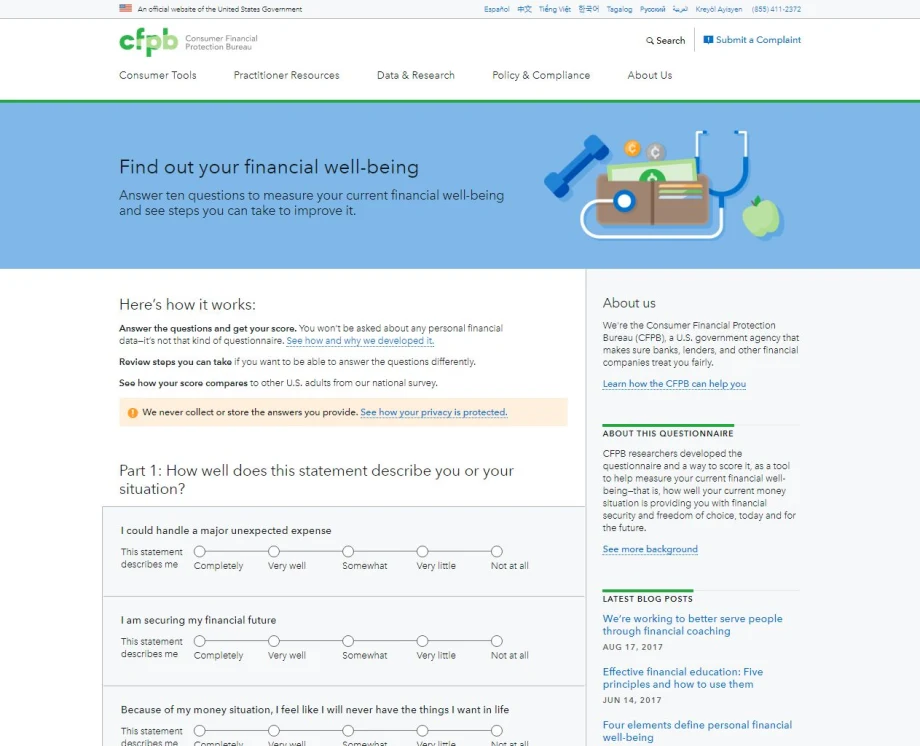
The survey provides measurements and insights on the financial well-being of specific consumer groups as well as the population as a whole. In addition to the survey, the bureau also released an interactive online tool allowing consumers to measure their level of financial well-being.
“These survey results are beginning to measure and examine the financial well-being of consumers,” said CFPB Director Richard Cordray. “And the new tool we are releasing allows consumers to measure their own financial well-being and helps them take better control of their financial futures.”
The National Financial Well-Being Survey was conducted by the CFPB in 2016. Using the 10-question scale developed by the CFPB, the survey provides the first-ever national data directly measuring the financial well-being of U.S. consumers. Upon answering the 10 questions provided, consumers were given a score from 0-100.
In the survey, the average consumer score was 54. The consumer sample used to conduct the survey was designed to be representative of U.S. households. In addition to responding to the questions which are included in the financial well-being scale, participants answered questions about a host of other measures, including individual, household, and family characteristics; income and employment; savings and safety nets; financial experiences; and money behaviors, skills, and attitudes.
According to results, more than 40% of adults report struggling to make ends meet. Of the national representative sample of consumers surveyed, 43% of consumers report struggling to pay bills. Additionally, more than a third, or 34%, reported experiencing material hardships in the past year, including running out of food, not being able to afford a place to live, or lacking the money to seek medical treatment.
Additionally, the survey showed that financial well-being is higher for older adults, especially those aged 65 and older. That segment’s average score was 61. On the other end of the spectrum, younger adults 34 years of age or younger tended to have the lowest financial well-being score with an average of 51.
Scores of 50 or below are associated with both a high probability of struggling to make ends meet and of experiencing hardship. In contrast, scores of 61 and above are associated with low probability of having trouble paying for basic needs or making ends meet.
The CFPB is also releasing an interactive online tool to enable people to evaluate their own financial well-being and explore ways to take control of their finances. This new tool is based on the CFPB financial well-being scale, which was released in 2015 for use by financial education professionals working with consumers.
The tool allows consumers to use the financial well-being scale themselves, and see their resulting financial well-being score online. Consumers can track their financial well-being score over time, or see how they compare to other consumers nationally, including by income, age, and employment status. Additionally, consumers can access CFPB resources to help take control of their finances and make progress towards financial goals, and find free or low-cost help from financial professionals.
More F&I

AI: Facilitator, Not Fixer, in F&I
The dealerships that thrive in the years ahead will be those that embrace technology while continuing to invest in the people who make customer interactions count.
Read More →
Modern Technology Objection Handling
In this video, Trent White shares how to confidently handle technology-based objections by helping customers understand the value of protection, even with modern vehicle technology.
Read More →
Consistency at Scale: Driving F&I Performance
With 75 rooftops across the Sunshine State, Morgan Auto Group has proven to Floridians that it knows a thing or two about driving performance in a competitive market. But it didn’t start at the top.
Read More →
Gitty Up on GAP
The foundational finance-and-insurance product hasn’t kept up with the latest conditions for auto dealers. Is the time ripe?
Read More →
How AI-Powered Coaching Is Transforming F&I Performance
See how AI-powered coaching can turn F&I customer conversations into actionable insights that support compliance, performance and profitability
Read More →
Sell Value, Build Trust
In this video, Trent White explains why selling on value, not fear, builds lasting customer trust, reduces cancellations, and drives long-term success.
Read More →
F&I Sales Give Dealers First-Half Lift
Product business shored up total profits to avoid an overall revenue tanking as product penetrations held steady, StoneEagle reported.
Read More →
Targeted Training Drives Results
Today’s technology, instead of threatening F&I managers, can actually make them better, according to an industry veteran who’s watched market setbacks roil the unprepared.
Read More →
Double the Change, Double the Chance
When an F&I manager gets a customer refusal, it’s a wise move to tweak more than one thing in the product offering.
Read More →
Just Do It
F&I managers need training, but instead of resisting application or expecting perfection, they should improve by simply acting on what they learn.
Read More →