



Distracted Driving Deaths Down But Not Out
Latest data show that despite more miles traveled, fatalities are falling, though the danger persists, particularly among young travelers.


Pedestrian fatalities alone increased by 52 last year, the highest number since 1981.
IMAGE: Pexels/Luke Miller
Traffic deaths due to distracted driving fell in 2022, though fatalities increased for pedestrians and other road users outside cars.
The National Highway Traffic Safety Administration data for the most recent available statistical year show progress is being made, especially since more vehicle miles are being traveled, but still point up the dangers of distracted driving.
Overall traffic fatalities fell about 2% to 42,514 as injuries dropped about 5% to 2.38 million, the federal transportation department agency reported.
Fatalities and injuries involving distracted drivers also fell. More than 3,300 people were killed in such accidents, down 6% year-over-year, according to the agency, which said an additional estimated 289,310 people suffered injuries.
At the same time, 621 pedestrians, cyclists and others outside of vehicles were killed in crashes involving distracted drivers, the agency said.
Taking all crashes into account, whether involving distracted drivers or not, pedestrian fatalities alone increased by 52 for the year, the highest number since 1981.
NHTSA projects that overall traffic fatalities again decreased last year by 3.6% to 42,514 for seven straight quarters of declines. That’s despite a 2% increase in vehicle miles traveled.
The agency launched an awareness campaign on the danger of distracted driving that runs through April 8. Put the Phone Away or Pay is designed to spread the word of the dangers, legal ramifications and fines that can result from driving without focus on the road. Additional enforcement is targeting drivers ages 18 to 34, the group NHTSA says is most likely to die in crashes involving distracted drivers.
“Distracted driving is extremely dangerous,” NHTSA Deputy Administrator Sophie Shulman said in a press release. “Distraction comes in many forms, but it is also preventable.”
DIG DEEPER: Study Points Out Drowsy-Driving Danger
Originally posted on Auto Dealer Today
More F&I

AI: Facilitator, Not Fixer, in F&I
The dealerships that thrive in the years ahead will be those that embrace technology while continuing to invest in the people who make customer interactions count.
Read More →
Modern Technology Objection Handling
In this video, Trent White shares how to confidently handle technology-based objections by helping customers understand the value of protection, even with modern vehicle technology.
Read More →
Consistency at Scale: Driving F&I Performance
With 75 rooftops across the Sunshine State, Morgan Auto Group has proven to Floridians that it knows a thing or two about driving performance in a competitive market. But it didn’t start at the top.
Read More →
Gitty Up on GAP
The foundational finance-and-insurance product hasn’t kept up with the latest conditions for auto dealers. Is the time ripe?
Read More →
How AI-Powered Coaching Is Transforming F&I Performance
See how AI-powered coaching can turn F&I customer conversations into actionable insights that support compliance, performance and profitability
Read More →
Sell Value, Build Trust
In this video, Trent White explains why selling on value, not fear, builds lasting customer trust, reduces cancellations, and drives long-term success.
Read More →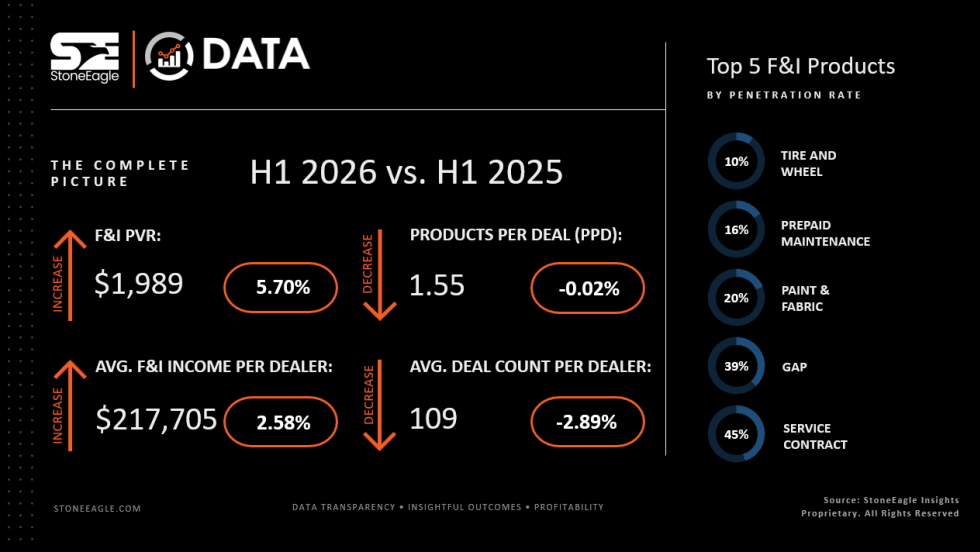
F&I Sales Give Dealers First-Half Lift
Product business shored up total profits to avoid an overall revenue tanking as product penetrations held steady, StoneEagle reported.
Read More →
Targeted Training Drives Results
Today’s technology, instead of threatening F&I managers, can actually make them better, according to an industry veteran who’s watched market setbacks roil the unprepared.
Read More →
Double the Change, Double the Chance
When an F&I manager gets a customer refusal, it’s a wise move to tweak more than one thing in the product offering.
Read More →
Just Do It
F&I managers need training, but instead of resisting application or expecting perfection, they should improve by simply acting on what they learn.
Read More →