



EFG Companies: Dealers Must Embrace Industry Paradigm Shift
EFG Companies CEO John Pappanastos said digital buying habits, millennial and Gen Z consumers, and women are forcing industry change dealers must embrace.
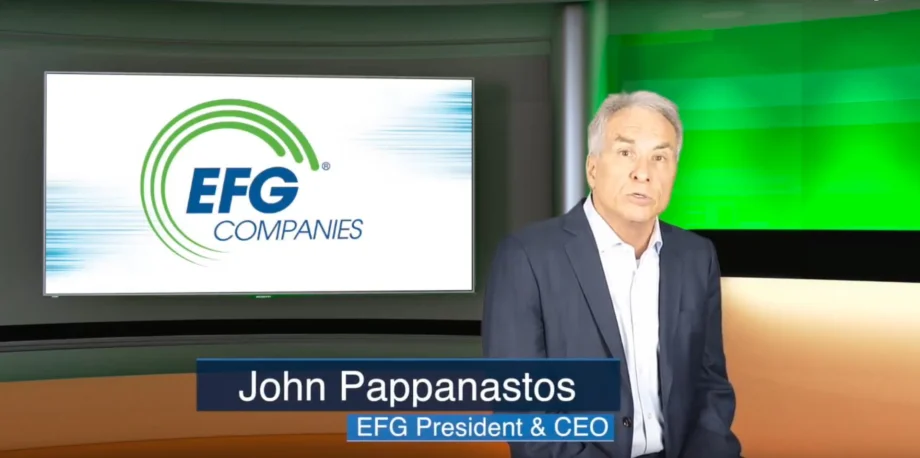
DALLAS, Texas — Staffing and customer engagement models are the top issues impacting the future health of the retail automotive industry, EFG Companies President and CEO John Pappanastos said today.
The F&I product provider’s chief executive delivered his comments as part of a state of the industry address the company posted on its website. Pappanastos encourage dealership principals and senior managers to quickly address those issues or risk becoming a dinosaur in today’s rapidly changing consumer car-buying mode, noting that digital buying habits, millennial and Gen Z consumers, and women are forcing industry change.
According to the National Automobile Dealers Association’s 2017 Workforce Study, retail automotive suffered from a 43% turnover rate — up two points from 2016. Additionally, the automotive industry experienced an 88% attrition rate among female new hires, and a below average rate of millennial new hires when compared to other industries.
Pappanastos said many retail automotive businesses lack a comprehensive plan to become an employer of choice, and instead rely heavily on traditional “bell-to-bell” hours, commission-only payment plans, and limited training. He urged them to immediately develop a strategy for hiring, training, and promoting the best and brightest employees to operate in a world where consumers are demanding a more digital process with a better customer experience.
The executive noted that a single poor hiring decision in F&I can easily result in up to $75,000 in lost profit due to onboarding costs and lost production, adding that the retail automotive industry’s focus on daily operations also hampers leadership development and obscures the growth path for millennial hires who, as a group, require opportunities for promotion.
The F&I product executive also touched on recent research from Cox Automotive, which showed that 80% of consumers want to complete at least half of the car-buying process digitally. He also cited a 2018 Deloitte study showing that “dealers create a fragmented and inconsistent approach to the customer,” which leads to inefficient customer contact, inconsistent messaging, and ultimately failure to sell and build loyalty.
“While I realize change is difficult, dealership principals must incorporate greater consumer-facing digital platforms into their dealerships,” said Pappanastos, adding that hiring employees who are experts in online customer engagement and digital sales approaches represents one solution. “Failure to do so will result in lost revenue. We must remember the old adage of ‘meet the customer where they are.’ And today’s customer is clearly online.”
Pappanastos also encouraged dealerships not to lose sight of compliance. “Job skills are easy to assess. What’s difficult is finding candidates who have solid character,” the executive said. “During these tumultuous times, dealerships must maintain a high degree of integrated compliance. The resulting fines, and damage to reputation, can result in significant business loss due to very clear and public online postings and reviews.”
Pappanastos remarks during his state of the industry address focused on the future health of the retail automotive industry and sounded a wakeup call to dealership principals to quickly embrace changing consumer buying preferences. He also encouraged future millennial and Gen Z employees to seek out careers in retail automotive, noting that exciting changes and their opportunity to make industrywide impact.
More F&I

AI: Facilitator, Not Fixer, in F&I
The dealerships that thrive in the years ahead will be those that embrace technology while continuing to invest in the people who make customer interactions count.
Read More →
Modern Technology Objection Handling
In this video, Trent White shares how to confidently handle technology-based objections by helping customers understand the value of protection, even with modern vehicle technology.
Read More →
Consistency at Scale: Driving F&I Performance
With 75 rooftops across the Sunshine State, Morgan Auto Group has proven to Floridians that it knows a thing or two about driving performance in a competitive market. But it didn’t start at the top.
Read More →
Gitty Up on GAP
The foundational finance-and-insurance product hasn’t kept up with the latest conditions for auto dealers. Is the time ripe?
Read More →
How AI-Powered Coaching Is Transforming F&I Performance
See how AI-powered coaching can turn F&I customer conversations into actionable insights that support compliance, performance and profitability
Read More →
Sell Value, Build Trust
In this video, Trent White explains why selling on value, not fear, builds lasting customer trust, reduces cancellations, and drives long-term success.
Read More →
F&I Sales Give Dealers First-Half Lift
Product business shored up total profits to avoid an overall revenue tanking as product penetrations held steady, StoneEagle reported.
Read More →
Targeted Training Drives Results
Today’s technology, instead of threatening F&I managers, can actually make them better, according to an industry veteran who’s watched market setbacks roil the unprepared.
Read More →
Double the Change, Double the Chance
When an F&I manager gets a customer refusal, it’s a wise move to tweak more than one thing in the product offering.
Read More →
Just Do It
F&I managers need training, but instead of resisting application or expecting perfection, they should improve by simply acting on what they learn.
Read More →