



Ford to Focus on Trucks, EVs, Connectivity
Ford CEO Jim Hackett said on Tuesday the automaker plans to reduce engineering costs by 50% through 2022. Ford will also shift investment into trucks and electrified vehicles, and reduce costs and investment in sedans and internal combustion engines.
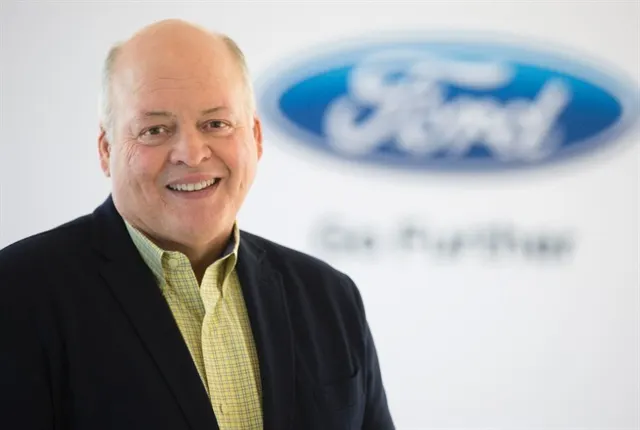
Photo of CEO Jim Hackett courtesy of Ford.
NEW YORK — Ford Motor Co.'s new leader wants to shift investment into trucks and electrified vehicles and reduce costs and investment in sedans and internal combustion engines, CEO Jim Hackett said Tuesday.
The company is also pursuing global partnerships in manufacturing and mobility to share the expense of developing new technology, including self-driving cars and battery-electric vehicles for China.
Ford plans to reduce costs by 50% through 2022 by eliminating $14 billion in costs, including $10 billion in material cost reductions and $4 billion in engineering costs, by using more common parts, reducing order complexity, and building fewer prototypes, according to the company.
Hackett, who became president and CEO on May 22, laid out his plan for investors in New York City on Oct. 3. Hackett said he has set a long-term goal of an 8% automotive operating margin.
Ford will shift $7 billion in capital from cars to SUVs and trucks, including the Ranger and EcoSport in North America and the Bronco globally. Ford will build the next-generation Focus for North America in China to reduce costs. Ford is also planning to reduce internal combustion engine expenditures by one-third, and shift those savings into electrification in addition to the $4.5 billion already allocated.
Vehicle connectivity has become a key plank in the plan, as Ford plans to install 4G LTE modems by 2019. By 2020, 90% of Ford's global vehicles will be connected.
Ford will also continue to develop partnerships. Ford is exploring an alliance with Mahindra Group in India and may partner with Zoyte to develop low-cost battery-electric vehicles for China. The company has also partnered with Lyft and Domino's Pizza to research the customer experience of delivery services.
Ford has also set up an internal team known as "Team Edison" as it begins rolling out 13 electrified vehicles in the next five years.
More Auto Finance

Interest Rates Further Squeeze Auto Consumers
Last month’s hike and a potential second increase this month add to a growing list of inflation woes that could continue to dent overall car sales.
Read More →
Mind Your Process
Consistent steps taken in various aspects of the F&I office can make valuable differences over time, similar to an outline for a best-selling book.
Read More →
Top Five Credit Application Fraud Flags
Compliance audits regularly reveal bad habits that can lead to fraud charges and should have been stamped out decades ago.
Read More →
More Auto Loans for the Taking in August
Riskier categories were on the uptick for the month as lenders loosened access in several areas while balancing out the exposure in another, Cox Automotive reported.
Read More →
July Was Hot for Auto Borrowers
Credit proved readily available for many, but most loans left buyers in negative territory, Cox Automotive said.
Read More →
Dealer Lender Preferences Revealed
When lenders provide consistent, fast service, their overall satisfaction scores with dealers greatly improve, according to JD Power research.
Read More →
Auto Refi Savings Surge
Consumers with 84-month auto loan terms who refinanced saved the most on monthly payments, according to a new report by auto refinancing provider Caribou.
Read More →
Subaru Enters Lending Business
The automaker follows other brands in adding captive financing in the U.S., and says the move will strengthen its position here.
Read More →
Positive Equity Reaches Record High
Mainstream vehicle owners who bought a car seven years ago are likely to have positive equity when trading in for a new vehicle, according to second-quarter Edmunds data.
Read More →
Dealerships Are Paying the Price for Extended Car Loans
Growing negative-equity scenarios mean such lengthy terms should be addressed in a forward-looking way to make them work for the dealer and the consumer down the road.
Read More →