



GM First to Join Green Group
General Motors Corp. recently became the first automaker to join the U.S. Climate Action Partnership, a group whose goals include reducing greenhouse gases by at least 60 percent by 2050 and creating economic opportunity for its member organizations, reported the Detroit Free Press.
General Motors Corp. recently became the first automaker to join the U.S. Climate Action Partnership, a group whose goals include reducing greenhouse gases by at least 60 percent by 2050 and creating economic opportunity for its member organizations, reported the Detroit Free Press. Detroit-based GM was one of 14 organizations that joined the three-month-old partnership, known as USCAP, this week. Others included Midland-based Dow Chemical Co., Johnson & Johnson and Shell.
GM made the announcement — dismissed by the Sierra Club as a "green scam"— one day after Sen. Barack Obama criticized the U.S. auto industry's vehicle lineup and the same day a Senate committee passed a fuel-economy bill the industry calls unattainable.
"GM is very pleased to join USCAP in proactively addressing the concerns posed by climate change," GM Chairman and Chief Executive Officer Rick Wagoner said in a statement. "The key, as we see it, is energy diversity — being able to offer our customers vehicles that can be powered by many different energy sources and advanced propulsion systems to help displace petroleum and reduce greenhouse gas emissions."
Although many applauded GM's decision to join the organization, the accolades were not unanimous. Sierra Club spokesman Dan Becker called the move a smoke screen.
"It is ironic that at the same time that GM is saying that they want to join USCAP, they are fighting against improving the fuel-economy standards that would cut their global warming emissions and fighting to overturn the California law that specifically requires that they reduce their global warming emissions," Becker said.
Many, including Kevin Knobloch, president of the Union of Concerned Scientists, were encouraged by the move.
"By joining USCAP, General Motors is acknowledging that global warming is a serious and urgent problem," Knobloch said. "General Motors is adding its voice to that urgent call. The key is whether GM will take the additional steps of building and selling vehicles that are significantly cleaner at the tailpipe."
GM spokesman Greg Martin said the automaker is serious about improving fuel economy and carbon emission caps, as long as the solution cuts across all sectors of the economy.
GM argues that its strategy for diversifying energy sources for vehicles is a sounder method for addressing those issues than the Corporate Average Fuel Economy program.
GM offers 24 vehicles rated at 30 miles per gallon or better on the highway and 16 flex-fuel vehicles. It will have five hybrids on the market by the end of the year. The Senate committee's bill seeks a 35-m.p.g. standard by 2020.
GM also is proceeding with engineering of battery- and fuel cell-powered versions of the electric vehicle propulsion system shown in the Chevrolet Volt concept car this year. It has said the system could be ready for production as early as 2010. Development of the power train, however, depends on advances in lithium batteries that haven't occurred yet.
"We are going to be part of the solution," Martin said. "But the auto industry can't be the only solution. About 19 percent of CO2 emissions are attributable to autos. By addressing the auto industry, you're addressing only one portion of the challenge."
Representatives of Ford Motor Co. and the Chrysler Group said those automakers also are considering joining USCAP.
Rallying behind a reduction in emissions is a good first step, Knobloch said, but the next steps will be more challenging.
"The real question for General Motors, now that it's in USCAP, is how will it step up in terms of the products it designs itself," he said. "I hope this is a step on a progression that will have General Motors become a global leader in building the most fuel-efficient vehicles."
More F&I

AI: Facilitator, Not Fixer, in F&I
The dealerships that thrive in the years ahead will be those that embrace technology while continuing to invest in the people who make customer interactions count.
Read More →
Modern Technology Objection Handling
In this video, Trent White shares how to confidently handle technology-based objections by helping customers understand the value of protection, even with modern vehicle technology.
Read More →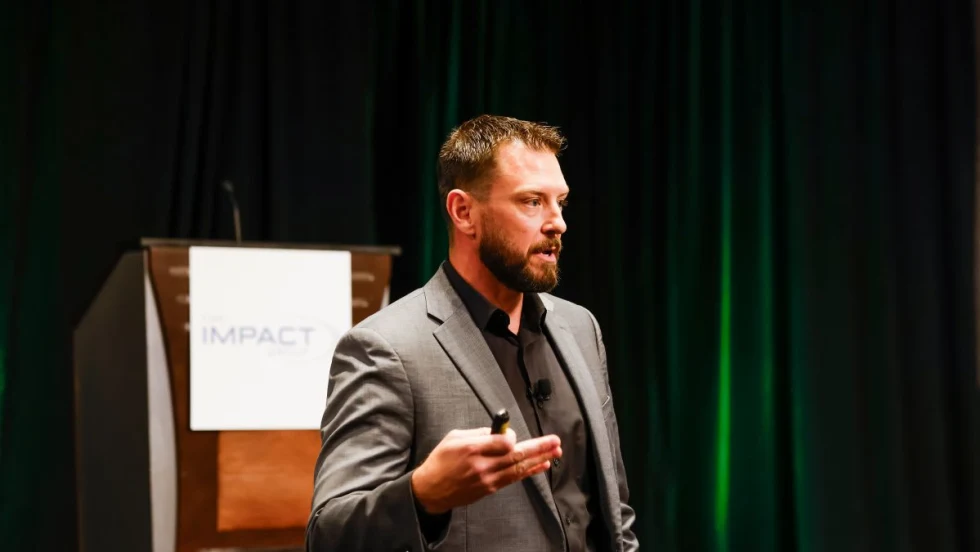
Consistency at Scale: Driving F&I Performance
With 75 rooftops across the Sunshine State, Morgan Auto Group has proven to Floridians that it knows a thing or two about driving performance in a competitive market. But it didn’t start at the top.
Read More →
Gitty Up on GAP
The foundational finance-and-insurance product hasn’t kept up with the latest conditions for auto dealers. Is the time ripe?
Read More →
How AI-Powered Coaching Is Transforming F&I Performance
See how AI-powered coaching can turn F&I customer conversations into actionable insights that support compliance, performance and profitability
Read More →
Sell Value, Build Trust
In this video, Trent White explains why selling on value, not fear, builds lasting customer trust, reduces cancellations, and drives long-term success.
Read More →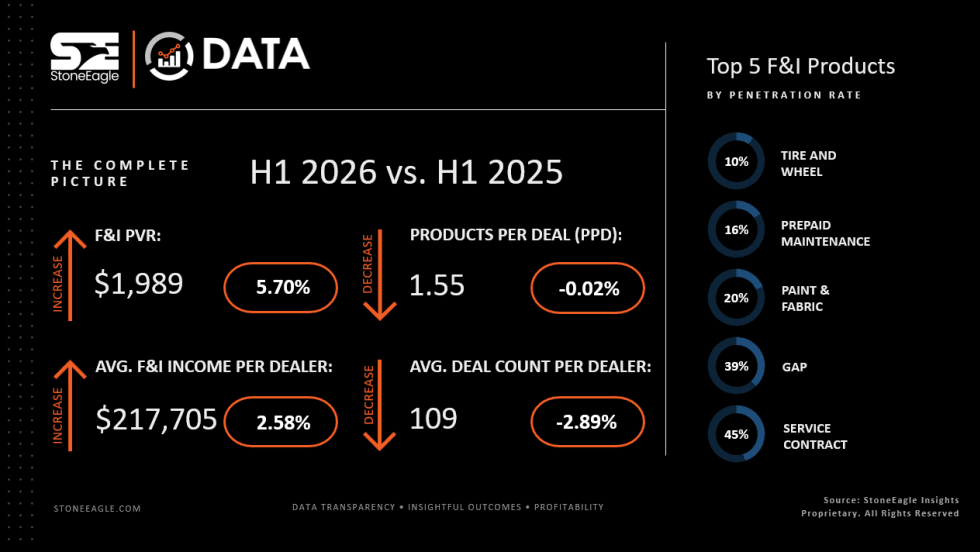
F&I Sales Give Dealers First-Half Lift
Product business shored up total profits to avoid an overall revenue tanking as product penetrations held steady, StoneEagle reported.
Read More →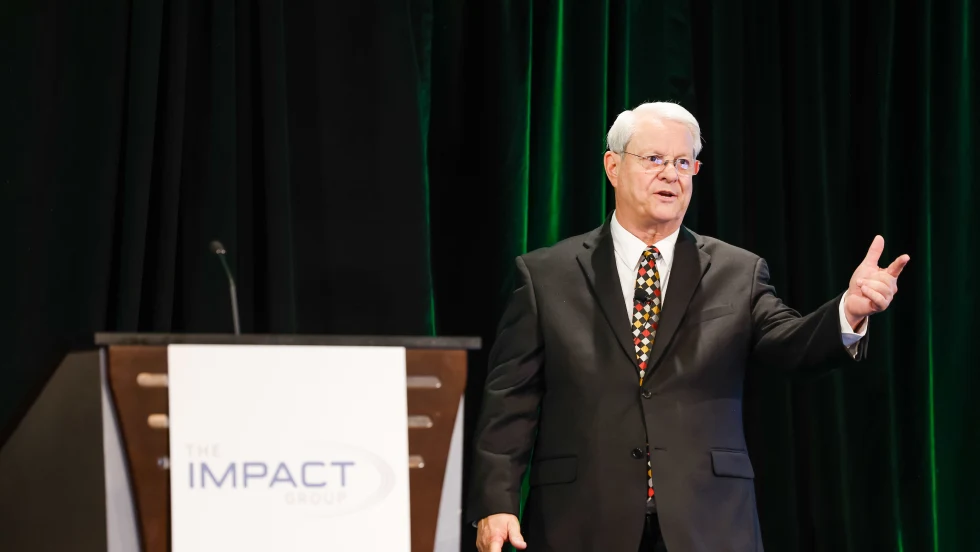
Targeted Training Drives Results
Today’s technology, instead of threatening F&I managers, can actually make them better, according to an industry veteran who’s watched market setbacks roil the unprepared.
Read More →
Double the Change, Double the Chance
When an F&I manager gets a customer refusal, it’s a wise move to tweak more than one thing in the product offering.
Read More →
Just Do It
F&I managers need training, but instead of resisting application or expecting perfection, they should improve by simply acting on what they learn.
Read More →