



House Votes to Eliminate DOJ’s Use of Disparate Impact
The House passed an amendment Wednesday that would bar the Department of Justice from using funds for litigation in which the regulator seeks to apply the disparate impact theory.

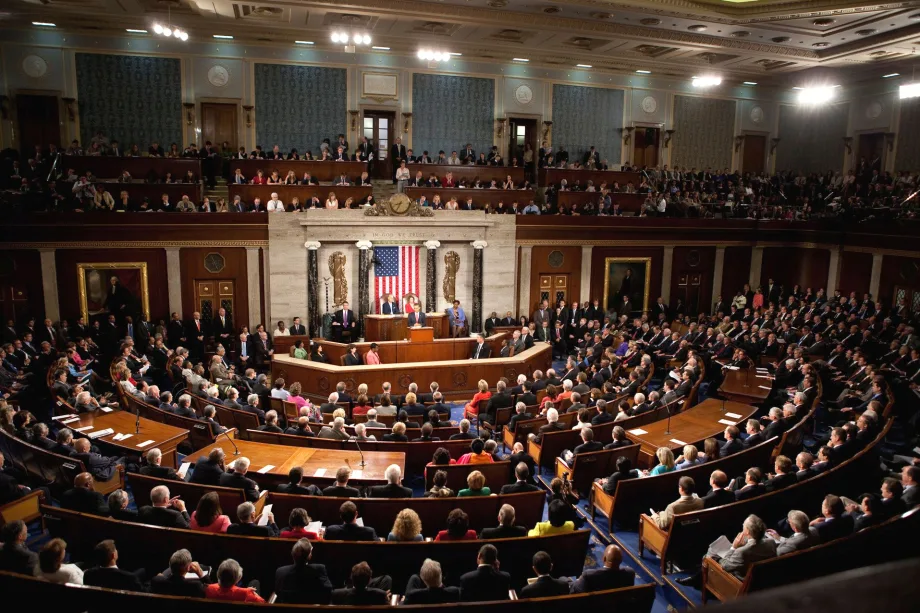
WASHINGTON, D.C. — On Wednesday, the House of Representatives passed an amendment to H.R. 2578, the Fiscal Year 2016 Commerce, Justice, and Science Appropriations Act, that would bar the Department of Justice from using funds for litigation in which the regulator seeks to apply the disparate impact theory. The legal theory has been used by the Consumer Financial Protection Bureau (CFPB) to support its actions in the auto finance arena, and is also the crux of a Fair Housing Act case currently under review by the Supreme Court.
The amendment, introduced by Rep. Scott Garrett (R-N.J.), was passed by the Republican-controlled House in a 232 to 196 vote. It would prohibit the DOJ from using funds for litigation that relies on the disparate impact legal theory. Under that theory, a policy or practice may be deemed discriminatory if it has an adverse impact on a protected group — even if that impact is unintentional.
“While everyone agrees that discrimination has no place in the lending practices of any respectable institution, the application of disparate impact theory has had devastating impacts on law-abiding businesses who have diligently maintained fair and consistent lending standards,” Garrett said in a statement after the passage of his amendment. “The federal government should be encouraging sound business practices, not punishing those that utilize them. I thank my colleagues for taking a stand for small businesses and reinstating equal protection under the laws as guaranteed in our Constitution by the Fourteenth Amendment.”
The entire bill, H.R. 2578, is expected to be voted on in the coming days. In a statement on June 1, the White House said that President Obama’s senior advisors recommend that he veto the bill due, in part, to its “highly objectionable provisions.”
Disparate impact is also at the center of a case that will determine if the way Texas allocates low-income housing credits violates the 1968 Fair Housing Act. The Supreme Court is expected to make a decision on the case this summer. If it rules in Texas’ favor, some industry experts believe it could be the nail in the coffin of the legal theory — even outside of housing policies.
The DOJ and CFPB have used disparate impact to go after auto lenders like Ally Financial, which reached a $98 million settlement with the regulators in December 2013. The DOJ and CFPB alleged that the finance source’s lending practices resulted in discrimination against minority car buyers. Ally has maintained that its policies do not result in discrimination.
“Ally’s long-time process for evaluating auto installment contracts from dealers does not include information on a consumer’s race or ethnicity,” the finance source said at the time of the settlement. “Ally assesses these contracts and sets pricing based solely on a consumer’s creditworthiness and contract characteristics.”
More Compliance

Variations on a Theme – Lease Packing
Dealers must be careful they don’t run afoul of the law when it comes to such deceptive practices, as there are many cases pointing to the potential bad ends of such deals.
Read More →
Your 10-Point Compliance Checklist
Identify areas of concern and opportunities for training by updating, installing and enforcing a compliance checklist that requires specific actions for sales, F&I and accounting.
Read More →
A Continuing Antediluvian Dealer Fraud: Payment Packing
The longtime illegal practice, which can take many forms, can get a dealer and its employees in deep trouble. It’s a good idea to determine if anyone in your stores is doing it and to weed it out if so.
Read More →
Line 1 Is Not a Junk Drawer
Rolling products into the cash price — even if the bank told you to — misrepresents the vehicle’s value and runs afoul of four federal laws.
Read More →
Dueling Banjos in the Car Biz
Reports and accounts at variance show auto dealers’ trust profiles have risen in many consumers’ minds but that there remains a need for greater transparency by some.
Read More →
NADA and the Miracle on 34th Street
Automotive dealers should follow the National Automobile Dealers Association's consumer-friendly guidelines in order to minimize their legal risks.
Read More →
Another Look at a Recent Data Breach
Get caught up on the most pressing legal and regulatory matters facing dealers and F&I professionals, including data security, shotgun purchases, and inconsistent payment quotes.
Read More →

The Best Thing a Dealer Can Do to Avoid Legal Problems
Citing the issue is a strategy borrowed from the legal field itself.
Read More →