



IHS Markit: SUV Shift Not Prominent Among All Groups
According to the research firm’s analysis, more than 35% of U.S. households with a sedan in the garage that returned to market for a new vehicle between April 2017 and March 2018 acquired an SUV. That's up from just 24% five years ago.
SOUTHFIELD, Mich. — Consumer preferences for SUVs continue to rise, and at a faster pace than five years ago, according to a new loyalty and defection based on new loyalty and defection analysis from IHS Markit.
According to the firm, more than 35% of U.S. households with a sedan in the garage that returned to market for a new vehicle between April 2017 and March 2018 acquired an SUV, up from just 24% five years ago. However, not all consumers are moving to the popular body style at the same pace.
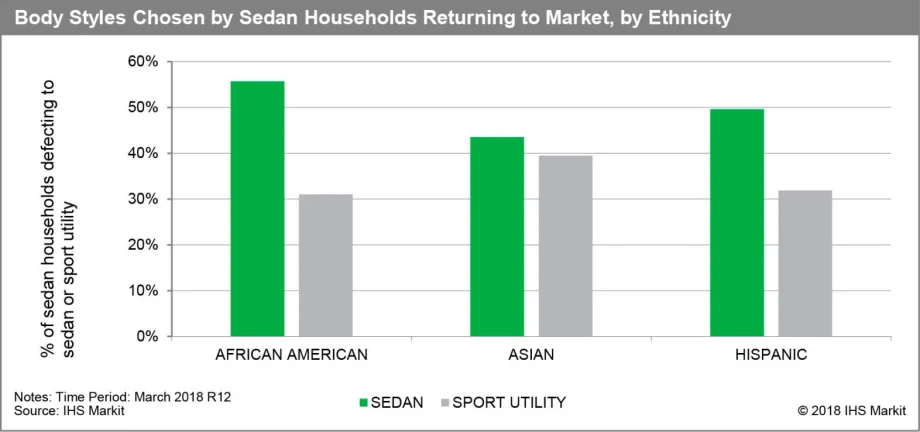
The IHS Markit analysis found variances among ethnic groups, household income, and age levels. For instance, the propensity to defect from a sedan to an SUV was much higher among Asians than African American or Hispanic consumers, according to the analysis.
According to the firm, nearly 40% of Asian sedan owners who returned to market for a new vehicle during the study period defected from a sedan to an SUV. That’s significantly higher than Hispanics (31.9%) or African Americans (31%).
“Perhaps surprisingly, 55.7% of African American sedan owners opted to stay with a sedan for their next vehicle purchase, versus only 49.6% of Hispanic and 43.5 percent of Asians,” the firm noted.
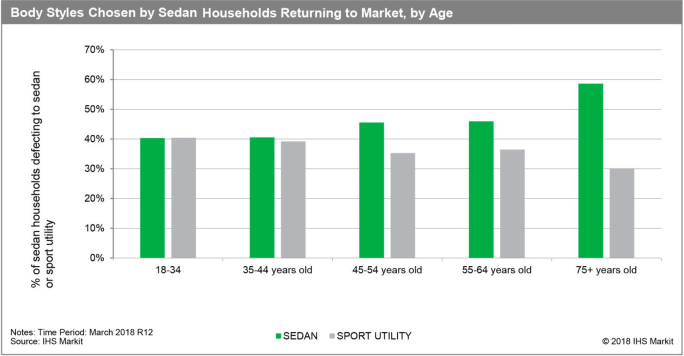
Various age groups also showed different patterns for defection from sedans as well. During the April 2017 to March 2018 timeframe, the propensity to defect from sedan to SUV decreased as age increased. Loyalty to sedans is extremely high among older consumers and varies by nearly 20 percentage points from the youngest consumers to the oldest.
“Many marketers may not realize the importance of continuing to target their sedan marketing and advertising efforts toward older buyers,” said Tom Libby, loyalty principal at IHS Markit. “These consumers sometimes have more buying power as well, which means an important group of prospective customers could be at risk of being missed in advertising and marketing efforts.”
Household income levels also contribute to consumer preferences and defection rates. The analysis found as incomes rise, consumers are more likely to defect from a sedan to an SUV. Conversely, the propensity of sedan owners to choose another sedan when returning to market declines as income levels increase. The data suggests the healthy U.S. economy itself is contributing to the flourishing SUV business.
The complete analysis by IHS Markit covered new vehicle transactions from April 2017 to March 2018, including purchases and leases among owners who had acquired a new vehicle during the 12-month timeframe. The SUV/CUV body style as defined by the research includes SUV and CUV models collectively. In addition, the second vehicle may be an addition to the household fleet, not necessarily a replacement. Age and income levels reported in the analysis are based on the head of household, who may not be the primary driver.
More Auto Finance

Interest Rates Further Squeeze Auto Consumers
Last month’s hike and a potential second increase this month add to a growing list of inflation woes that could continue to dent overall car sales.
Read More →
Mind Your Process
Consistent steps taken in various aspects of the F&I office can make valuable differences over time, similar to an outline for a best-selling book.
Read More →
Top Five Credit Application Fraud Flags
Compliance audits regularly reveal bad habits that can lead to fraud charges and should have been stamped out decades ago.
Read More →
More Auto Loans for the Taking in August
Riskier categories were on the uptick for the month as lenders loosened access in several areas while balancing out the exposure in another, Cox Automotive reported.
Read More →
July Was Hot for Auto Borrowers
Credit proved readily available for many, but most loans left buyers in negative territory, Cox Automotive said.
Read More →
Dealer Lender Preferences Revealed
When lenders provide consistent, fast service, their overall satisfaction scores with dealers greatly improve, according to JD Power research.
Read More →
Auto Refi Savings Surge
Consumers with 84-month auto loan terms who refinanced saved the most on monthly payments, according to a new report by auto refinancing provider Caribou.
Read More →
Subaru Enters Lending Business
The automaker follows other brands in adding captive financing in the U.S., and says the move will strengthen its position here.
Read More →
Positive Equity Reaches Record High
Mainstream vehicle owners who bought a car seven years ago are likely to have positive equity when trading in for a new vehicle, according to second-quarter Edmunds data.
Read More →
Dealerships Are Paying the Price for Extended Car Loans
Growing negative-equity scenarios mean such lengthy terms should be addressed in a forward-looking way to make them work for the dealer and the consumer down the road.
Read More →