



KBB: September’s Avg. New-Vehicle Price Up $144 From a Year Ago
New-car affordability continued to be a challenge for car buyers, with the average transaction price closing in on $35,000 in September.
IRVINE, Calif. — New-car affordability continued to be a challenge for car buyers in September, with the average transaction price closing in on $35,000, according to Kelley Blue Book.
The firm estimated the average new-vehicle price to be $34,861, up $144 from a year ago but flat with August. The year-over-year uptick, however, reflected slowing demand for new vehicles, Kelley Blue Book analysts said.
“Despite pullbacks in vehicle production this year, incentives are still rising and averaging nearly 11% of transaction prices,” said Kelley Blue Book analyst Tim Fleming. “In addition, with average prices nearly $35,000, we expect new-car affordability to continue to be a challenge, especially as more consumers stretch their loan terms out to 84 months to keep payments down.”
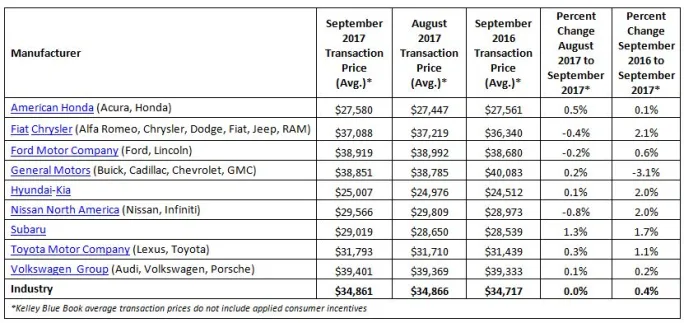
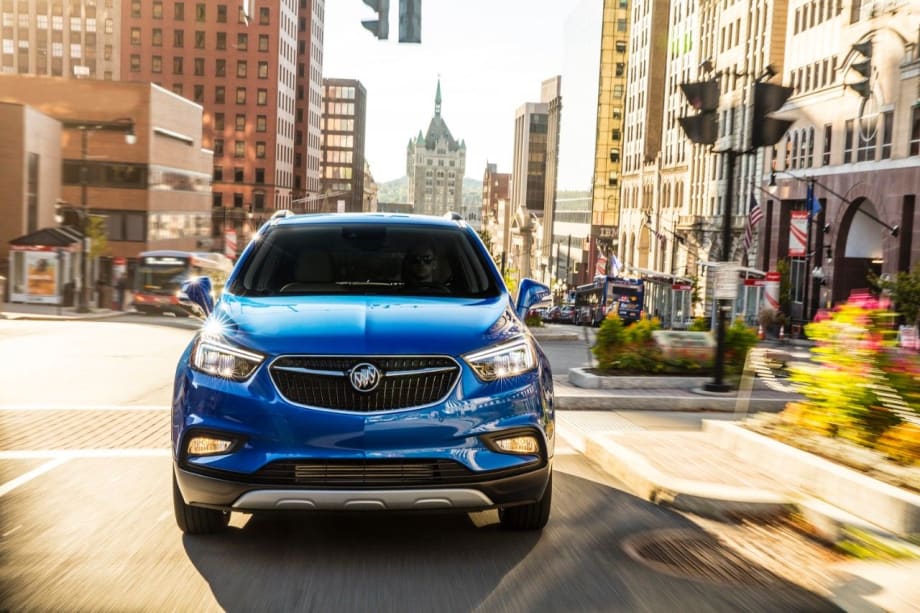
General Motors was the only manufacturer to register a decline, with its average transaction price falling 3% from a year ago. The only General Motors brand to record an increase was Buick, which saw its average transaction price rise 4% from a year ago. The decline could be partly attributed to the discontinuation of the Verano, the firm said, as well as the 2% increase in price for the refreshed Encore.
Chevrolet’s average transaction price fell 3%, with the redesigned Equinox recording its best month. Its average transaction price increased 3% from a year ago. The automaker’s top seller, the Silverado, saw its average transaction price fall 3%.
American Honda’s average transaction price was flat with a year ago, with the Honda brand’s average price increasing 1% from a year ago. Acura’s average transaction price fell 3%.
Honda’s best performer was the redesigned Odyssey minivan, which transacted 16% higher than a year ago. The redesigned CR-V also continued to impress, with its average transaction increasing 6%. Its smaller sibling, the HR-V, saw its transaction price fall 2%.
As for Acura, the refreshed TLX recorded its best month for the automaker, with its average transaction price climbing 6% from a year ago. All other models were down in terms of average transaction prices.
More F&I
Managing Expectations
Learn how proactive communication, setting clear expectations, and providing solutions when plans change can strengthen customer trust and improve the overall service experience.

The F&I Manager's Report Card
The best managers take the time and attention to measure the behaviors behind the numbers.

AI: Facilitator, Not Fixer, in F&I
The dealerships that thrive in the years ahead will be those that embrace technology while continuing to invest in the people who make customer interactions count.

Modern Technology Objection Handling
In this video, Trent White shares how to confidently handle technology-based objections by helping customers understand the value of protection, even with modern vehicle technology.

Consistency at Scale: Driving F&I Performance
With 75 rooftops across the Sunshine State, Morgan Auto Group has proven to Floridians that it knows a thing or two about driving performance in a competitive market. But it didn’t start at the top.

Gitty Up on GAP
The foundational finance-and-insurance product hasn’t kept up with the latest conditions for auto dealers. Is the time ripe?

How AI-Powered Coaching Is Transforming F&I Performance
See how AI-powered coaching can turn F&I customer conversations into actionable insights that support compliance, performance and profitability

Sell Value, Build Trust
In this video, Trent White explains why selling on value, not fear, builds lasting customer trust, reduces cancellations, and drives long-term success.
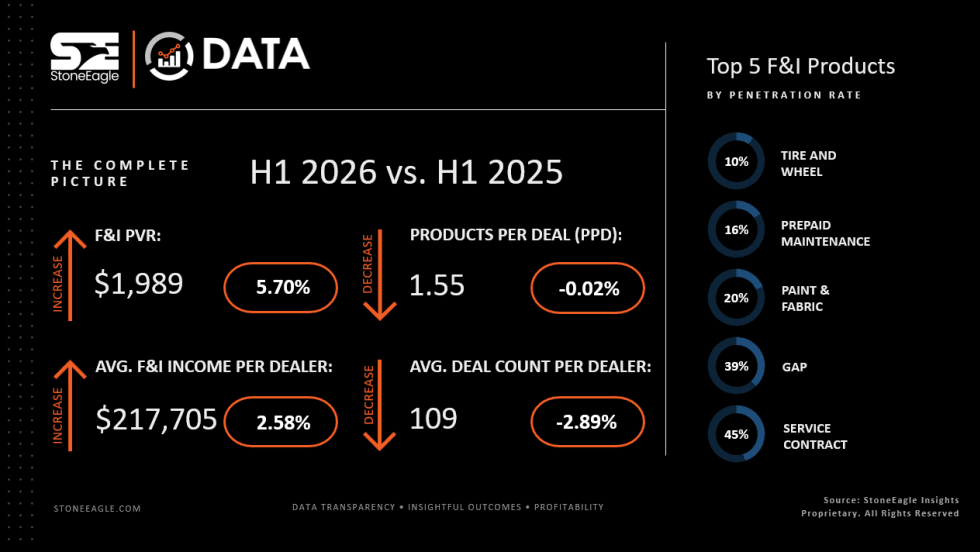
F&I Sales Give Dealers First-Half Lift
Product business shored up total profits to avoid an overall revenue tanking as product penetrations held steady, StoneEagle reported.
Targeted Training Drives Results
Today’s technology, instead of threatening F&I managers, can actually make them better, according to an industry veteran who’s watched market setbacks roil the unprepared.