



Manheim Used Vehicle Value Index Increases 1.6% in April
The index's April reading was 124.7, a year-over-year improvement thanks to the 0.5% increase in wholesale used-vehicle prices. Manheim officials said any weakness is more a result of excessive new-vehicle inventory, with more than four million new units sitting on dealer lots for the last three months.
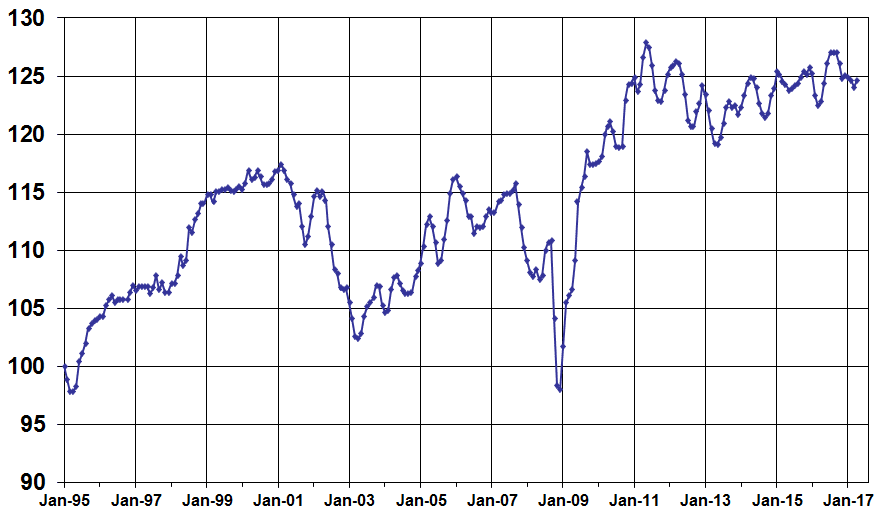
ATLANTA — Wholesale used-vehicle prices improved 0.5% on a month-over-month basis in April, bringing the Manheim Used Vehicle Value reading to 124.7 — a 1.6% increase from a year ago.
On a year-over-year basis, the mid-sized car category realized the largest value decline in April, while only pickups saw gains greater than the overall market.
“Although the Manheim Used Vehicle Value Index increased for the first time this year on a month-over-month basis, used-vehicle values have not collapsed the way many analysts have warned of for more than a year due to expected increases in wholesale supplies,” the firm stated in its monthly report. “And in fact, what weakness we have seen is probably more a result of excessive new-vehicle inventory, not used.”
At the retail level, the used-vehicle market remains healthy, officials said, and dealers have needed only a modest decline in auction pricing to maintain acceptable inventory turn rates. What’s really weighing down the industry is the lackluster new-vehicle market, which came in below expectations.
Franchised dealer have had more than four million new units in stock for the last three months, with April’s new-vehicle sales volume falling 4.7% from a year ago. The industry is also lagging last year’s record-setting performance on a year-to-date basis by 2.4%.
“The decline in sales is largely a result of continuing declines in car sales as volumes fell 11% for cars but declined only 0.1% for trucks,” the firm noted. “Retail sales declined 3.1% in April and are now down 0.5% year to date.”
The good news is vehicle OEMs resisted the temptation to push fleet deliveries in April. Combined rental, commercial fleet, and government purchases of new vehicles were down 12% in April, with the all-important rental segment down the most with a 12% decline.
“Granted, however, that large decline was relative to a very high level a year ago,” the firm stated.
Used-vehicle retail sales continued to grow in the first quarter, with sales up 3.6% from a year ago. Franchised dealer sales were up 5%, while independent sales were up 4%, according to the National Automobile Dealers Association.
Certified pre-owned sales ticked up slightly in April (0.7%). For the quarter, sales were up 0.3%. “Again, we suggest that CPO weakness relative to the overall market reflects the lack of potential gross profit for certain brands and market segments,” Manheim noted in its report.
The preliminary estimate for first quarter real GDP came in weaker than expected, the firm noted, with a very weak 0.7% quarter-to-quarter growth. Growth in consumer spending stalled to 0.3% — the slowest pace since the fourth quarter of 2009.
“Even with lackluster GDP performance in Q1, the consumer is in a good spot right now as there is strong consumer confidence, evidence of increasing incomes and low unemployment, which collectively should support continued healthy retail demand for autos,” Manheim officials stated.
More Auto Finance

Interest Rates Further Squeeze Auto Consumers
Last month’s hike and a potential second increase this month add to a growing list of inflation woes that could continue to dent overall car sales.
Read More →
Mind Your Process
Consistent steps taken in various aspects of the F&I office can make valuable differences over time, similar to an outline for a best-selling book.
Read More →
Top Five Credit Application Fraud Flags
Compliance audits regularly reveal bad habits that can lead to fraud charges and should have been stamped out decades ago.
Read More →
More Auto Loans for the Taking in August
Riskier categories were on the uptick for the month as lenders loosened access in several areas while balancing out the exposure in another, Cox Automotive reported.
Read More →
July Was Hot for Auto Borrowers
Credit proved readily available for many, but most loans left buyers in negative territory, Cox Automotive said.
Read More →
Dealer Lender Preferences Revealed
When lenders provide consistent, fast service, their overall satisfaction scores with dealers greatly improve, according to JD Power research.
Read More →
Auto Refi Savings Surge
Consumers with 84-month auto loan terms who refinanced saved the most on monthly payments, according to a new report by auto refinancing provider Caribou.
Read More →
Subaru Enters Lending Business
The automaker follows other brands in adding captive financing in the U.S., and says the move will strengthen its position here.
Read More →
Positive Equity Reaches Record High
Mainstream vehicle owners who bought a car seven years ago are likely to have positive equity when trading in for a new vehicle, according to second-quarter Edmunds data.
Read More →
Dealerships Are Paying the Price for Extended Car Loans
Growing negative-equity scenarios mean such lengthy terms should be addressed in a forward-looking way to make them work for the dealer and the consumer down the road.
Read More →