



NHTSA Issues Urgent Warning to 313,000 Honda, Acura Owners
New tests on Takata airbag inflators show that certain model-year 2001-2003 Honda and Acura vehicles have up to a 50% chance of rupturing during a crash, according to a National Highway Traffic Safety Administration (NHTSA) alert.
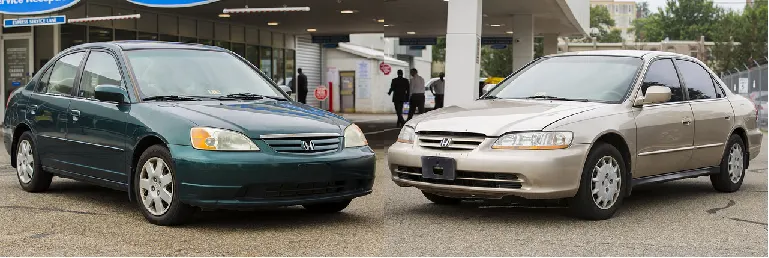
Two Honda models that contain the dangerous Takata air bag inflators.
WASHINGTON — New tests on Takata airbag inflators have found that certain model-year 2001-2003 Honda and Acura vehicles have up to a 50% chance of a dangerous rupture during a crash, according to a National Highway Traffic Safety Administration (NHTSA) alert.
“ … these vehicles are unsafe and need to be repaired immediately,” said U.S. Transportation Secretary Anthony Foxx. “Folks should not drive these vehicles unless they are going straight to a dealer to have them repaired immediately, free of charge.”
The models that are affected by the specific defective air bags are the 2001-2003 Honda Civic and Accord; the 2002 Honda CR-V and Odyssey; the 2002-2003 Acura TL; and the 2003 Acura CL and Honda Pilot.
The airbags in these vehicles, according to the NHTSA, contain a manufacturing defect that greatly increases the potential for dangerous rupture during a crash that causes the air bag to deploy. Testing on vehicles with the defective airbags in areas of high humidity — like Florida, Texas, other parts of the Gulf Coast, and Southern California — resulted in rupture rates that at times exceeded 50%.
Affected vehicles were originally recalled between 2008 and 2011. However, when recent reports of ruptures in the recalled vehicles were sent to the NHTSA, the regulator ordered Takata to perform additional ballistic testing on the inflators.
According to Honda, more than 70% of the higher-risk vehicles have already been repaired. Even with those repairs, there are still approximately 313,000 vehicles with the defect still on the roads, Honda stated.
“The air bag inflators in this particular group of vehicles pose a grave danger to drivers and passengers that must be fixed right away,” said NHTSA Administrator Dr. Mark Rosekind. "Drivers should visit SaferCar.gov or contact their local dealer to check whether their vehicle is affected. If it is, they should have the vehicle repaired immediately for free at an authorized dealer. We commend Honda for taking additional actions to get these vehicles repaired.”
More Auto Finance

Interest Rates Further Squeeze Auto Consumers
Last month’s hike and a potential second increase this month add to a growing list of inflation woes that could continue to dent overall car sales.
Read More →
Mind Your Process
Consistent steps taken in various aspects of the F&I office can make valuable differences over time, similar to an outline for a best-selling book.
Read More →
Top Five Credit Application Fraud Flags
Compliance audits regularly reveal bad habits that can lead to fraud charges and should have been stamped out decades ago.
Read More →
More Auto Loans for the Taking in August
Riskier categories were on the uptick for the month as lenders loosened access in several areas while balancing out the exposure in another, Cox Automotive reported.
Read More →
July Was Hot for Auto Borrowers
Credit proved readily available for many, but most loans left buyers in negative territory, Cox Automotive said.
Read More →
Dealer Lender Preferences Revealed
When lenders provide consistent, fast service, their overall satisfaction scores with dealers greatly improve, according to JD Power research.
Read More →
Auto Refi Savings Surge
Consumers with 84-month auto loan terms who refinanced saved the most on monthly payments, according to a new report by auto refinancing provider Caribou.
Read More →
Subaru Enters Lending Business
The automaker follows other brands in adding captive financing in the U.S., and says the move will strengthen its position here.
Read More →
Positive Equity Reaches Record High
Mainstream vehicle owners who bought a car seven years ago are likely to have positive equity when trading in for a new vehicle, according to second-quarter Edmunds data.
Read More →
Dealerships Are Paying the Price for Extended Car Loans
Growing negative-equity scenarios mean such lengthy terms should be addressed in a forward-looking way to make them work for the dealer and the consumer down the road.
Read More →