



Report: Spike in Wholesale Volume Hurts Pre-Owned Values
Prices for used vehicles declined 4.2% in the first 10 months of 2019 while volume increased 5.2%, J.D. Power analysts say, a trend that has begun to affect the commercial market.

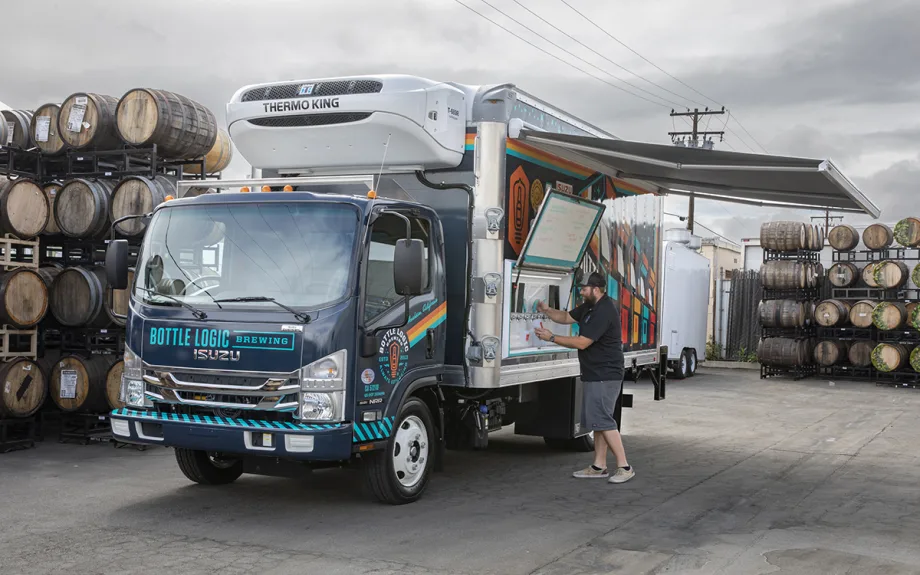
Average prices for pre-owned medium-duty cab-forward trucks such as the Isuzu N-Series declined by 15.2% in October, J.D. Power reports.
Photo courtesy Isuzu Commercial Truck of America Inc.
MCLEAN, Va. — J.D. Power analysts say the used vehicle market declined in October, charting a year-to-date drop of 4.2% in average prices. In the same period, wholesale volume grew by 5.2%. Highline volume increased 6.9% and mass-market inventories were up 4.9%.
“At an industry level, used vehicle prices are expected to finish out 2019 slightly up relative to 2018 — prices peaked in August and we expect they’ll continue to decline for the remaining months,” said David Paris, executive analyst at J.D. Power Valuation Services. “Incentives, used vehicle supply, and credit conditions are expected to apply downward pressure on used vehicle prices, but the impact of other factors, like gas and home prices and labor conditions, may support used vehicle prices in the near term.”
In a separate report, analysts reported that, despite the steady rate of depreciation in the auction channel, commercial trucks continued to lose value in the retail channel in October.
“Economists agree that the economy is negatively impacted to some degree by the uncertainty and inefficiency attributable to the tariff war.”
The medium duty truck market experienced sales of older, higher-mileage trucks, which has impacted pricing. The average price for a Class 3 or 4 cabover, for example, fell by 15.2% year-over-year in October —just over $2,100 per unit — and by a market-shaking 34.8% ($6,270) from September.
“Economists agree that the economy is negatively impacted to some degree by the uncertainty and inefficiency attributable to the tariff war. U.S. trade officials continue to comment optimistically about the progress of trade talks, but concrete action after a year and a half has been moderate at best,” said Chris Visser, commercial truck senior analyst at J.D. Power Valuation Services. “The presidential election of 2020 will further increase uncertainty and trepidation on the part of investors.”
To review J.D. Power’s November used vehicle market report, click here.
To review the firm’s November commercial truck report, click here.
More Auto Finance

Interest Rates Further Squeeze Auto Consumers
Last month’s hike and a potential second increase this month add to a growing list of inflation woes that could continue to dent overall car sales.
Read More →
Mind Your Process
Consistent steps taken in various aspects of the F&I office can make valuable differences over time, similar to an outline for a best-selling book.
Read More →
Top Five Credit Application Fraud Flags
Compliance audits regularly reveal bad habits that can lead to fraud charges and should have been stamped out decades ago.
Read More →
More Auto Loans for the Taking in August
Riskier categories were on the uptick for the month as lenders loosened access in several areas while balancing out the exposure in another, Cox Automotive reported.
Read More →
July Was Hot for Auto Borrowers
Credit proved readily available for many, but most loans left buyers in negative territory, Cox Automotive said.
Read More →
Dealer Lender Preferences Revealed
When lenders provide consistent, fast service, their overall satisfaction scores with dealers greatly improve, according to JD Power research.
Read More →
Auto Refi Savings Surge
Consumers with 84-month auto loan terms who refinanced saved the most on monthly payments, according to a new report by auto refinancing provider Caribou.
Read More →
Subaru Enters Lending Business
The automaker follows other brands in adding captive financing in the U.S., and says the move will strengthen its position here.
Read More →
Positive Equity Reaches Record High
Mainstream vehicle owners who bought a car seven years ago are likely to have positive equity when trading in for a new vehicle, according to second-quarter Edmunds data.
Read More →
Dealerships Are Paying the Price for Extended Car Loans
Growing negative-equity scenarios mean such lengthy terms should be addressed in a forward-looking way to make them work for the dealer and the consumer down the road.
Read More →