


Texas Auto Theft Numbers Climb in 2007
The number of Allstate insured vehicles in Texas that were stolen and never found jumped 11 percent from 2006 to 2007.
IRVING, Texas — The number of Allstate insured vehicles in Texas that were stolen and never found jumped 11 percent from 2006 to 2007. Texas' second largest auto insurer says a large portion of these un-recovered vehicles were SUVs and trucks — sending a message to drivers of these popular Texas vehicles that where and how you park your car can be as important as remembering to lock the doors.
"The majority of stolen full-size trucks and SUVs are taken into Mexico and used to transport narcotics and human smuggling. After that, these vehicles are stripped, used for parts or sold to unsuspecting buyers in Mexico and the U.S.," said Officer Steve Plummer with the El Paso County Auto Burglary and Theft Prevention Taskforce. "The size, carrying capacity, off- road capability, monetary value and availability of large trucks and SUVs will continue to make these vehicles prime targets for thieves".
According to Allstate Insurance Company, there was a 22 percent spike in un-recovered SUVs and a 17 percent increase in un-recovered trucks last year in the Lone Star State. Ford F-250 and 350 pick-ups are the most common type of un-recovered truck or SUV. The Acura Integra was the most common type of un-recovered, non-truck luxury vehicle.
The overall number of stolen Allstate-insured vehicles, both recovered and un-recovered in Texas, increased 1.2 percent from 2006 to 2007 with 4,188 auto theft claims filed statewide last year — costing more than $34 million.
"Texas has the second highest auto theft rate in the country," said Dena Kudlac, a Dallas Ft. Worth area Allstate Insurance Company exclusive agent. "Auto theft is one of the most expensive crimes Texans face annually; representing millions of dollars for consumers."
It can take a thief less than 10 seconds to break into a car. A team of skilled "strippers" using no power-tools can tear apart a car or truck in just six minutes, leaving an empty shell on blocks.
Safety experts at Allstate recommend consumers protect their vehicles with common sense practices and anti-theft devices, including tracking devices.
More F&I

AI: Facilitator, Not Fixer, in F&I
The dealerships that thrive in the years ahead will be those that embrace technology while continuing to invest in the people who make customer interactions count.
Read More →
Modern Technology Objection Handling
In this video, Trent White shares how to confidently handle technology-based objections by helping customers understand the value of protection, even with modern vehicle technology.
Read More →
Consistency at Scale: Driving F&I Performance
With 75 rooftops across the Sunshine State, Morgan Auto Group has proven to Floridians that it knows a thing or two about driving performance in a competitive market. But it didn’t start at the top.
Read More →
Gitty Up on GAP
The foundational finance-and-insurance product hasn’t kept up with the latest conditions for auto dealers. Is the time ripe?
Read More →
How AI-Powered Coaching Is Transforming F&I Performance
See how AI-powered coaching can turn F&I customer conversations into actionable insights that support compliance, performance and profitability
Read More →
Sell Value, Build Trust
In this video, Trent White explains why selling on value, not fear, builds lasting customer trust, reduces cancellations, and drives long-term success.
Read More →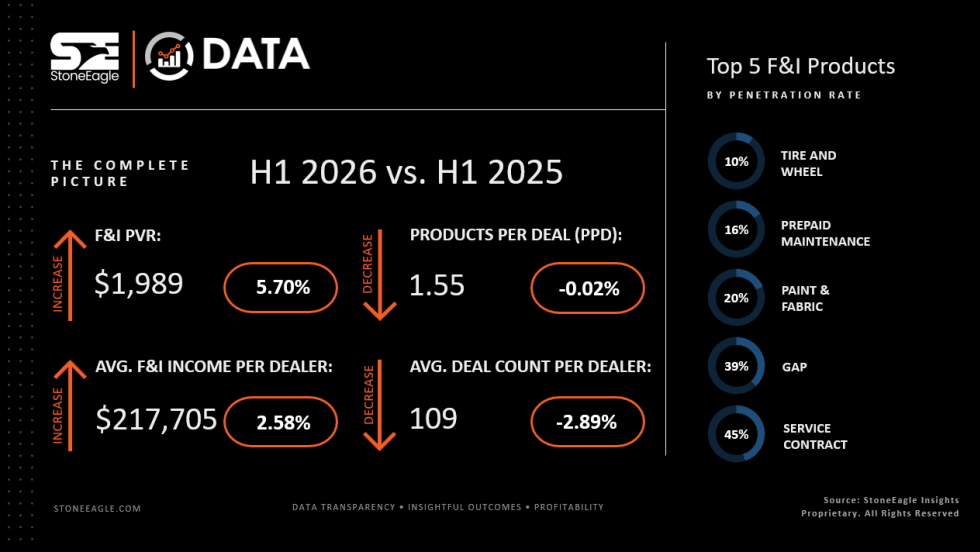
F&I Sales Give Dealers First-Half Lift
Product business shored up total profits to avoid an overall revenue tanking as product penetrations held steady, StoneEagle reported.
Read More →
Targeted Training Drives Results
Today’s technology, instead of threatening F&I managers, can actually make them better, according to an industry veteran who’s watched market setbacks roil the unprepared.
Read More →
Double the Change, Double the Chance
When an F&I manager gets a customer refusal, it’s a wise move to tweak more than one thing in the product offering.
Read More →
Just Do It
F&I managers need training, but instead of resisting application or expecting perfection, they should improve by simply acting on what they learn.
Read More →