



TransUnion: Auto Finance Registers Lowest Growth Rate Since Q1 2012
The firm attributed the slowdown to improvements in oil states and tightening underwriting guidelines, which have also helped stabilize delinquency rates.
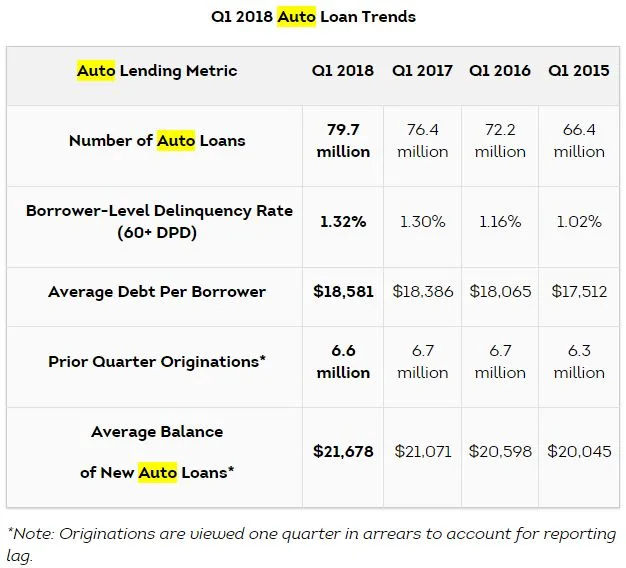
CHICAGO — Tighter underwriting guidelines and better on-time payment in oil states had a positive effect on serious auto delinquency rates per borrower, according to TransUnion.
After growing 1.16% in the first quarter of 2015 to 130% in last year’s opening quarter, the serious delinquency rate — or loans more than 60 days delinquent — stayed relatively flat at 1.32% in the first quarter 2018.
“The first quarter of 2018 was relatively quiet in the auto finance space,” said Brian Landau, senior vice president and automotive business leader at TransUnion. “The most noteworthy change was the stabilization in the delinquency rate, likely due to shifts in the makeup of new auto loan borrowers and continued improvements in oil states.
“Gas prices, as measured by WTI crude, have increased more than 21% in the last year, which has provided a significant boost to the local economies of oil-producing states.”
The top six states with the largest annual decreases in delinquency rates in Q1 2018 — Alaska, Wyoming, Texas, New Mexico, Oklahoma, and North Dakota — are among the eight states where oil, gas, and mining account for 10% or more of gross domestic product. The other two states — Louisiana and West Virginia — also performed better than the national average in terms of annual changes in their serious delinquency rates, according to TransUnion.
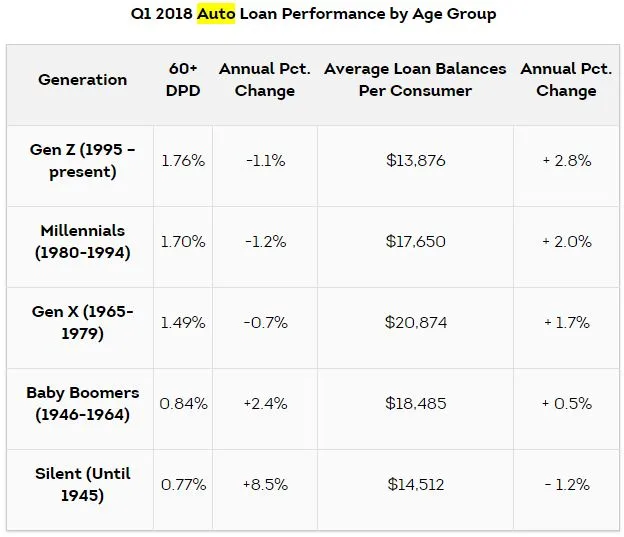
The firm also observed a continued shift in the origination makeup of auto loan borrowers, as finance sources continued to migrate to higher credit tiers. This led to the lowest annual growth rate in auto loan balances since the first quarter of 2012. They rose 5.2% to $1.183 trillion.
Overall originations, viewed on quarter in arrears to account for reporting lag, declined 1.5% in the fourth quarter of 2017 — the sixth consecutive quarter of year declines, though the smallest such decrease in 2017.
“Origination mix continues to shift toward lower risk, with superprime and prime plus taking 1.8 points of share from prime, nearprime, and subprime on an annual basis,” Landau said. “This continues the trend from last year, where the shift to the two lowest risk tiers was 1.6 points.
“Finally, we believe the slowdown in auto loan balance growth is largely due to the decline in originations, as lenders continue to tighten their underwriting requirements and rising interest rates put a slight damper on demand.”
More F&I

AI: Facilitator, Not Fixer, in F&I
The dealerships that thrive in the years ahead will be those that embrace technology while continuing to invest in the people who make customer interactions count.
Read More →
Modern Technology Objection Handling
In this video, Trent White shares how to confidently handle technology-based objections by helping customers understand the value of protection, even with modern vehicle technology.
Read More →
Consistency at Scale: Driving F&I Performance
With 75 rooftops across the Sunshine State, Morgan Auto Group has proven to Floridians that it knows a thing or two about driving performance in a competitive market. But it didn’t start at the top.
Read More →
Gitty Up on GAP
The foundational finance-and-insurance product hasn’t kept up with the latest conditions for auto dealers. Is the time ripe?
Read More →
How AI-Powered Coaching Is Transforming F&I Performance
See how AI-powered coaching can turn F&I customer conversations into actionable insights that support compliance, performance and profitability
Read More →
Sell Value, Build Trust
In this video, Trent White explains why selling on value, not fear, builds lasting customer trust, reduces cancellations, and drives long-term success.
Read More →
F&I Sales Give Dealers First-Half Lift
Product business shored up total profits to avoid an overall revenue tanking as product penetrations held steady, StoneEagle reported.
Read More →
Targeted Training Drives Results
Today’s technology, instead of threatening F&I managers, can actually make them better, according to an industry veteran who’s watched market setbacks roil the unprepared.
Read More →
Double the Change, Double the Chance
When an F&I manager gets a customer refusal, it’s a wise move to tweak more than one thing in the product offering.
Read More →
Just Do It
F&I managers need training, but instead of resisting application or expecting perfection, they should improve by simply acting on what they learn.
Read More →