



Another Carmaker Experiments With Solar
Nissan joins several other major brands in testing the charging tech or offering it as an extra

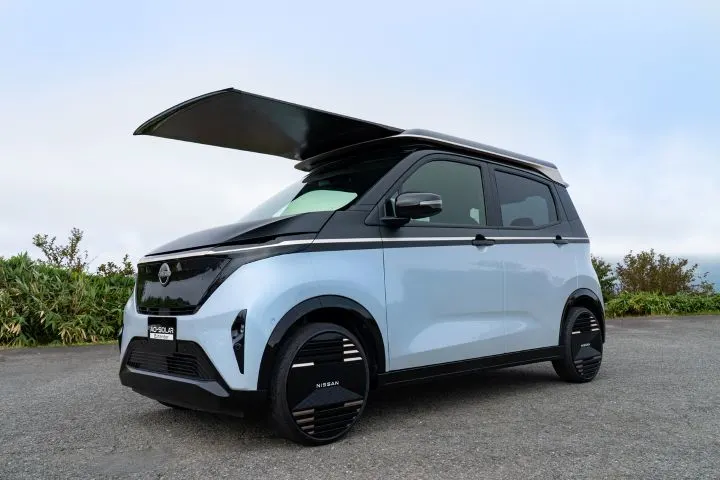
The concept kei car has an extendable extra solar panel for when it's parked for extra power generation, shade.
Nissan
Nissan has entered the quest for solar-powered cars with a concept mounted system it plans for a future commercial launch.
The Japanese automaker follows several other major automakers in either adding solar panels as auxiliary power boosters on selected vehicles or developing concept models to gauge consumer interest. It showcased the Sakura Kei electric vehicle at the Japan Mobility Show held through Sunday in Tokyo.
Miniature kei cars have limited availability in the U.S. due to import safety and emissions restrictions. More than half of states allow them but only in certain scenarios, typically forbidding them on freeways.
In Japan, though, keis are popular for fitting better on tight urban street systems. The Sakura, in fact, has been Nissan’s best-selling EV for three straight years. Many Sakura owners drive them for short errands, the solar power all but eliminating the need for grid charging. Sakura is the Japanese word for cherry blossom, the country's national flower.
The battery-electric concept car sports an extendable solar system on its roof that Nissan says can add up to nearly 1,900 miles of driving range per year. The experiment aims to provide “effortless charging” and reduce electric grid dependence.
The solar feature can charge the car while on the road and parked. It can be extended when the car is parked to add about 500 watts of power generation, according to Nissan, which said the system is designed to reduce drag.
In natural disasters, Nissan said the Sakura can serve as a backup power source.
The automaker originated the solar system innovation from a 2021 in-company “idea contest.”
Fellow Japanese brand Toyota is offering a limited-quantity solar roof option on its 2026 Prius XSE Premium trim. The 185-watt addition can charge the hybrid’s drive battery while parked and powers auxiliary functions while on the road.
The 2020 Hyundai Sonata hybrid car also had a solar roof system to increase driving range, but the South Korean automaker apparently didn’t retain the feature in later years.
Tesla’s Cybertruck, meanwhile, reportedly now has solar-charging capability, according to an owners’ club website. And the U.S. startup Aptera has developed a three-wheeled solar car.
More Showroom

New Cars Less Affordable
Buying conditions eroded for American shoppers last month due to inflation and interest rates, though they fared better than a year ago.

October Sales Divided
Inventory trends split between the new- and used-vehicle markets, though prices continued to rise for both in October.

Auto Transaction Prices Hit New Height
October sales of big, pricey models push up the average, even as budget-conscious consumers snag more economical options.

Making the Safe Choice
Kelley Blue Book has turned households with teen drivers onto safe and affordable options for their vehicles of choice

Inventory Holds Steady
September new-vehicle inventory rose slightly month-over-month, but dealer lots are laden with MY2026 vehicles as the typical model year changeover trudges along.

October Auto Sales Fall With the Leaves
A forecast anticipates retail deliveries are down this month as consumers continue to face cost challenges, though more are tapping long loans in order to buy.

California Sees Quarterly Gains
California’s new-vehicle market saw a boost in hybrids in the third quarter and its first overall quarterly market gain of the year.

New-Vehicle Prices Stay Put
Affordability pressures and model availability shaped new-vehicle sales in September, according to an analysis by Kelley Blue Book.

EV Buyer Consideration Shifts
What drives American consumers to purchase an electric vehicle is shifting as the question moves away from Should I?' to 'Which features and experience do I want to have?'

Year-to-Date Auto Sales Holding Their Own
A forecast through August shows that automakers have shifted strategies to keep deliveries and revenues up despite tariffs and other economic challenges.