



Don't Say We Didn't Warn You
Hudson details a Connecticut lawsuit that confirmed as-is vehicle sales are subject to the UCC’s implied warranties rule.



The U.S. District Court for the District of Connecticut awarded $8,007 in actual damages and $25,000 in punitive damages to a car buyer who claimed breach of warranty on an “as-is” sale. Photo by Chris Randall via Flickrs
We really hate to say “We told you so,” but we told you so. We’ve run several articles in Spot Delivery pointing out a problem that we see over and over in dealers’ buyers orders. Here’s the problem:
Under the Uniform Commercial Code, as enacted in most states, a car sale gives rise to two so-called “implied warranties” — implied because they need not be expressed, either orally or in writing. These two implied warranties are the implied warranty of merchantability and the implied warranty of fitness for a particular purpose. In most states, the UCC permits a seller to “disclaim” these implied warranties and sell a vehicle with no warranties at all — an “as-is” sale.
The UCC imposes a requirement for such a disclaimer, though. It must be in writing and “conspicuous.” We see buyers order after buyers order in which the warranty disclaimer appears in ordinary text surrounded by other ordinary text, or in which the disclaimer is in bold type or in capital letters but is surrounded by other provisions also in bold or caps. Such presentations, we have warned, will fuel plaintiffs’ claims that they are not “conspicuous.” A recent Connecticut case illustrates the point.
Motion Granted
Ismet Krasniqi bought a used Audi A6 from A Better Way Wholesale Autos Inc. Almost two years later, Krasniqi learned that the car had structural damage from prior collisions, rendering it unsafe to drive and potentially life-threatening in the event of a crash.
Krasniqi sued Better Way for breach of the implied warranty of merchantability, violation of the Connecticut Unfair Trade Practices Act, and breach of express warranty, seeking $8,007 in actual damages, $25,000 in punitive damages, and post-judgment interest. Better Way failed to answer the complaint, and Krasniqi moved for a default judgment. The U.S. District Court for the District of Connecticut granted the motion in part and denied it in part.
Krasniqi claimed that Better Way breached the implied warranty of merchantability under the Connecticut version of the UCC by selling him a car that was unsafe to drive.
The court noted that Better Way attempted to disclaim the implied warranty of merchantability with language to that effect in the sales contract. However, the court found that the disclaimer was not conspicuous because it was in the “same font size, color, and typeface as the other text on the page, [was] not set apart from other text or in all capital letters, and include[d] no specific header.”
Because the court found that the disclaimer was unenforceable, it went on to address whether Krasniqi established that Better Way breached the implied warranty of merchantability and determined that he did. Specifically, the court found that Krasniqi sufficiently alleged that Better Way is a merchant that sold a car that was not merchantable and caused Krasniqi damages, and that Krasniqi gave Better Way notice of his injury in the form of a demand letter.
Next, Krasniqi claimed that Better Way violated the CUTPA by failing to perform a safety inspection, as required by Connecticut law, or by selling a car notwithstanding the defects and failing to disclose those defects, as required by Connecticut law. The court found that Krasniqi adequately established a claim for relief under the CUTPA.
Finally, Krasniqi claimed that Better Way breached the express warranty that the vehicle had undergone a safety inspection and that it was safe for operation. The court found that Krasniqi did not establish the breach of express warranty claim because he failed to provide to the court the form on which Better Way allegedly made an express warranty.
Punitive Damages
The court awarded Krasniqi the requested $8,007 in actual damages, representing $7,357 for the diminished value of the vehicle as of the date of sale and $650 for the cost of a vehicle inspection. The court also awarded the requested $25,000 in punitive damages for recklessly violating the CUTPA and exposing Krasniqi or anyone else driving or riding in the car to a “significant risk of serious bodily harm.” Finally, the court awarded Krasniqi post-judgment interest at the rate of 4.75% per annum, the current bank prime interest rate.
It’s hard to tell how much effect the loss of the disclaimer of implied warranties had on the court’s decision, but you have to believe the dealership would have been in much better shape if it could have argued that the buyer had been warned — and warned conspicuously — that the sale was “as-is.”
Thomas B. Hudson is a partner in the firm of Hudson Cook LLP, publisher of Spot Delivery, and the author of several widely read compliance manuals. Contact him at tom.hudson@bobit.com. ©CounselorLibrary.com 2018, all rights reserved. Single print publication rights only, to Auto Dealer Today (7/18). HC No. 4823-3533-5532
Originally posted on Auto Dealer Today
More Opinion

Combative UAW Demands Leave No Room For Constructive Negotiations
Compensation for workers' contributions during the panedmic is justified but not at this level.
Read More →
Curing Your COVID Hangover
It’s time to get re-connected with our customers and stay there.
Read More →
Uber Doubles Q2 Revenue
The company saw revenue more than double to $8.1 billion as customers continued to hail rides and order takeout food.
Read More →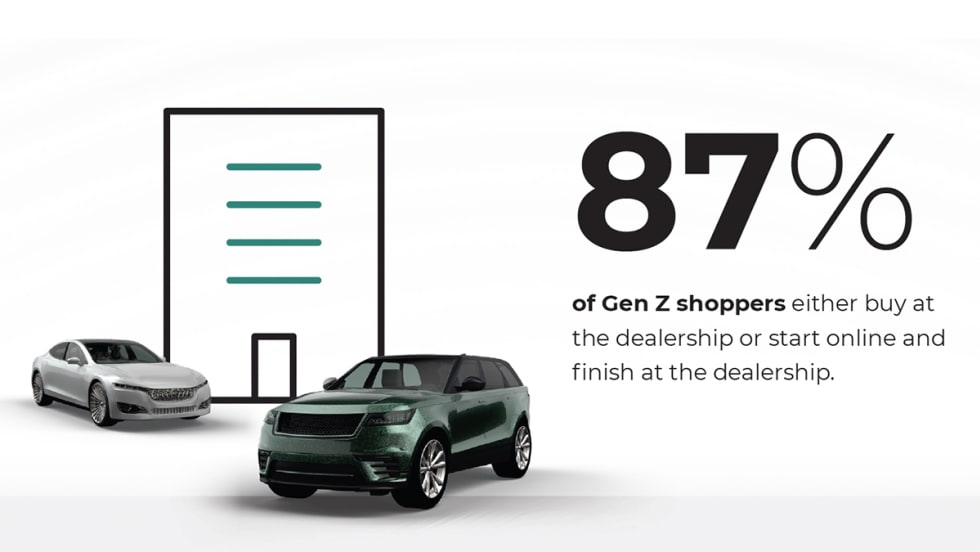
Study Finds Gen-Z Car Shoppers Spend More Time Researching and Find Purchase Process More Difficult Than Older Generations
Gen Z shoppers report they experience more problems compared to Baby Boomers, including 45% of Gen Z frustrated with waiting on a salesperson and 52% with additional fees.
Read More →
The Remote Evolution In F&I
F&I profits have consistently increased since my departure from “the box” — and it’s all happening in conjunction with my fuzzy slippers.
Read More →
LMP Automotive Holdings Receives Notification of Deficiency from Nasdaq
The Nasdaq notice has no immediate effect on the listing or trading of the Company’s common stock on the Nasdaq Capital Market.
Read More →
Auto Experts Weigh in on the Semiconductor Shortage
Experts suggest automakers focus their attention on the user experience and greater collaboration as they content with limited semiconductor chip supplies.
Read More →
LMP Automotive Holdings Announces its Board of Directors Approved an Immediate Pursuit of Strategic Alternatives
The Company intends to terminate all of its pending acquisitions in accordance with the terms of their respective acquisition agreements, primarily due to the inability to secure financial commitments and close within the timeframes set forth in such agreements.
Read More →
Blockade of Ambassador Bridge Costs Auto Industry Millions
Total losses add up to $300 million, with a $155 million hit to automakers and $145 million in lost direct wages.
Read More →
8 Ways Small Dealers Can Compete With Big Franchises
The digitization of the auto retail and finance industry has helped level the playing field for dealers who are willing to invest in new tools — no matter your size or location.
Read More →